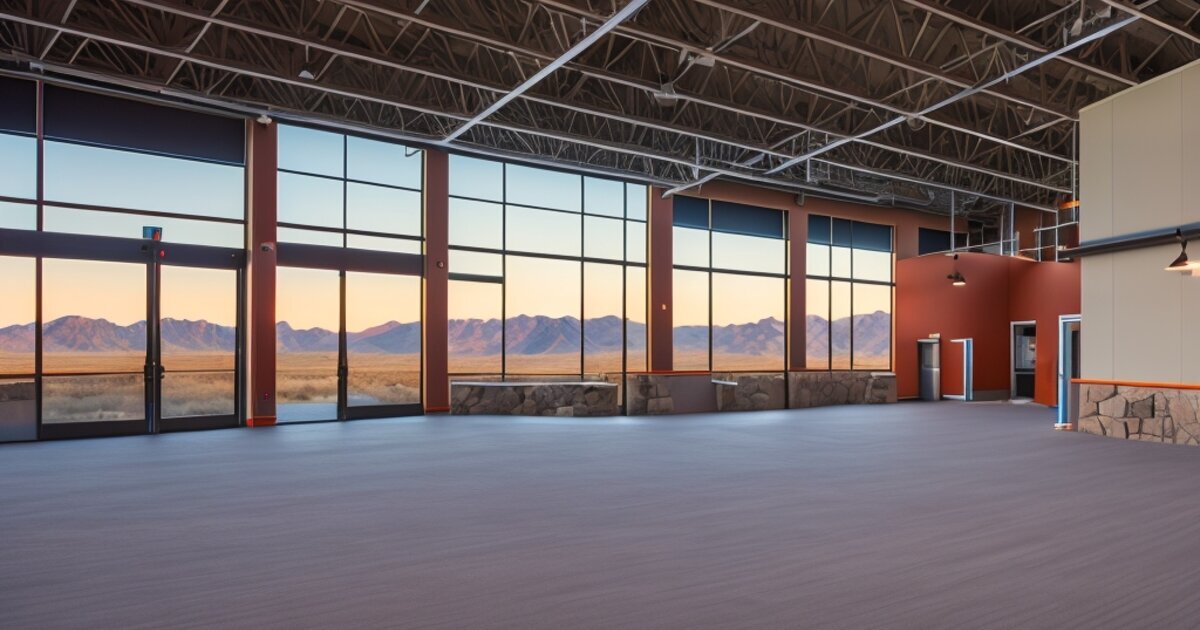
Chandler, Arizona has quietly become one of the most consequential technology corridors in the United States. With Intel’s $20 billion Fab 52 and Fab 62 expansion, Microchip Technology’s headquarters and fabrication facilities, and NXP Semiconductors’ continued operations, the city is adding millions of square feet of advanced manufacturing space. This growth radiates outward into data centers, retail developments, healthcare facilities, and mixed-use projects that serve a rapidly expanding workforce.
For facility managers overseeing construction, renovation, or maintenance in Chandler’s tech ecosystem, coating specifications are more complex than standard commercial painting. Semiconductor fabs demand cleanroom-grade systems that control airborne molecular contamination. Data centers require electrostatic dissipative flooring and low-outgassing wall coatings. Retail and mixed-use developments must balance aesthetic requirements with the punishing realities of the Sonoran Desert climate. This guide examines the coating considerations that define successful projects across Chandler’s diverse facility landscape.
Quick Answer
Commercial painting in Chandler must account for both advanced facility requirements and Sonoran Desert exposure. Semiconductor fabs, data centers, healthcare facilities, retail centers, and mixed-use properties need coating systems selected for cleanroom performance, ESD control, low odor, UV resistance, thermal movement, and project phasing around active operations.
Key Takeaways
| Facility Type | Primary Coating Priority |
|---|---|
| Semiconductor fabs | Cleanroom-grade, low-outgassing, non-shedding systems |
| Data centers | ESD flooring and low-particulate wall coatings |
| Retail and mixed-use | UV-stable color retention and brand consistency |
| Healthcare | Low-VOC, cleanable, durable interior coatings |
Chandler Tech Corridor Ecosystem
Semiconductor and Electronics Manufacturing Facilities
Chandler’s identity as a tech hub begins with semiconductor manufacturing. Intel’s Ocotillo campus remains one of the company’s largest fabrication sites globally, and the ongoing Fab 52 and Fab 62 construction adds two new leading-edge facilities to the landscape. Microchip Technology and NXP Semiconductors operate additional fabs and testing facilities throughout the city. These facilities require coating systems that go far beyond standard commercial paint.
Cleanroom classifications in Chandler’s fabs range from ISO Class 1 in lithography bays to ISO Class 1000 in support areas. Each classification demands coatings that control airborne molecular contamination, prevent electrostatic discharge, and withstand aggressive chemical cleaning protocols. Floor systems must be seamless and conductive, wall coatings must be non-shedding and low-outgassing, and all surfaces must survive repeated wipe-down with isopropyl alcohol and specialized cleanroom disinfectants.
For facility managers overseeing fab construction or renovation, the stakes are high. A coating that outgasses trace compounds or sheds particles can compromise wafer yield on production lines worth billions of dollars. For a detailed examination of cleanroom coating specifications for Arizona’s semiconductor boom, see our guide to semiconductor fab coatings.
Data Center and Cleanroom Construction Growth
The semiconductor industry’s presence in Chandler has catalyzed a parallel expansion in data center construction. Hyperscale providers and enterprise operators are building facilities to support the region’s manufacturing operations, research institutions, and growing population. These data centers range from standard commercial colocation facilities to specialized cleanroom environments that support advanced research and development.
Cleanroom-rated data centers in Chandler require many of the same coating considerations as semiconductor fabs, though typically at less stringent ISO classifications. ISO Class 7 and Class 8 are common for data center white spaces, with some facilities requiring ISO Class 5 or 6 in specialized zones. Electrostatic dissipative flooring remains critical, as do low-outgassing wall and ceiling systems that do not contribute particulate contamination to the environment.
The desert climate adds additional complexity. Arizona’s low humidity amplifies electrostatic discharge risks, making proper ESD flooring specification and grounding essential. Temperature swings between 100°F summer days and 40°F winter nights place thermal stress on coating systems that must maintain their electrical properties across the full range. For comprehensive guidance on data center cleanroom coatings, refer to our article on data center cleanroom coatings.
Retail and Mixed-Use Development Painting
Chandler’s tech workforce has driven significant retail and mixed-use development throughout the city. The Chandler Fashion Center, downtown revitalization projects, and numerous lifestyle centers require commercial painting that balances aesthetic appeal with long-term durability in desert conditions.
Retail exterior coatings in Chandler face the same UV intensity and thermal cycling challenges as industrial facilities, but with higher visibility and stricter brand compliance requirements. Color retention is critical for tenant satisfaction, and coating systems must resist fading, chalking, and dirt pickup over extended service intervals. Elastomeric acrylic systems and fluoropolymer coatings are common specifications for retail exteriors, providing the flexibility and UV resistance needed for Sonoran Desert exposure.
Interior retail spaces present different challenges. High-traffic areas require scuff-resistant wall coatings that maintain appearance between maintenance cycles. Food service tenants need coatings that withstand grease, moisture, and frequent cleaning. Mixed-use developments must coordinate painting schedules across residential, commercial, and hospitality zones with minimal disruption to occupied spaces.
Desert Climate Considerations for Modern Buildings
All commercial painting in Chandler, regardless of facility type, must account for the Sonoran Desert climate. Summer temperatures regularly exceed 110°F, with surface temperatures on exposed substrates reaching 140-160°F. UV radiation is among the highest in the United States, with 300-plus days of clear skies annually. Monsoon season brings rapid humidity spikes, intense short-duration rainfall, and dust storms that can contaminate surfaces during application.
These conditions demand coating systems with proven performance in desert environments. UV-stable formulations prevent polymer chain scission and color degradation. Elastomeric systems accommodate thermal expansion and contraction without cracking. Cool roof coatings reduce surface temperatures and energy consumption on large commercial and industrial roofs. Proper seasonal timing is essential, with spring and fall offering the most favorable application windows.
For a broader overview of managing coatings in Arizona’s desert climate, see our Phoenix commercial painting guide, which covers many of the same environmental factors Chandler facility managers face. For guidance on selecting the right products for your specific facility type, our coating selection guide provides a framework for matching coating systems to performance requirements.
Facility Manager Checklist
Use this checklist when planning commercial painting projects in Chandler’s tech corridor:
- Identify facility type requirements — semiconductor fabs, data centers, retail, and healthcare each demand different coating specifications
- Confirm cleanroom classification for controlled environments and verify coating systems meet corresponding AMC and particulate standards
- Specify ESD flooring by resistance range for data center and fab areas: conductive (10^4-10^6), static-dissipative (10^6-10^9), or anti-static (10^9-10^11)
- Select UV-stable exterior coatings with documented performance in desert climates; verify solar reflectance and thermal emittance for cool roof applications
- Plan around monsoon season (July–September) and extreme summer heat; schedule critical exterior work for spring or fall application windows
- Require seamless installation in cleanroom and wet process areas with integral cove bases and sealed penetrations
- Verify contractor experience with cleanroom-grade application, controlled-environment protocols, and Arizona desert conditions
- Coordinate with operational schedules to minimize disruption in 24/7 manufacturing and data center environments
- Document warranty terms specifically for cleanroom performance, color retention, and desert climate durability
- Budget appropriately for premium coating systems; desert-performance materials and cleanroom-grade applications represent higher upfront costs with significantly extended service life
For a detailed breakdown of commercial painting costs and budgeting factors, see our guide to commercial painting costs.
Frequently Asked Questions
What makes Chandler commercial painting different from standard Arizona projects?
Chandler combines extreme desert exposure with specialized technology facilities. Many projects must satisfy cleanroom, ESD, low-outgassing, or 24/7 operational requirements in addition to normal UV and heat durability standards.
Do Chandler data centers need ESD flooring?
Most data center white spaces and support areas benefit from electrostatic dissipative flooring, especially in Arizona’s low-humidity environment where static discharge risks are elevated.
When should exterior painting be scheduled in Chandler?
Spring and fall are typically best. Summer work requires strict substrate-temperature monitoring and monsoon planning, while occupied facilities may also need night, weekend, or phased application windows.
Standards & Sources
Related Reading
- Semiconductor Fab Coatings
- Data Center Cleanroom Coatings
- Phoenix Commercial Painting Guide
- Gilbert Commercial Painting
Conclusion
Chandler’s transformation into a premier technology corridor has created unprecedented demand for commercial painting and coating expertise across facility types. From the cleanroom-grade precision required in semiconductor fabs to the aesthetic durability demanded by retail developments, each sector presents unique challenges that standard commercial painting cannot address.
Facility managers who treat coatings as an afterthought risk premature system failure, operational disruptions, and costly remediation. The right approach integrates coating specification into the earliest phases of project planning, partners with contractors who understand both the technical requirements of controlled environments and the practical realities of Arizona’s desert climate, and validates material performance with independent test data.
If you are managing construction, renovation, or maintenance in Chandler’s tech corridor, Moorhouse Coating provides specialized coating systems for semiconductor manufacturing, data centers, retail, and healthcare facilities. Our team understands the cleanroom classifications, ESD requirements, and desert climate considerations that define successful projects in this market. Contact us to discuss your facility’s specific requirements and schedule a project assessment.
Frequently Asked Questions
What makes Chandler commercial painting different from standard Arizona projects?
Chandler combines extreme desert exposure with specialized technology facilities. Many projects must satisfy cleanroom, ESD, low outgassing, or 24/7 operational requirements in addition to normal UV and heat durability standards.
Do Chandler data centers need ESD flooring?
Most data center white spaces and support areas benefit from electrostatic dissipative flooring, especially in Arizona’s low humidity environment where static discharge risks are elevated.
When should exterior painting be scheduled in Chandler?
Spring and fall are typically best. Summer work requires strict substrate temperature monitoring and monsoon planning, while occupied facilities may also need night, weekend, or phased application windows.