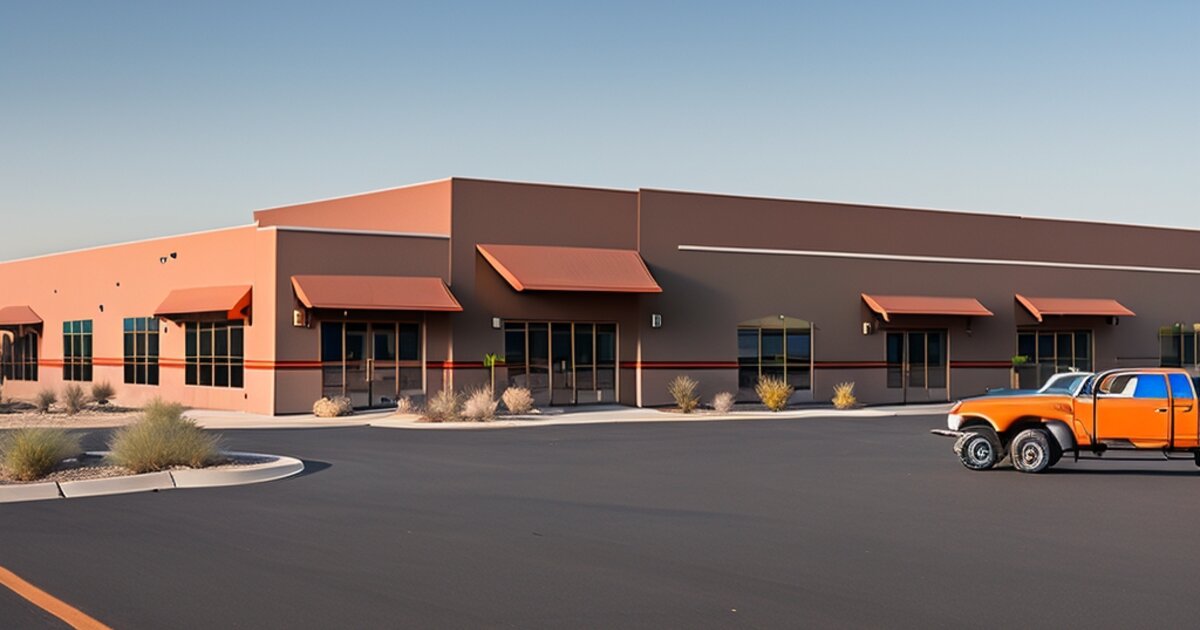
Goodyear, Arizona has emerged as a strategic logistics and industrial hub in the West Valley, driven by its proximity to Interstate 10, the Loop 303 freeway corridor, and the Phoenix Goodyear Airport. Major distribution centers, manufacturing facilities, and warehouse complexes now dominate the landscape between Estrella Parkway and Bullard Avenue, creating significant demand for industrial-grade coating systems. For facility managers overseeing these large-scale industrial properties, commercial painting is not merely a maintenance task but a critical investment in operational efficiency, safety compliance, and long-term asset protection.
The industrial growth in Goodyear presents distinct coating challenges that differ substantially from retail or office environments. Warehouse floors must withstand forklift traffic, chemical spills, and continuous abrasion. Exterior metal buildings require corrosion protection in a desert climate that accelerates oxidation. Safety markings and wayfinding systems must maintain visibility despite dust accumulation and UV degradation. This guide examines the specific painting considerations for Goodyear’s industrial and warehouse facilities, with practical strategies for coating selection, scheduling, and contractor management in one of the Southwest’s fastest-growing logistics corridors.
Quick Answer
Goodyear commercial painting is driven by industrial scale, warehouse traffic, desert UV, dust, and 24/7 operational constraints. Facility managers should prioritize durable floor systems, UV-stable exterior coatings, corrosion protection for metal buildings, OSHA-visible safety markings, and phased schedules that keep logistics and manufacturing operations moving.
Key Takeaways
- Warehouse floors should be specified by forklift traffic, chemical exposure, thermal shock, and required slip resistance.
- Exterior metal and tilt-up assets need UV-stable, corrosion-resistant systems with documented desert performance.
- Safety striping and wayfinding must remain visible despite abrasion, dust accumulation, and sun exposure.
- Contractor qualifications should include industrial safety training, epoxy floor experience, and phased project management for active facilities.
Goodyear Industrial Growth Ecosystem
Goodyear’s Industrial Transformation
The City of Goodyear has strategically positioned itself as a premier logistics and industrial destination in the Phoenix metropolitan area. The development of the Phoenix Goodyear Airport into a reliever airport with industrial adjacency, combined with the completion of the Loop 303 freeway, has attracted major distribution and manufacturing tenants to the area. Companies operating in Goodyear benefit from direct freeway access to California markets, proximity to the Union Pacific rail corridor, and a workforce drawn from the expanding West Valley residential communities.
This industrial expansion has created a diverse facility landscape. Modern distribution centers exceeding 500,000 square feet operate alongside light manufacturing facilities, cold storage warehouses, and aviation support buildings. Each facility type demands specific coating systems tailored to operational requirements, environmental exposure, and compliance standards. The common thread across all Goodyear industrial properties is the need for coatings that perform reliably in a desert climate while supporting 24/7 operational schedules.
Desert Climate Challenges for Industrial Coatings
Goodyear’s location on the western edge of the Phoenix metropolitan area exposes industrial facilities to the full force of the Sonoran Desert climate. Summer temperatures regularly reach 112°F to 115°F, with metal building surfaces and unshaded concrete experiencing temperatures in excess of 150°F. This thermal loading accelerates coating degradation, particularly on roof systems and south-facing wall surfaces.
UV radiation in Goodyear is among the most intense in the continental United States. Industrial facilities with large expanses of metal cladding, concrete tilt-up walls, and exposed steel framing are particularly vulnerable to photodegradation. Standard exterior coatings that perform adequately in milder climates may chalk, fade, and lose adhesion within three to five years in Goodyear’s environment.
Wind and dust present additional challenges. The open terrain west of Goodyear allows dust storms to approach with minimal obstruction, depositing fine particulates on exterior surfaces and creating abrasion hazards during application. Monsoon season introduces sudden humidity increases and intense rainfall that can compromise coating application schedules and damage uncured films.
For facility managers transitioning from other markets, Goodyear’s climate demands a fundamental reassessment of coating life expectancy and maintenance cycles. Coatings that might last ten years in a temperate climate may require recoating in six to eight years in the Sonoran Desert. Our Phoenix commercial painting guide provides additional context on managing coatings in Arizona’s extreme desert environment.
Warehouse and Distribution Center Floor Coatings
Warehouse floors in Goodyear’s distribution centers represent one of the highest-value coating investments facility managers will make. These floors must withstand continuous forklift and pallet jack traffic, point loading from racking systems, chemical exposure from cleaning agents and incidental spills, and thermal cycling from refrigerated zones adjacent to ambient storage areas.
Epoxy floor coating systems remain the standard for warehouse applications, offering excellent adhesion to concrete, chemical resistance, and customizable slip resistance. For high-traffic distribution centers, consider 100% solids epoxy systems applied at 10 to 20 mils thickness, with urethane topcoats for enhanced UV stability and abrasion resistance. These systems provide service lives of 10 to 15 years under normal warehouse conditions.
Cold storage and refrigerated warehouse facilities in Goodyear require specialized flooring systems that withstand thermal shock from forklift traffic moving between freezer and ambient zones. Thermal shock-resistant epoxy formulations with flexible additives prevent cracking and delamination under rapid temperature changes. For comprehensive guidance on cold storage flooring specifications, see our cold storage coatings for thermal shock article.
Safety markings, wayfinding lines, and designated pedestrian walkways require durable striping systems that maintain visibility under constant traffic. Methyl methacrylate (MMA) and polyaspartic striping systems cure rapidly and provide superior abrasion resistance compared to standard epoxy line striping. These systems minimize facility downtime during maintenance repainting of traffic markings.
For a detailed examination of warehouse floor coating options, our warehouse floor coatings guide provides specifications for various traffic levels, chemical exposure scenarios, and operational requirements common in Goodyear’s distribution facilities.
Metal Building and Structural Steel Protection
Pre-engineered metal buildings and structural steel frameworks are common in Goodyear’s industrial parks, offering cost-effective construction for large clear-span facilities. However, these structures require proactive corrosion protection in the desert climate, where temperature extremes and occasional moisture exposure accelerate oxidation.
Exterior metal surfaces should receive high-performance fluoropolymer or silicone-modified polyester coil coatings with documented performance in desert environments. These coatings provide UV stability, chalk resistance, and color retention while accommodating thermal expansion of metal panels. For existing buildings requiring field-applied coating, direct-to-metal (DTM) acrylic or urethane systems offer good adhesion and flexibility when properly specified for the substrate condition.
Structural steel inside warehouses and manufacturing facilities requires intumescent fireproofing coatings that meet building code requirements while resisting damage from forklift impacts and material handling operations. Cementitious fireproofing provides robust impact resistance but adds significant weight to steel members. Intumescent epoxy systems offer thinner film builds and smoother finishes but require careful specification to ensure adequate dry film thickness for the required fire rating.
For pre-engineered metal building painting considerations specific to Southwest conditions, our pre-engineered metal building painting guide provides detailed specifications for substrate preparation, coating selection, and application protocols.
Safety and Compliance Markings
Industrial facilities in Goodyear must maintain OSHA-compliant safety markings, aisle striping, and hazard identification systems. These markings are subject to continuous wear from vehicle traffic, dust accumulation, and UV fading, requiring periodic refresh to maintain visibility and compliance.
Floor marking color standards should follow OSHA and ANSI conventions: yellow for caution and physical hazards, red for fire protection equipment and emergency stops, green for safety equipment and first aid stations, blue for informational markings, and orange for energized equipment. Photoluminescent egress markings may be required for facilities with limited emergency lighting or complex exit routing.
Exterior safety markings, including loading dock edge lines, pedestrian crosswalks, and traffic control symbols, require coatings with enhanced UV stability and abrasion resistance. Thermoplastic markings offer excellent durability for exterior applications but require specialized application equipment. High-build traffic paints with glass bead additives provide a cost-effective alternative with good nighttime reflectivity.
For facilities handling hazardous materials, secondary containment areas require chemical-resistant coatings that withstand spills of acids, bases, solvents, and petroleum products. Epoxy novolac and vinyl ester systems provide the broadest chemical resistance for industrial containment applications. Our prevent secondary containment coating failures article provides detailed guidance on specifying and maintaining these critical protective systems.
Seasonal Scheduling for Industrial Projects
Industrial painting in Goodyear requires careful scheduling to minimize operational disruption while optimizing coating application conditions. Unlike retail or office environments, industrial facilities often operate 24/7, leaving limited windows for painting work that requires area shutdowns or ventilation controls.
Spring (March through May) offers ideal conditions for exterior painting, with moderate temperatures, low humidity, and minimal precipitation risk. However, spring is also peak construction season in Arizona, and experienced contractors may have limited availability. Fall (October through November) provides similar conditions with the added benefit of post-monsoon dust settling, though shorter daylight hours compress daily production.
Summer exterior work is challenging but sometimes unavoidable for facilities with deferred maintenance. Early morning application windows (5:00 AM to 10:00 AM) may provide acceptable substrate temperatures before surfaces heat beyond coating specifications. Some high-temperature formulations allow application at substrate temperatures up to 120°F, but these products require experienced applicators and strict quality control.
Interior warehouse and manufacturing painting can proceed year-round in climate-controlled facilities, though summer work may require enhanced ventilation to manage solvent vapors and ensure adequate curing. For facilities with refrigeration or cold storage, painting must be scheduled during temperature maintenance windows or coordinated with temporary climate control equipment.
For guidance on managing painting projects during Arizona’s challenging summer conditions, see our Phoenix summer painting article, which provides detailed heat scheduling protocols and substrate temperature management strategies applicable to Goodyear industrial facilities.
Coating Selection for Long-Term Performance
Selecting coatings for Goodyear industrial facilities requires balancing upfront cost against lifecycle performance in extreme conditions. The lowest bid rarely delivers the lowest total cost of ownership when coating failure leads to operational disruption, remediation expense, and premature recoating.
For exterior metal building applications, specify coatings with published Arizona test data demonstrating color retention and chalk resistance after five years of exposure. Premium silicone-modified polyester (SMP) and polyvinylidene fluoride (PVDF) coatings cost more initially but deliver significantly extended service life in desert UV exposure.
Warehouse floor systems should be specified based on traffic intensity, chemical exposure, and thermal conditions rather than initial cost alone. Facilities with heavy forklift traffic and frequent chemical exposure benefit from slurry broadcast epoxy systems with quartz aggregate, while light-traffic storage areas may perform adequately with thinner epoxy sealers.
Consider cool roof coatings for large warehouse and distribution centers to reduce cooling loads and extend roof membrane life. White elastomeric roof coatings with high solar reflectance can reduce roof surface temperatures by 50°F or more, translating to measurable energy savings during Goodyear’s extended cooling season.
For a comprehensive framework for matching coating systems to facility requirements, our coating selection guide provides evaluation criteria and product category recommendations for various industrial applications.
Contractor Qualifications and Project Management
Industrial painting in Goodyear demands contractors with specialized capabilities beyond standard commercial painting. Facility managers should evaluate prospective contractors on their experience with large-scale warehouse projects, industrial safety protocols, and desert climate application expertise.
Essential contractor qualifications include OSHA 30 certification, documented experience with epoxy floor systems, and familiarity with industrial containment and ventilation requirements. For projects involving fireproofing or intumescent coatings, verify that the contractor holds certifications from the coating manufacturer and has completed similar fire-rated applications.
Project management capabilities are equally important. Industrial facilities cannot tolerate open-ended schedules or undefined work zones. Require contractors to provide detailed phasing plans that minimize operational disruption, with clear daily production targets and checkpoint inspections at phase completion.
Request project references from similar industrial facilities in desert climates, and verify that the contractor maintains adequate insurance coverage including general liability, workers compensation, and pollution liability. For a structured approach to evaluating contractor proposals, our facility manager’s guide to coating contractor RFQs provides evaluation criteria and qualification questions specific to industrial painting projects.
Facility Manager Checklist
Use this checklist when planning commercial painting projects in Goodyear’s industrial and warehouse corridors:
- Assess facility type and operational requirements — Distribution centers, manufacturing facilities, and cold storage warehouses each demand different coating specifications and application protocols
- Schedule around operational constraints — Plan painting work during low-activity periods or use phased approaches that maintain 24/7 operations
- Specify UV-stable exterior coatings with documented desert climate performance for metal buildings, tilt-up concrete, and structural steel
- Select appropriate floor systems based on traffic intensity, chemical exposure, and thermal conditions; include slip resistance and wayfinding markings
- Require dust and contamination controls during surface preparation, particularly for epoxy floor applications where substrate cleanliness affects adhesion
- Verify contractor qualifications including OSHA certification, epoxy floor experience, industrial safety training, and desert climate application expertise
- Document warranty terms specifically for industrial applications, including chemical resistance, abrasion tolerance, and desert climate durability coverage
Frequently Asked Questions
What coating systems are most important for Goodyear warehouses?
The highest-priority systems are durable epoxy or urethane floor coatings, abrasion-resistant safety striping, corrosion-resistant metal building coatings, and chemical-resistant systems where spills or containment areas are present.
How should industrial painting be scheduled around 24/7 operations?
Use phased work zones, low-activity windows, clear daily production targets, and checkpoint inspections before each area returns to service. For exterior work, spring and fall usually provide the best weather conditions.
Why do Goodyear metal buildings need desert-specific coatings?
Large metal buildings experience intense UV exposure, high surface temperatures, thermal expansion, dust abrasion, and occasional monsoon moisture. Coatings need color retention, chalk resistance, adhesion, and flexibility under those conditions.
Standards & Sources
Related Reading
- Phoenix Commercial Painting | Climate Guide
- Warehouse Floor Coatings: Specifications and Selection
- Pre-Engineered Metal Building Painting
- Cold Storage Coatings for Thermal Shock
- Coating Selection Guide
- Phoenix Summer Painting: Heat Scheduling
- Prevent Secondary Containment Coating Failures
Goodyear’s position as a West Valley industrial and logistics powerhouse continues to strengthen as major employers expand operations and new development breaks ground along the Loop 303 corridor. For facility managers, the challenge is maintaining coating performance across large industrial portfolios while minimizing operational disruption in 24/7 environments. By understanding the specific demands of warehouse, manufacturing, and distribution facilities in the Sonoran Desert climate, you can implement coating programs that protect assets, ensure safety compliance, and support the continued growth of Goodyear’s industrial economy.
Frequently Asked Questions
What coating systems are most important for Goodyear warehouses?
The highest priority systems are durable epoxy or urethane floor coatings, abrasion resistant safety striping, corrosion resistant metal building coatings, and chemical resistant systems where spills or containment areas are present.
How should industrial painting be scheduled around 24/7 operations?
Use phased work zones, low activity windows, clear daily production targets, and checkpoint inspections before each area returns to service. For exterior work, spring and fall usually provide the best weather conditions.
Why do Goodyear metal buildings need desert specific coatings?
Large metal buildings experience intense UV exposure, high surface temperatures, thermal expansion, dust abrasion, and occasional monsoon moisture. Coatings need color retention, chalk resistance, adhesion, and flexibility under those conditions.