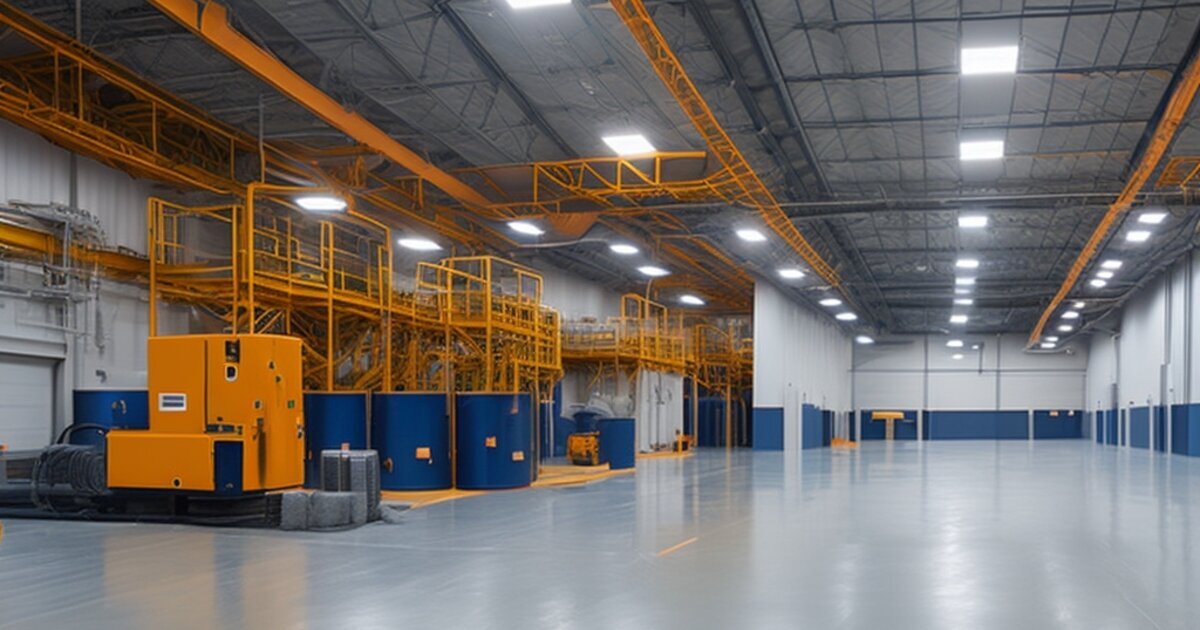
Arizona is ground zero for the most significant semiconductor manufacturing expansion in U.S. history. With TSMC’s $65 billion investment in Phoenix and Intel’s ongoing Fab 52 and Fab 62 construction in Chandler, the state is adding millions of square feet of cleanroom space that demands coating systems engineered to the highest standards on earth. For facility managers, cleanroom engineers, and procurement teams overseeing these projects, selecting the wrong coating system is not merely a maintenance issue—it is a contamination risk that can compromise yield on multi-billion-dollar production lines.
Semiconductor fabs operate in environments where a single airborne particle can destroy a $20,000 wafer. Coating systems in these facilities must control airborne molecular contamination (AMC), manage electrostatic discharge, resist aggressive chemicals, and maintain surface integrity through thousands of cleaning cycles. This guide examines the coating specifications that Arizona’s new fabs require across their cleanroom classifications.
Quick Answer
Semiconductor fab coatings must be matched to cleanroom class, AMC sensitivity, ESD risk, and chemical exposure. Arizona fabs typically require low-outgassing wall and ceiling systems, conductive or static-dissipative seamless floors, documented chemical resistance, and pre-occupancy testing before production areas are released.
Fab Coating Specification Matrix
| Fab Zone | Primary Coating Need | Typical System |
|---|---|---|
| ISO Class 1-10 lithography and process bays | AMC control and particle suppression | Low-outgassing phenolic, polyurea, or 100% solids systems |
| Class 100 metrology and inspection | Seamless cleanability and ESD control | Epoxy or polyurethane floors with non-shedding wall coatings |
| Wet process and etch areas | Acid and solvent resistance | Vinyl ester or novolac epoxy with sealed cove bases |
| Gowning and material staging | Durability with cleanroom protocols | High-build epoxy or polyurethane with documented cure validation |
Cleanroom Classification & Coating Requirements
ISO 14644 Cleanroom Classification and Coating Requirements
Semiconductor fabs operate under ISO 14644-1, which defines airborne particulate limits by cleanroom class. In Arizona’s new TSMC and Intel facilities, the most critical process zones—lithography, etch, and deposition—require ISO Class 1 to Class 10 conditions. These are among the most stringent environments in commercial or industrial construction.
Coating selection must align with each zone’s classification. In Class 1 and Class 10 areas, conventional high-performance epoxies may still outgas trace compounds that deposit on wafer surfaces. These zones typically require specialized phenolic or polyurea wall and ceiling systems that have undergone rigorous airborne molecular contamination (AMC) testing. Floor systems in Class 1-10 spaces use conductive or static-dissipative epoxy formulations with extremely low particle generation rates.
Class 100 zones, including metrology and inspection areas, permit slightly broader coating options but still require seamless, non-shedding systems. High-solids epoxy or polyurethane floor coatings with integral cove bases are standard. Wall coatings must be smooth enough to prevent particle accumulation and durable enough to withstand frequent wipe-down with IPA or cleanroom-grade disinfectants. For a broader overview of how these standards apply across facility types, see our guide to data center cleanroom coatings.
Low-Outgassing Coating Systems for AMC Control
Airborne molecular contamination is the silent yield killer in semiconductor fabs. AMC includes acids, bases, condensables, and dopants that deposit on wafers and alter electrical properties at the nanometer scale. Coatings are a significant source of AMC if not properly specified.
Low-outgassing coating systems for fab construction are tested to SEMI F21-95 or IEST-RP-CC031 standards. These protocols measure total mass loss (TML) and collected volatile condensable materials (CVCM) under accelerated thermal conditions. Coatings acceptable for Class 1-10 fab zones typically show TML below 1.0% and CVCM below 0.10%.
Waterborne epoxy systems have improved dramatically but still carry risks in the most critical zones. Many fab specifications now require 100% solids epoxy or polyurethane systems with no solvent content. Some advanced facilities specify two-part polyurea spray systems that cure in seconds and emit virtually no VOCs or AMC during or after application.
Application protocol matters as much as material selection. In Class 1-10 zones, coatings must be applied under controlled environmental conditions, with full cure validation before the space is brought online. Any surface preparation—sanding, grinding, or chemical etching—must be completed in adjacent Class 1000 or general areas to prevent cross-contamination. For detailed application protocols in controlled environments, refer to our article on cleanroom painting.
ESD and Conductive Flooring for Fab Areas
Electrostatic discharge in a semiconductor fab can destroy delicate circuitry, attract particulate contamination, and create safety hazards in solvent-handling areas. Flooring systems must be specified by electrical resistance range, measured in ohms per square.
Conductive flooring (10^4 to 10^6 ohms/sq) is required in areas where explosive solvents are handled or where the most ESD-sensitive devices are processed. Static-dissipative flooring (10^6 to 10^9 ohms/sq) is standard for general cleanroom areas, including Class 100 and Class 1000 zones. Anti-static flooring (10^9 to 10^11 ohms/sq) may be acceptable in administrative or support areas within the fab envelope.
Arizona’s dry climate amplifies ESD risks. Ambient humidity in Phoenix averages 20-30% for much of the year, creating conditions where static potentials build rapidly on improperly specified floors. ESD floor coatings in Arizona fabs require grounding grids integrated into the substrate, with point-to-point resistance testing documented before occupancy.
The flooring system must also integrate with the facility’s chemical resistance requirements. In etch areas where hydrofluoric acid or solvent spills are possible, conductive vinyl sheet goods may fail where conductive epoxy or polyurethane systems endure. For a complete discussion of ESD flooring specifications, testing protocols, and maintenance, see our guide to ESD flooring systems.
Chemical Resistance for Etch and Deposition Areas
Semiconductor etch and deposition processes use some of the most aggressive chemicals in industrial manufacturing. Hydrofluoric acid, sulfuric acid, hydrogen peroxide, and various solvent blends are routine process chemistries. Coating systems in these areas must survive incidental exposure without degradation, staining, or surface breakdown that could generate particles.
Chemical resistance is tested under ASTM D1308, which evaluates coating performance after defined exposure periods to specific reagents. For fab etch areas, coatings should show no effect after 24-hour immersion in process-relevant chemistries.
Vinyl ester flooring systems offer superior chemical resistance in the most aggressive wet process zones. These systems use fiberglass reinforcement and can be formulated with conductive or static-dissipative properties. For walls and secondary containment areas, novolac epoxy systems provide excellent acid resistance at a lower installed cost than vinyl ester.
Seam integrity is critical. Any crack, pinhole, or improperly sealed joint becomes a pathway for chemical attack on the substrate and a harbinger of coating failure. Cove bases must extend 4-6 inches vertically with radiused transitions. Penetrations for drains, utilities, and equipment pads require detailed sealing with chemically resistant epoxies.
Facility Manager Checklist
- Confirm Cleanroom Classification: Verify each zone’s ISO class and match coating systems to the corresponding AMC and particulate requirements.
- Review Outgassing Data: Require third-party TML/CVCM test data for all coatings in Class 1-10 areas before approval.
- Specify ESD Flooring by Zone: Define resistance ranges—conductive, static-dissipative, or anti-static—based on area-specific ESD risks.
- Validate Chemical Resistance: Confirm coatings survive 24-hour immersion in the actual process chemistries used in etch and deposition areas.
- Require Seamless Installation: Mandate integral cove bases, sealed penetrations, and chemical-resistant trench systems at all drains.
- Verify Installer Credentials: Confirm cleanroom-grade application experience, controlled-environment spraying, and cure verification protocols.
- Coordinate Pre-Occupancy Testing: Schedule particle generation, outgassing validation, and ESD resistance verification before handover.
For facility managers new to the Phoenix market, our Phoenix commercial painting guide covers additional considerations for coatings in Arizona’s extreme climate, including thermal cycling and UV exposure in non-cleanroom support areas.
Frequently Asked Questions
What makes semiconductor fab coatings different from standard industrial coatings?
Fab coatings must limit particles, outgassing, static discharge, and chemical degradation at levels far beyond standard industrial requirements. Material data, installation controls, and final testing are all part of the specification.
Do all cleanroom areas need conductive flooring?
No. Conductive flooring is used where ESD or solvent-handling risk is highest, while static-dissipative systems are often sufficient in general cleanroom zones. The required resistance range should be defined by room function.
When should coating contractors be involved in a fab project?
They should be involved during design or specification review, before materials are approved. Early coordination prevents incompatibility between coatings, cleanroom classification, process chemicals, and commissioning schedules.
Standards & Sources
Related Reading
- EV Battery Facility Flooring
- Data Center Cleanroom Coatings
- Data Center Cleanroom Painting
- ESD Flooring Systems
Conclusion
Arizona’s semiconductor boom represents a generational investment in advanced manufacturing infrastructure. The coating systems specified for these fabs must perform at a level that matches the precision of the processes they support. From Class 1 lithography bays to Class 1000 material staging areas, each zone demands coatings that control contamination, prevent electrostatic discharge, and resist aggressive chemicals.
Facility managers and procurement teams who treat coatings as a commodity purchasing decision risk costly yield losses, extended commissioning schedules, and premature system failure. The right approach partners experienced cleanroom coating contractors early in the design process, validates material performance with independent test data, and enforces rigorous installation and cure protocols.
If you are planning fab construction, expansion, or renovation in Arizona, Moorhouse Coating provides cleanroom-grade coating systems engineered for semiconductor manufacturing environments. Our team understands the AMC, ESD, and chemical resistance requirements that differentiate fab coatings from standard industrial finishes. Contact us to discuss your project specifications and schedule a facility assessment.
For a broader framework on selecting coatings across industrial applications, see our coatings selection guide.
Frequently Asked Questions
What makes semiconductor fab coatings different from standard industrial coatings?
Fab coatings must limit particles, outgassing, static discharge, and chemical degradation at levels far beyond standard industrial requirements. Material data, installation controls, and final testing are all part of the specification.
Do all cleanroom areas need conductive flooring?
No. Conductive flooring is used where ESD or solvent handling risk is highest, while static dissipative systems are often sufficient in general cleanroom zones. The required resistance range should be defined by room function.
When should coating contractors be involved in a fab project?
They should be involved during design or specification review, before materials are approved. Early coordination prevents incompatibility between coatings, cleanroom classification, process chemicals, and commissioning schedules.