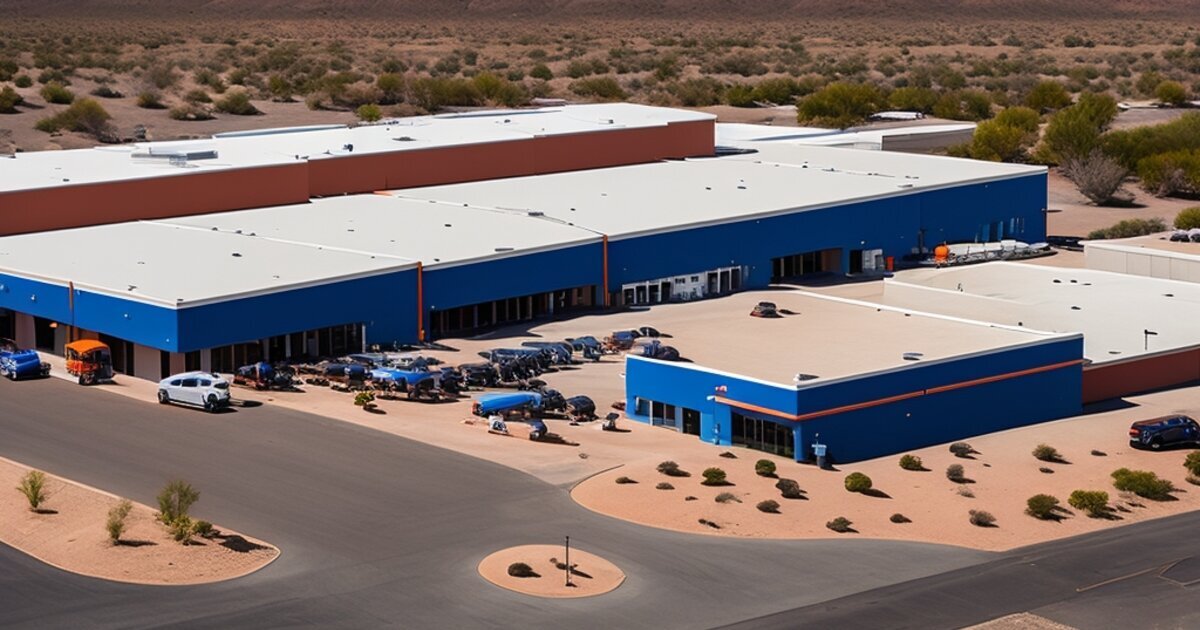
Tempe, Arizona operates at a different rhythm than neighboring Phoenix suburbs. The presence of Arizona State University — one of the nation’s largest public research universities — creates a unique economic and physical environment where academic schedules, student housing cycles, research facility standards, and entertainment-driven retail all intersect. For facility managers overseeing commercial assets in the ASU corridor, this university-town energy presents both opportunity and complexity.
Unlike monolithic office parks or standardized industrial zones, Tempe’s built environment spans century-old brick structures near Mill Avenue, mid-century research labs, modern corporate headquarters, and high-rise residential towers built to house a growing student and young professional population. Each asset class carries distinct coating requirements, occupancy constraints, and aesthetic expectations. This guide is for facility managers navigating commercial painting decisions across Tempe’s university-influenced landscape.
Quick Answer
Commercial painting in Tempe requires planning around ASU calendars, Mill Avenue foot traffic, student housing turnover, high-rise access, and desert UV exposure. Facility managers should match coating systems to each asset type, use low-odor products in occupied areas, and schedule exterior work around heat, monsoon risk, and event-driven traffic patterns.
Tempe Commercial Painting Corridor
University and Research Facility Painting
ASU’s presence in Tempe extends well beyond undergraduate lecture halls. The university corridor includes research laboratories, biomedical facilities, performing arts centers, athletics complexes, and administrative buildings that operate on schedules largely decoupled from standard commercial real estate cycles. For facility managers, this means painting projects must accommodate academic calendars, research continuity requirements, and high-traffic pedestrian zones that never fully quiet down.
Research facilities present particular coating challenges. Cleanroom environments, chemical storage areas, and high-humidity aquatic centers require specialized coating systems that go far beyond standard latex or acrylic applications. Epoxy and polyurethane systems with specific chemical resistance profiles are often necessary, and surface preparation must meet stricter contamination standards than typical commercial work. When planning coating maintenance for university assets, coordinate with facility operations to identify semester breaks and reduced-occupancy windows that allow proper cure times without disrupting research activity.
For broader guidance on academic facility painting strategies, see our post on educational facility painting best practices.
Tempe Facility Painting Priorities
| Tempe asset type | Main constraint | Practical coating priority |
|---|---|---|
| ASU-adjacent research facilities | Academic schedules and research continuity | Low-VOC specialty systems with strict containment |
| Mill Avenue retail and hospitality | Heavy pedestrian traffic and brand visibility | Washable, anti-graffiti, UV-stable finishes |
| Student housing towers | Compressed turnover windows and high-rise access | Pre-scheduled crews, durable common-area coatings, coordinated lift plans |
| Corporate and tech offices | Minimal disruption and modern aesthetics | Low-odor coatings, precise finish quality, sustainability documentation |
| Historic masonry near downtown | Substrate sensitivity and review requirements | Breathable masonry-compatible coatings and careful prep |
Mill Avenue and Downtown Retail/Hospitality
Mill Avenue remains Tempe’s primary commercial spine, connecting the ASU campus to the Salt River corridor. The district mixes historic masonry buildings, modern mixed-use developments, restaurants, hotels, and entertainment venues that experience intense pedestrian traffic and periodic event-driven surges. Coating decisions here must balance visual appeal with durability under constant use.
Restaurant and hospitality facilities face accelerated coating degradation from grease vapor, high humidity, and frequent cleaning regimens. Exterior surfaces in dining districts require more frequent maintenance cycles than standard commercial facades, particularly on lower wall sections and entryways where physical contact and staining are concentrated. Anti-graffiti coatings and easily cleanable semi-gloss systems often justify their premium in these high-visibility, high-maintenance zones.
The retail environment along Mill Avenue also demands careful color and finish selection. Brand consistency across multi-tenant properties, wayfinding clarity, and night-time lighting interaction all affect coating choices. For facility managers overseeing retail portfolios in Tempe’s core, our retail store painting guide covers tenant coordination and finish specification in detail.
High-Rise Residential and Student Housing
Tempe’s skyline has transformed over the past decade with the addition of numerous high-rise residential towers catering to students, young professionals, and university staff. These assets operate under occupancy constraints that make exterior painting particularly challenging — scaffolding and swing stage work adjacent to residential balconies requires extensive coordination, and surface preparation noise must be managed within lease-compliant hours.
Student housing compounds the scheduling challenge with turnover-driven maintenance cycles. Unlike traditional multi-family housing with annual lease rotations, student housing often experiences concentrated move-out periods in May and December that create compressed windows for interior painting, unit turns, and common area refreshes. Facility managers must pre-position coating crews and materials to execute efficiently during these narrow intervals.
The scale of modern student housing towers also elevates material logistics. High-volume projects require just-in-time delivery coordination, staged material storage, and waste management plans that comply with both city regulations and property management standards. For large-scale residential painting coordination, refer to our multi-family apartment and condo painting guide.
Corporate Office and Tech Corridor Growth
Tempe’s corporate office market has expanded significantly along the Price Corridor and surrounding areas, attracting technology companies, financial services firms, and professional offices that expect contemporary workplace aesthetics and minimal operational disruption. These facilities often feature open floor plans, glass curtain walls with minimal painted surfaces, and high-end interior finishes that demand precision application and zero-defect standards.
The tech corridor’s growth has introduced a younger demographic of tenants and employees with elevated expectations for workplace design. Accent walls, branded color schemes, and collaborative space finishes require careful color matching and application quality. Facility managers should specify coating systems that allow future reconfiguration without extensive surface preparation — low-VOC, low-odor products that enable same-day reoccupancy are increasingly standard requirements.
Corporate clients also increasingly request documentation of coating systems for sustainability reporting and LEED maintenance. Maintaining records of product specifications, application dates, and warranty information supports both ongoing maintenance planning and environmental compliance verification. For cost planning across corporate asset types, see our overview of commercial painting costs and budgeting factors.
Facility Manager Checklist
Use this checklist when planning commercial painting across Tempe’s diverse asset portfolio:
- Calendar Coordination: Map academic schedules, student move-in/move-out dates, and event calendars before setting project timelines
- Research Sensitivity: Identify cleanroom, laboratory, or specialized research zones requiring containment protocols beyond standard commercial painting
- Pedestrian Management: Develop traffic control plans for Mill Avenue and campus-adjacent properties with continuous foot traffic
- High-Rise Logistics: Confirm swing stage, scaffolding, or lift access for residential towers and verify insurance and safety certifications
- Retail Continuity: Coordinate with tenants on Mill Avenue to maintain business access and minimize revenue impact
- Material Specifications: Select UV-stable, heat-tolerant coatings for south and west exposures common in Tempe’s desert environment
- Sustainability Documentation: Record product VOC levels, recycled content, and manufacturer sustainability credentials for corporate reporting
- Tenant Communication: Establish notification protocols for multi-tenant properties with diverse occupancy schedules
- Warranty Transferability: Confirm coating warranties remain valid under Arizona’s specific climate conditions and application requirements
- Monsoon Preparedness: Schedule exterior work outside peak monsoon months and establish rapid-protection protocols for materials and fresh coatings
- Historic Compliance: Verify any Mill Avenue or campus-adjacent historic structures require additional review or specialized coating systems
- Post-Occupancy Scheduling: Prioritize interior work during reduced-occupancy periods common in university-influenced markets
Frequently Asked Questions
When is the best time to schedule commercial painting in Tempe?
Interior work often fits semester breaks, tenant turnover, or reduced-occupancy periods. Exterior work should avoid peak heat, monsoon storms, and major event traffic when possible.
What coatings hold up best in Tempe’s desert exposure?
UV-stable acrylic, elastomeric, polyurethane, and other heat-tolerant systems generally outperform standard coatings on south and west exposures.
How should facility managers handle painting near ASU or Mill Avenue?
Coordinate early with occupants, tenants, event calendars, and pedestrian control requirements so coating work does not disrupt research, retail operations, or public access.
Standards & Sources
Related Reading
- Gilbert Commercial Painting
- Educational Facility Painting Best Practices
- Retail Store Painting Guide
- Multi-Family Apartment and Condo Painting
Conclusion
Tempe’s identity as a university town shapes every aspect of commercial facility management, including coating maintenance and renovation. The concentration of research facilities, retail corridors, residential towers, and corporate offices within a compact geographic area creates a diverse portfolio of coating requirements that rarely align with simple, one-size-fits-all approaches.
Facility managers who succeed in this market coordinate closely with academic calendars, understand the durability demands of high-traffic retail and hospitality environments, plan around the logistical constraints of high-rise residential towers, and meet the aesthetic and sustainability expectations of modern corporate tenants. The common thread across all asset types is the need for experienced contractors who understand Tempe’s specific operational rhythms and can execute with minimal disruption to active facilities.
For facility managers overseeing assets across the broader Phoenix metropolitan area, our Phoenix commercial painting guide provides additional context on regional climate considerations and regulatory requirements that complement Tempe’s university-specific dynamics.
Contact Moorhouse Coating to discuss your Tempe commercial painting project — from ASU corridor research facilities to Mill Avenue retail and downtown residential towers, we coordinate execution around the schedules and standards that define this unique market.
Frequently Asked Questions
When is the best time to schedule commercial painting in Tempe?
Interior work often fits semester breaks, tenant turnover, or reduced occupancy periods. Exterior work should avoid peak heat, monsoon storms, and major event traffic when possible.
What coatings hold up best in Tempe's desert exposure?
UV stable acrylic, elastomeric, polyurethane, and other heat tolerant systems generally outperform standard coatings on south and west exposures.
How should facility managers handle painting near ASU or Mill Avenue?
Coordinate early with occupants, tenants, event calendars, and pedestrian control requirements so coating work does not disrupt research, retail operations, or public access.