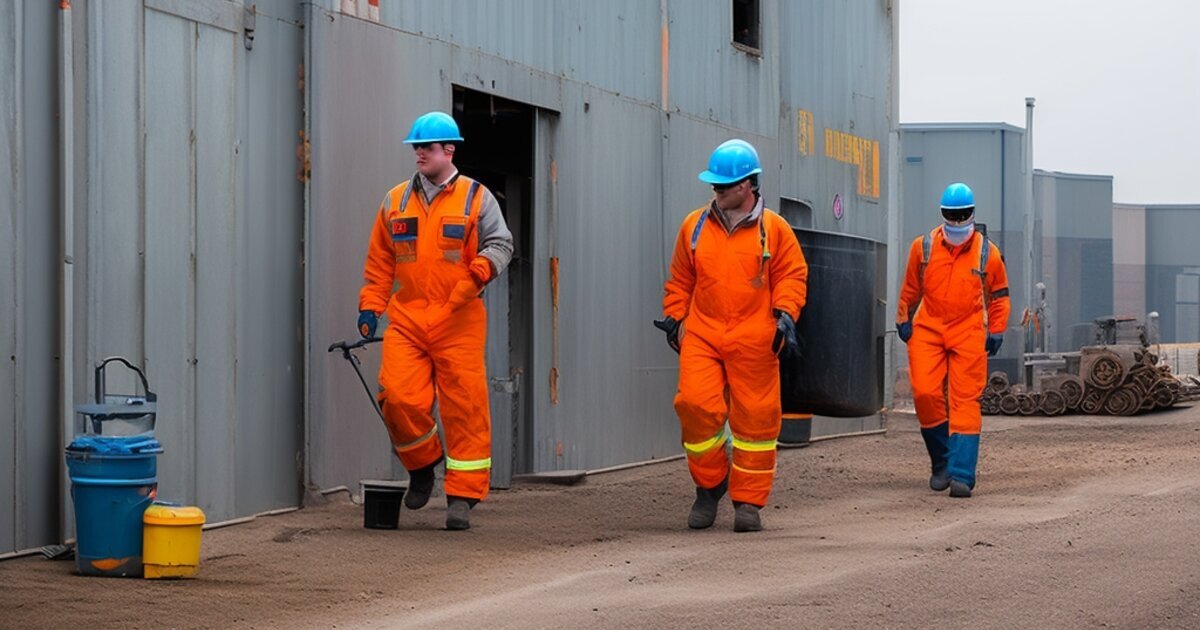
Facilities that generate, process, or store combustible dust face a dual challenge: maintaining strict OSHA compliance while executing maintenance painting and coating work that does not introduce ignition sources. Dust explosions kill workers and destroy facilities every year, and painting contractors who work in these environments must understand the regulatory framework, hazard controls, and coating requirements that keep operations safe.
This post is written for safety managers and facility managers in food processing, pharmaceutical manufacturing, and chemical processing. It covers the NFPA 652 standard, safe painting practices in combustible dust environments, anti-static coating considerations, and post-project validation protocols.
Quick Answer
Painting in a combustible dust area is only safe when the project is tied to the facility’s Dust Hazard Analysis, ignition sources are controlled, dust is removed before and after work, and coating application is monitored for explosive atmospheres. Facility managers should require documented cleaning, hot work permits, rated equipment, continuous LEL monitoring, and validation before operations resume.
Key Takeaways
- Treat painting as part of the combustible dust management program, not a routine maintenance task.
- Do not allow coating work over accumulated dust or in areas where dust clouds can form.
- Match anti-static or conductive coatings to the facility grounding strategy when electrostatic discharge is a concern.
- Require post-project cleaning records, dust layer inspection, and monitoring results before restarting production.
Combustible Dust Compliance Workflow
NFPA 652 and OSHA Requirements
NFPA 652, the Standard on the Fundamentals of Combustible Dust, requires facilities to complete a Dust Hazard Analysis (DHA) and implement a written combustible dust management program. OSHA’s General Duty Clause and specific standards under 29 CFR 1910 address housekeeping, ignition source control, and personal protective equipment. Together, these frameworks define what safe painting operations look like in dust hazard areas.
The DHA must identify where dust accumulates, evaluate the potential for deflagration or explosion, and specify controls. For facility managers, this means any painting contractor entering a dust hazard zone must work within the boundaries of the existing DHA. Painting introduces solvents, spray equipment, and potential ignition sources. Contractors must understand the facility’s hazard classifications and obtain proper hot work permits before beginning surface preparation or coating application.
For a broader overview of regulatory requirements, see our OSHA compliance guide. For specific safety protocols applicable to industrial environments, review our dedicated post on industrial painting safety.
Dust Control During Painting Operations
Painting in combustible dust environments requires pre-project cleaning, continuous dust suppression, and strict control over ignition sources. Dust layers as thin as 1/32 inch can fuel a flash fire or explosion if disturbed and ignited. Contractors must not paint over accumulated dust or work in areas where dust clouds can form.
Pre-project cleaning involves mechanical removal of dust deposits from all surfaces, including horizontal structures, ledges, and equipment. Vacuum systems rated for combustible dust collection, grounded to prevent static discharge, are required. Compressed air blow-down is prohibited unless the area is completely shut down and all ignition sources are eliminated.
During painting, contractors should isolate the work area using physical barriers or temporary enclosures with negative air pressure. Spray application generates atomized coating particles that can themselves create explosive atmospheres when combined with combustible dust. Local exhaust ventilation and continuous atmospheric monitoring for Lower Explosive Limit (LEL) are mandatory. Tools and equipment must be intrinsically safe or rated for the hazard classification of the area.
For more on managing hazardous materials during coating work, see our post on hazmat handling.
Anti-Static and Conductive Coating Considerations
Static electricity is a documented ignition source for combustible dust. In facilities where dust is present, the coating system itself must be evaluated for electrostatic discharge risk. Standard solvent-based coatings can generate static during spray application, and insulating coating films can accumulate charge on equipment surfaces.
Anti-static and conductive coatings are formulated to dissipate electrical charge rather than allow it to accumulate. These coatings contain conductive fillers such as carbon black or metallic particles that provide a controlled path to ground. In pharmaceutical and chemical processing facilities, conductive floor coatings are often specified in powder handling and packaging areas to prevent electrostatic discharge.
Facility managers should specify coating systems compatible with the facility’s electrical grounding scheme. Surface resistivity testing, per ASTM D257, verifies that the applied coating meets the required conductivity range. Application procedures for conductive coatings differ from standard coatings; film thickness must be controlled carefully, as excessive thickness can reduce conductivity, while insufficient thickness may leave bare substrate exposed.
For environments requiring enhanced fire protection, review our guide on fire-resistant coatings.
Post-Painting Cleaning and Validation Protocols
After painting is complete, the work area must be restored to a dust-free condition before operations resume. Dust displaced during the project, even in small quantities, creates an immediate hazard. Post-project cleaning protocols should mirror pre-project standards: vacuum collection with HEPA filtration, wet wiping of surfaces, and inspection of concealed spaces where dust may have migrated.
Validation involves documented inspection of dust layer thickness using a compliant thickness gauge or visual comparison against a standard. Facilities should re-verify that accumulated dust does not exceed the limits defined in the DHA. In food processing plants, additional validation may include environmental sampling for coating overspray or solvent residue. For guidance on coating systems in food production environments, see our post on food processing plant coatings.
Documentation is critical. The facility’s combustible dust management program should include a record of the painting project, including the scope, hazard controls, atmospheric monitoring results, and post-project cleaning verification. This documentation supports both internal safety audits and external regulatory inspections.
Frequently Asked Questions
Can painting work proceed if combustible dust is present but production is shut down?
Not until the dust hazard is controlled. Shutdown reduces some process risks, but accumulated dust can still ignite if disturbed by surface preparation, spray application, static discharge, or hot work. The area should be cleaned, isolated, and verified against the DHA before work begins.
Are anti-static coatings required in every combustible dust area?
No. Anti-static or conductive coatings are specified when the DHA, process conditions, or grounding plan identifies electrostatic discharge as a credible ignition source. The coating system should be tested after application to confirm the required surface resistivity.
What records should facility managers keep after a dust-area coating project?
Keep the work scope, permits, cleaning verification, atmospheric monitoring logs, coating product data, surface resistivity tests if applicable, and post-project inspection records. These records support OSHA, NFPA, insurance, and internal safety audits.
Standards & Sources
Related Reading
- Hazmat Handling in Commercial Painting Operations
- Fire-Resistant Coatings for Commercial and Industrial Buildings
- Food Processing Plant Coatings
- Confined Space Painting and OSHA 1910.146 Compliance
- Industrial Painting Safety Protocols
Facility Manager Checklist
Use this checklist when planning and managing painting projects in combustible dust environments:
Pre-Project Planning
- Review the current Dust Hazard Analysis (DHA) and confirm the work area classification
- Verify the painting contractor has experience in combustible dust environments
- Obtain hot work permits and communicate permit conditions to all trades
- Confirm atmospheric monitoring equipment is calibrated and available
- Schedule pre-project cleaning and dust removal using approved vacuum methods
- Identify and mark all ignition sources; confirm isolation or shutdown procedures
During the Project
- Verify continuous LEL monitoring in and around the work area
- Ensure all tools and equipment are rated for the hazard classification
- Maintain physical barriers and negative air enclosures where required
- Prohibit compressed air blow-down and dry sweeping in dust hazard zones
- Confirm spray booth or local exhaust ventilation is operational and inspected
- Conduct daily safety briefings addressing dust hazard controls
Post-Project Validation
- Complete thorough cleaning of all surfaces, ledges, and concealed areas
- Inspect dust layer thickness and verify compliance with DHA limits
- Test conductive or anti-static coatings for surface resistivity if specified
- Document cleaning verification, monitoring results, and any deviations
- Update facility combustible dust management program records
- Conduct a post-project walkthrough with the contractor and safety team
Conclusion
Combustible dust compliance is not a one-time task. It is an ongoing discipline that extends to every maintenance activity, including painting and coating. Facility managers who integrate dust hazard controls into their painting programs reduce the risk of catastrophic incidents while maintaining regulatory compliance and operational continuity.
Moorhouse Coating works with safety managers and facility managers to plan and execute painting projects in hazardous environments. Our crews are trained in NFPA 652 requirements, confined space protocols, and hot work permitting. If your facility requires coating maintenance in a combustible dust area, contact us to discuss a project plan that protects your people, your equipment, and your operations.
Related Reading
- Hazmat Handling in Commercial Painting Operations
- Fire-Resistant Coatings
- Food Processing Plant Coatings
- Industrial Painting Safety Protocols
- OSHA Compliance Guide for Commercial Painting
Frequently Asked Questions
Can painting work proceed if combustible dust is present but production is shut down?
Not until the dust hazard is controlled. Shutdown reduces some process risks, but accumulated dust can still ignite if disturbed by surface preparation, spray application, static discharge, or hot work. The area should be cleaned, isolated, and verified against the DHA before work begins.
Are anti static coatings required in every combustible dust area?
No. Anti static or conductive coatings are specified when the DHA, process conditions, or grounding plan identifies electrostatic discharge as a credible ignition source. The coating system should be tested after application to confirm the required surface resistivity.
What records should facility managers keep after a dust area coating project?
Keep the work scope, permits, cleaning verification, atmospheric monitoring logs, coating product data, surface resistivity tests if applicable, and post project inspection records. These records support OSHA, NFPA, insurance, and internal safety audits.