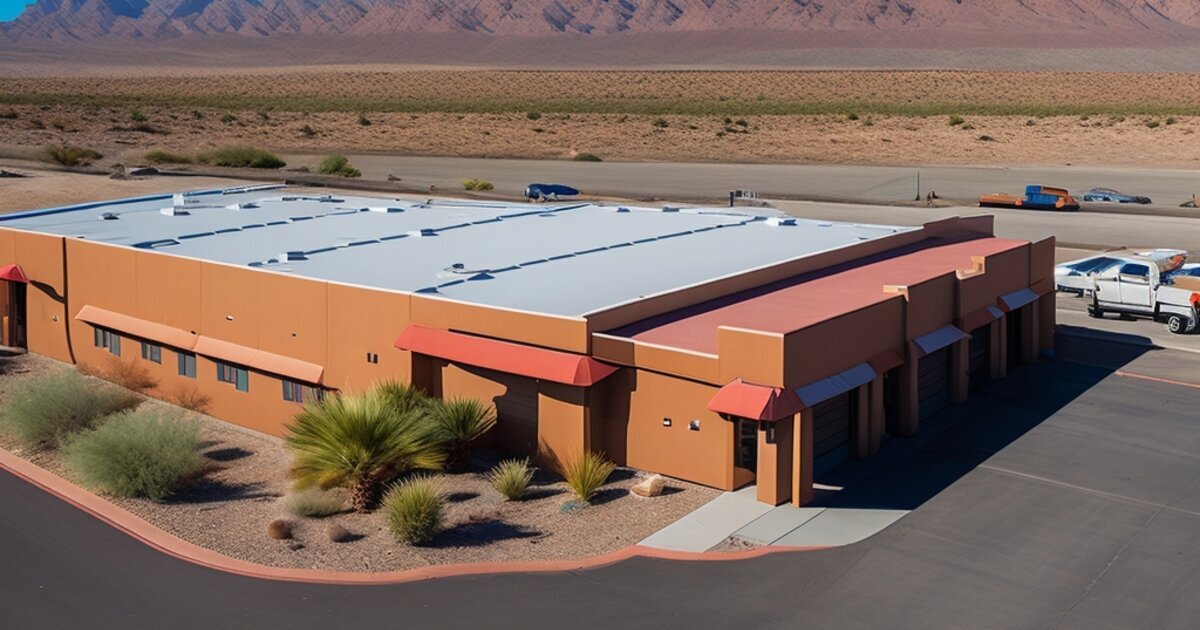
Henderson, Nevada, is no longer Las Vegas’s quiet suburb. It is the fastest-growing city in the state and one of the fastest-growing communities in the country. For facility managers, that growth translates into new construction, expanding commercial corridors, aging retail centers, and infrastructure that must perform under some of the most demanding desert conditions in the Southwest.
If you manage a commercial property in Henderson, you are operating in a market where coating decisions made today will face accelerated UV exposure, thermal cycling, and dust loading for years to come. The properties being built now will set the maintenance baseline for the next decade. Getting the coating strategy right from the start protects asset value, reduces lifecycle cost, and keeps operations running without interruption.
Quick Answer
Henderson commercial painting requires desert-rated coating systems, strict substrate temperature monitoring, dust controls, and scheduling that matches fast-growth construction and occupied operations. Facility managers should specify UV-stable products, document surface preparation, and plan maintenance cycles for retail, industrial, healthcare, senior living, and master-planned community properties.
Key Takeaways
| Henderson Priority | Facility Manager Focus |
|---|---|
| Desert heat and UV | Require substrate temperature logs and UV-stable coatings. |
| Growth-driven schedules | Avoid shortcuts in prep even when occupancy deadlines are compressed. |
| Industrial expansion | Match floors, metal buildings, and tilt-up concrete to operational exposure. |
| Healthcare and senior living | Use low-VOC, durable coatings with containment and phased scheduling. |
Henderson Growth Map
Desert Heat and UV: Henderson’s Core Challenge
Henderson sits in the Mojave Desert just southeast of Las Vegas, which means it shares many of the same environmental stressors as its larger neighbor. Summer temperatures routinely exceed 105 degrees Fahrenheit. UV radiation is intense and sustained year-round. Dust and fine particulate matter are constant concerns.
For a deeper look at desert coating strategy, see our guide on Las Vegas commercial painting.
What makes Henderson distinct is the pace of new construction combined with these conditions. Buildings are going up fast, and many are being coated during peak summer months to meet occupancy deadlines. When coating is applied under thermal stress without proper substrate monitoring, film formation suffers. The result is premature chalking, color fade, and adhesion failure within two to three years instead of ten.
Substrate temperature management is critical. South- and west-facing walls in Henderson can reach surface temperatures well above ambient air readings. Facility managers should require contractors to log substrate temperature hourly and maintain a hard-stop protocol when thresholds are exceeded.
Roofing systems face particular stress. Flat commercial roofs with dark membranes create surface temperatures that accelerate coating degradation. For properties looking to reduce thermal load and extend roof coating life, cool roof coating application offers measurable benefits in desert markets like Henderson.
Master-Planned Community Commercial Centers
Henderson’s growth has been shaped by master-planned communities, and each of those communities requires supporting commercial infrastructure. Shopping centers, office parks, medical plazas, and mixed-use developments are expanding along the I-215 and I-11 corridors. These properties share a common characteristic: they are owner- or HOA-managed, which means coating decisions often involve multiple stakeholders and budget committees.
For facility managers in these environments, the challenge is coordinating aesthetic standards with performance requirements. HOA color guidelines may restrict palette choices. At the same time, the exterior substrate, whether stucco, EIFS, or fiber cement, must withstand the same UV and thermal exposure as any other desert building.
Stucco and EIFS are common in Henderson commercial construction. Both systems require proper sealant maintenance and recoating intervals that account for the local climate. When recoating is delayed, hairline cracking accelerates, moisture intrusion begins at flashing points, and repair costs multiply.
Industrial and Warehouse Growth
Henderson has become a significant logistics hub. Industrial parks near the Henderson Executive Airport and along the I-11 corridor are filling with distribution centers, last-mile facilities, and light manufacturing operations. These properties have coating needs that differ from retail or office assets.
Warehouse and industrial facilities require durable floor coatings that withstand forklift traffic, chemical exposure, and thermal shock. Exterior metal buildings need corrosion-resistant systems that perform under daily thermal expansion. Concrete tilt-up walls require proper curing and coating selection to prevent efflorescence and peeling.
The fast pace of industrial development means many facilities are turned over on compressed schedules. Cutting prep time to meet a move-in date is a common failure mode that leads to early system failure. For retail-specific guidance, see our overview of retail store painting.
Healthcare and Senior Living Expansion
Healthcare and senior living represent one of the fastest-growing segments in Henderson. New hospitals, medical office buildings, assisted living facilities, and skilled nursing centers are under construction across the city. These properties have specialized coating requirements that go beyond standard commercial work.
Infection control, low-VOC product selection, and phased scheduling around patient and resident occupancy are all non-negotiable. Facility managers must coordinate with clinical operations to ensure that coating work does not compromise air quality or disrupt care delivery. This requires detailed scheduling, proper containment, and products that meet healthcare facility standards.
Senior living properties must maintain a residential aesthetic while meeting commercial durability requirements. Common areas and resident corridors experience high traffic and frequent cleaning, requiring scrubbable, stain-resistant coating systems.
Cost and Maintenance Planning
Henderson’s growth has pushed construction and maintenance costs upward. Facility managers who plan coating projects reactively typically pay more than those who maintain a scheduled maintenance program.
Understanding the full lifecycle cost of a coating system helps justify upfront investment in higher-performance products. A coating that lasts twelve years with minimal maintenance often delivers lower total cost of ownership than a budget system requiring touch-up at year five. For a detailed breakdown, see commercial painting cost guidance.
Facility Manager Checklist
Use this checklist when planning or reviewing a commercial coating project in Henderson:
- Climate verification: Require substrate temperature monitoring and maintain a hard-stop threshold during summer application windows.
- Product selection: Specify UV-stable, color-retentive coatings rated for desert exposure and thermal cycling.
- Surface preparation: Confirm SSPC or NACE surface preparation standards are met and documented before coating begins.
- Containment planning: Account for dust control, pedestrian routing, and HVAC isolation during active coating phases.
- Scheduling coordination: Align coating phases with occupancy, clinical operations, or retail traffic patterns.
- Warranty review: Verify that the coating system warranty covers desert climate conditions and is not voided by application outside manufacturer temperature ranges.
- Maintenance calendar: Establish a preventive inspection and touch-up schedule based on substrate type and exposure orientation.
For a more detailed maintenance framework, review our guide on preventive maintenance schedule planning for commercial properties.
Frequently Asked Questions
What is the biggest coating risk for Henderson commercial properties?
The biggest risk is applying coatings under desert thermal stress without documenting substrate temperature, surface preparation, and cure conditions. This can cause premature chalking, fading, peeling, and warranty disputes.
When should commercial exterior painting be scheduled in Henderson?
Spring and fall are typically best for large exterior scopes. Summer work should use early starts, hard-stop temperature thresholds, and products approved for the actual substrate temperatures measured on site.
What properties in Henderson need specialized coating planning?
Industrial facilities, healthcare buildings, senior living properties, retail centers, and HOA-managed commercial assets all need tailored planning. Each has different traffic, compliance, aesthetic, ventilation, and maintenance requirements.
Standards & Sources
Related Reading
- Las Vegas Commercial Painting: Desert Heat, Dust, and Entertainment Venue Schedules
- Cool Roof Coating Application
- Preventive Maintenance Schedule
- Reno Commercial Painting
Conclusion
Henderson’s status as Nevada’s fastest-growing city creates both opportunity and responsibility for facility managers. Coating decisions made with desert conditions, growth pace, and operational continuity in mind will protect asset value and reduce long-term maintenance burden.
If you manage a commercial, industrial, or healthcare property in Henderson, Moorhouse Coating provides project planning, surface preparation, and application services tailored to high-exposure desert markets. Contact our team to review your facility’s coating condition and develop a maintenance plan that matches Henderson’s growth trajectory.
Frequently Asked Questions
What is the biggest coating risk for Henderson commercial properties?
The biggest risk is applying coatings under desert thermal stress without documenting substrate temperature, surface preparation, and cure conditions. This can cause premature chalking, fading, peeling, and warranty disputes.
When should commercial exterior painting be scheduled in Henderson?
Spring and fall are typically best for large exterior scopes. Summer work should use early starts, hard stop temperature thresholds, and products approved for the actual substrate temperatures measured on site.
What properties in Henderson need specialized coating planning?
Industrial facilities, healthcare buildings, senior living properties, retail centers, and HOA managed commercial assets all need tailored planning. Each has different traffic, compliance, aesthetic, ventilation, and maintenance requirements.