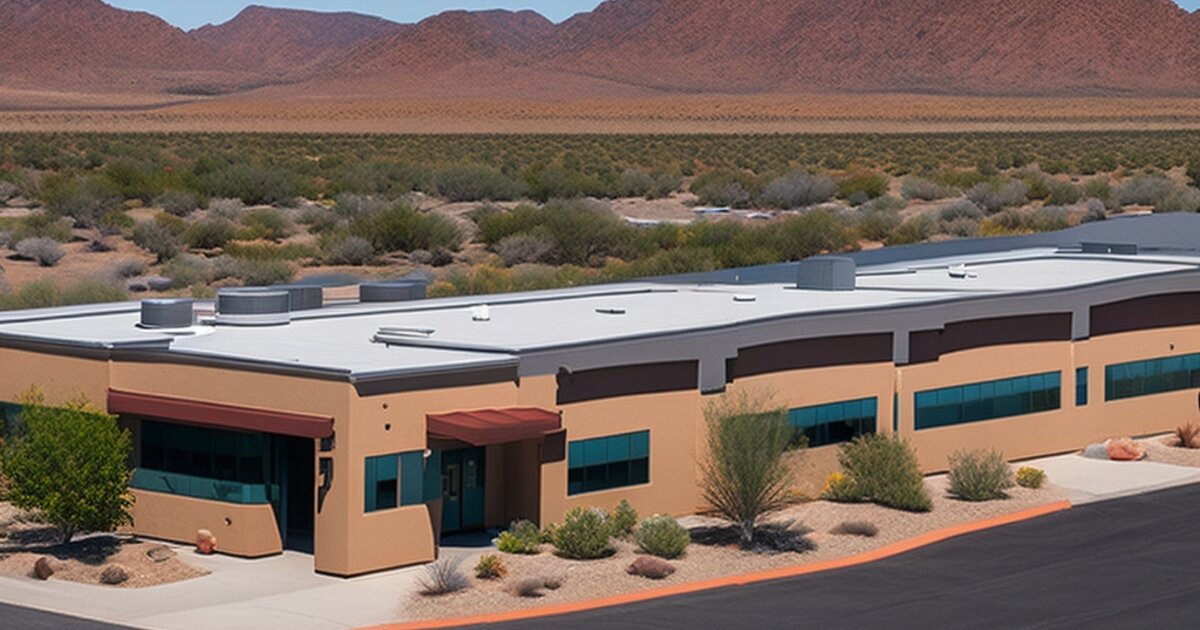
Facility managers overseeing commercial properties in Prescott, Arizona operate in a unique environment that few other Southwest markets can replicate. At 5,300 feet above sea level, Prescott delivers a genuine four-season climate without the punishing extremes that characterize lower-elevation desert cities. This distinctive weather pattern, combined with a substantial government and military presence, creates specialized commercial painting requirements that demand localized expertise and strategic planning. Understanding how Prescott’s altitude, seasonal variation, and institutional infrastructure interact with coating systems can help facility managers extend asset life, maintain compliance, and protect property values across diverse building portfolios.
Quick Answer
Commercial painting in Prescott should prioritize UV-resistant 100% acrylic exterior systems, freeze-thaw-tolerant detailing, and scheduling during April-June or September-November weather windows. Government, healthcare, retirement, and historic district properties also need added documentation, access planning, and substrate-specific specifications that standard Phoenix-area scopes may overlook.
Prescott’s Four-Season Climate and Coating Performance
Unlike Phoenix or Tucson, where blistering summer heat dominates coating degradation, Prescott experiences distinct spring, summer, fall, and winter cycles. Summer highs rarely exceed 92°F, while winter lows dip into the teens, creating a broader temperature range than many Arizona facility managers expect. This four-season pattern produces moderate UV exposure compared to lower desert elevations, but the cumulative freeze-thaw cycles during winter months introduce stress on exterior substrates that pure-heat climates avoid.
The altitude effect intensifies UV radiation by approximately 4-5% per 1,000 feet of elevation gain. At Prescott’s elevation, exterior surfaces receive roughly 20% more UV intensity than equivalent exposures at sea level. This elevated radiation accelerates chalking and fading in conventional alkyd and lower-grade acrylic coatings, particularly on south- and west-facing elevations. Facility managers selecting exterior systems for Prescott properties should prioritize 100% acrylic latex formulations with titanium dioxide loadings above 20% and UV-resistant extender pigments that maintain reflectance through multiple seasonal cycles.
Summer monsoon moisture presents another Prescott-specific consideration. The July through September thunderstorm season delivers intense, short-duration rainfall that tests substrate sealing and caulk integrity. Unlike Phoenix, where moisture evaporates within hours, Prescott’s cooler overnight temperatures can extend drying windows, increasing the risk of water intrusion behind failed sealants. Proper joint detailing and elastomeric coating selection become critical maintenance priorities for commercial exteriors in this market.
Government and Military Facility Painting Requirements
Prescott anchors one of Arizona’s most concentrated government facility corridors. The city hosts the Prescott National Forest headquarters, the Forest Service’s Southwestern Region offices, multiple Veterans Affairs facilities, and Yavapai County administrative buildings. These institutional properties operate under stringent maintenance protocols that prioritize durability, regulatory compliance, and minimal operational disruption over cosmetic speed.
Federal facility managers must navigate procurement requirements including Davis-Bacon wage compliance, environmental impact documentation under NEPA where applicable, and increasingly rigorous low-VOC mandates. The General Services Administration’s growing emphasis on sustainability metrics means coating selections for government buildings in Prescott frequently require zero-VOC or near-zero-VOC formulations that maintain performance in the city’s variable climate. Municipal government building painting projects share many of these compliance frameworks, though federal facilities typically demand additional security clearance and access control protocols that commercial contractors must accommodate.
The military presence extends to nearby installations and training facilities that maintain administrative and support buildings within the Prescott trade area. These properties require coating systems that withstand irregular occupancy patterns—buildings may sit vacant for extended periods then return to intensive use, creating humidity and ventilation challenges that accelerate coating failure if substrates aren’t properly sealed during maintenance cycles.
Historic Downtown and Tourism-Related Properties
Prescott’s Whiskey Row and surrounding historic district represent one of Arizona’s most authentic frontier-era downtown cores. Facility managers overseeing hospitality properties, retail storefronts, and restaurant operations in this district face the dual challenge of maintaining modern commercial functionality while preserving historic character that drives tourism revenue.
The Arizona State Historic Preservation Office maintains review authority over exterior alterations in designated historic districts, including color schemes and coating types. Facility managers planning painting projects in downtown Prescott should engage historic preservation consultants early in the planning process to ensure color palette compliance and substrate-appropriate coating selection. Inappropriate elastomeric or vinyl coatings applied over historic wood siding or original brick can trap moisture and accelerate substrate deterioration—problems that become exponentially more expensive than proper initial specification.
Tourism-dependent properties including hotels near Courthouse Plaza and bed-and-breakfast operations in the historic residential districts experience accelerated interior wear due to high guest turnover. Lobby areas, corridors, and guest room bathrooms typically require repainting cycles of 3-5 years compared to 7-10 years for standard commercial office space. Selecting scrubbable, stain-resistant interior formulations with antimicrobial additives helps extend these cycles while maintaining the aesthetic standards that TripAdvisor and booking platform reviews demand.
For properties eligible for rehabilitation tax credits, historic preservation tax credits commercial painting strategies can offset 20% of qualified improvement costs, provided the work meets Secretary of the Interior Standards. Facility managers should coordinate painting specifications with tax credit consultants before work begins—retroactive compliance is rarely achievable.
Healthcare and Retirement Community Facilities
Prescott’s reputation as a retirement destination has spawned a robust healthcare infrastructure including Yavapai Regional Medical Center, multiple skilled nursing facilities, and assisted living campuses throughout the Quad Cities area. These properties demand infection-control-compliant painting protocols that go far beyond standard commercial preparation and application.
Healthcare facility painting requires contractor teams trained in ICRA (Infection Control Risk Assessment) protocols, including containment barriers, negative-pressure workspaces, and HEPA filtration during surface preparation. The Joint Commission’s environment of care standards apply to all accredited facilities, meaning facility managers must document coating selections for slip resistance, cleanability, and off-gassing characteristics. Healthcare facility painting in Prescott carries the additional complexity of coordinating around Arizona’s snowbird season, when patient census peaks and construction disruption tolerance drops to annual lows.
Retirement community properties present their own coating challenges. Independent living apartment complexes and continuing care retirement communities manage thousands of interior units with staggered turnover. Painting contractors serving these portfolios must demonstrate capacity for rapid unit turns—often 48-72 hours between residents—while delivering consistent color matching and finish quality across hundreds of identical floor plans. Pre-established standard color palettes and bulk material purchasing agreements help control costs and minimize downtime during these transition periods.
Seasonal Scheduling Advantages for Prescott Projects
Prescott’s moderate climate creates one of the most flexible exterior painting windows in the Southwest. While Phoenix contractors battle 115°F summer temperatures that force night-shift scheduling and accelerated curing issues, Prescott maintains workable exterior conditions from April through October, with many years offering additional November windows before sustained freezing arrives.
This extended season allows facility managers to phase large portfolio projects without the compressed urgency that lower-elevation markets demand. A multi-building office park or retail center can be completed in sequential phases across an entire summer rather than cramming work into six-week windows between heat waves. The scheduling flexibility also supports better contractor availability and competitive pricing, as crews aren’t competing for identical high-season slots.
Interior projects benefit from Prescott’s mild summers, which reduce HVAC loading during occupied renovations. Unlike Phoenix, where summer interior painting without air conditioning creates unbearable working conditions and VOC concentration spikes, Prescott’s natural ventilation options and moderate temperatures allow occupied interior work with standard respiratory protection rather than forced-air systems.
Winter interior projects remain viable with standard precautions, though exterior work generally suspends from December through February when overnight lows consistently drop below freezing. Facility managers should plan exterior maintenance painting for the April-June or September-November shoulders, reserving January-March for interior common area refreshes and unit turns.
Coating Selection for Altitude and Seasonal Variation
The interplay between Prescott’s altitude, UV intensity, and temperature variation demands thoughtful coating specification across substrate types. Exterior wood trim and siding, common in Prescott’s historic and mountain-style architecture, requires penetrating oil-modified stains or high-build acrylic systems that flex through seasonal expansion and contraction without cracking.
Stucco and EIFS surfaces, increasingly common in newer commercial construction, perform well with breathable elastomeric coatings that bridge hairline cracking while allowing moisture vapor transmission. The cooler Prescott summers reduce the thermal shock that degrades elastomeric systems in Phoenix, potentially extending service life by 2-3 years compared to lower-elevation equivalents.
Metal roofing and cladding on commercial and institutional buildings requires direct-to-metal primers with zinc phosphate or newer silane-modified chemistry that maintains adhesion through freeze-thaw cycling. Standard alkyd primers adequate for Phoenix applications often fail prematurely in Prescott’s winter conditions, leading to flaking and rust bloom that compromise topcoat performance.
Floor coatings in commercial kitchens, healthcare facilities, and light industrial spaces must accommodate Prescott’s wider temperature swings during application and cure. Epoxy systems applied in unconditioned spaces during spring or fall may experience cure inhibition if overnight temperatures drop below manufacturer specifications. Polyaspartic and fast-cure polyurethane alternatives offer wider temperature application windows and return-to-service advantages that justify their higher material costs for time-sensitive projects.
Prescott Coating Selection Priorities
| Facility condition | Primary coating priority | Why it matters in Prescott |
|---|---|---|
| South- and west-facing exteriors | UV-stable 100% acrylic or elastomeric system | High elevation increases UV exposure and accelerates chalking |
| Historic wood or masonry | Breathable, substrate-compatible coating | Trapped moisture can damage original materials during freeze-thaw cycles |
| Healthcare and senior living interiors | Low-odor, scrubbable, infection-control-compatible finishes | Occupied work requires cleanability with minimal disruption |
| Metal roofs, trim, and cladding | Corrosion-resistant primer with freeze-thaw adhesion | Winter temperature swings can expose weak primer bonds |
| Kitchen and service floors | Fast-cure epoxy, polyurethane, or polyaspartic system | Overnight temperature drops can affect cure and return-to-service timing |
Cost Considerations and Contractor Selection
Commercial painting costs in Prescott generally track 10-15% below Phoenix metro pricing due to lower labor rates and reduced environmental stressors that simplify application. However, specialized requirements for government compliance, historic preservation, and healthcare infection control can offset these savings through additional documentation, containment, and inspection protocols. Commercial painting cost analysis for Prescott projects should account for these specialized requirements rather than applying standard commercial square-footage pricing without adjustment.
Contractor selection criteria should emphasize demonstrated experience with federal and institutional procurement processes, historic preservation compliance, and healthcare ICRA protocols. General commercial painters without this specialized background may deliver competitive bids that underestimate compliance complexity, leading to change orders and schedule delays once project constraints become apparent.
Frequently Asked Questions
What is the best season for exterior commercial painting in Prescott?
April through June and September through November are usually the best windows because daytime temperatures are moderate and sustained freezing is less likely. Winter exterior work should be limited unless the coating manufacturer allows the expected surface temperatures.
Does Prescott’s mild climate reduce coating requirements?
Not necessarily. Prescott avoids the worst low-desert heat, but its elevation increases UV exposure and its winter freeze-thaw cycles require better sealant, primer, and crack-bridging details.
Do government and healthcare facilities need different painting specifications?
Yes. Government work often requires procurement, wage, access, and environmental documentation, while healthcare and senior living projects typically need ICRA planning, low-odor materials, and strict occupied-space scheduling.
Related Reading
- Flagstaff Commercial Painting: High Altitude UV and Freeze-Thaw Challenges — Explore how northern Arizona’s higher elevation creates even more extreme coating challenges than Prescott’s moderate altitude.
- Phoenix Commercial Painting Guide — Compare Prescott’s mild four-season climate against the intense heat and monsoon demands of Arizona’s largest market.
- Municipal Government Building Painting — Understand the compliance and procurement frameworks that govern public facility maintenance painting across the Southwest.
- Healthcare Facility Painting — Deep dive into infection control protocols and coating specifications for medical environments.
- Historic Preservation Tax Credits Commercial Painting — Learn how federal tax incentives can offset rehabilitation costs for qualifying historic properties.
Facility Manager Checklist
- Assess current exterior coating condition on all elevations, prioritizing south- and west-facing walls that receive maximum UV exposure at Prescott’s 5,300-foot elevation
- Verify contractor compliance capability for federal Davis-Bacon, NEPA, and security clearance requirements before soliciting bids for government-adjacent properties
- Coordinate with historic preservation authorities for any exterior work in designated historic districts to ensure color and material compliance
- Schedule exterior painting phases during April-June or September-November windows to avoid freeze-thaw curing complications and maximize crew availability
- Specify altitude-appropriate coatings with enhanced UV resistance (100% acrylic, high TiO2 loading) for all exterior substrates exposed to intensified high-elevation radiation
- Require ICRA training documentation from painting contractors bidding healthcare or senior living facility projects, including containment and negative-pressure protocols
- Document coating selections and application conditions for warranty compliance and to support future maintenance planning across Prescott’s four-season climate cycles
Moorhouse Coating provides commercial and industrial painting services throughout Arizona, including Prescott, Phoenix, Flagstaff, and surrounding markets. Contact our estimating team for facility-specific coating assessments and maintenance program development.
Frequently Asked Questions
What is the best season for exterior commercial painting in Prescott?
April through June and September through November are usually the best windows because daytime temperatures are moderate and sustained freezing is less likely. Winter exterior work should be limited unless the coating manufacturer allows the expected surface temperatures.
Does Prescott's mild climate reduce coating requirements?
Not necessarily. Prescott avoids the worst low desert heat, but its elevation increases UV exposure and its winter freeze thaw cycles require better sealant, primer, and crack bridging details.
Do government and healthcare facilities need different painting specifications?
Yes. Government work often requires procurement, wage, access, and environmental documentation, while healthcare and senior living projects typically need ICRA planning, low odor materials, and strict occupied space scheduling.