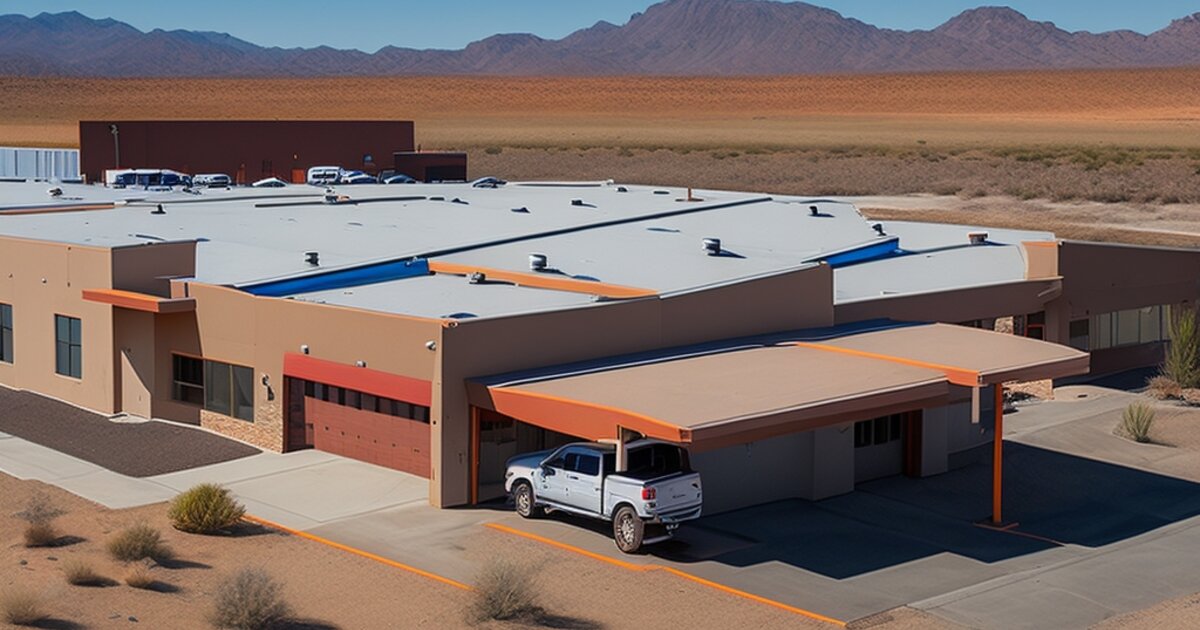
Facility managers operating in Yuma, Arizona face environmental conditions unmatched anywhere else in the United States. As the hottest city in the nation by average annual temperature, Yuma regularly sees summer highs exceeding 115°F, ground-level UV exposure that degrades standard coatings in a fraction of their rated service life, and an agricultural economy that generates corrosive dust, humidity spikes from irrigation, and around-the-clock operational demands. For facility managers overseeing warehouses, cold storage facilities, retail centers, and food processing plants along the Yuma agricultural corridor, commercial painting is not a routine maintenance task—it is a specialized engineering decision that directly impacts asset longevity, energy costs, and operational continuity.
This guide examines how Yuma’s unique combination of extreme desert heat and agricultural industry density shapes coating selection, application scheduling, and long-term performance for commercial facilities in Southwest Arizona.
Quick Answer
Yuma commercial painting requires UV-stable, heat-tolerant coating systems, strict substrate temperature monitoring, and scheduling outside the May-through-September heat blackout whenever possible. Agricultural facilities also need coatings that tolerate washdowns, cold storage thermal shock, harvest-season operations, and dust from the surrounding production corridor.
Yuma Painting Season Calendar
America’s Hottest City: Understanding Yuma’s Climate Burden
Yuma holds the distinction of being the hottest city in the United States by average annual temperature, with daily highs exceeding 100°F for approximately 116 days each year. Summer temperatures routinely reach 110°F to 115°F, and the record stands at 124°F. What separates Yuma from other Southwest desert cities is not just the peak temperature but the persistence of extreme heat. While Phoenix experiences intense summer highs, Yuma’s location in the Sonoran Desert at near sea level, combined with minimal cloud cover and persistent high pressure, creates a thermal environment that stresses building materials continuously from May through September.
For facility managers, this thermal burden translates directly into coating performance challenges. Substrate temperatures on south- and west-facing walls, metal roofing, and concrete surfaces can exceed 140°F during peak afternoon hours. Standard acrylic coatings applied under these conditions experience accelerated solvent flash-off, poor leveling, and inadequate film formation. The result is a rough, porous finish with diminished adhesion and reduced service life. In Yuma, we routinely see standard exterior coatings fail within two to three years on high-exposure surfaces—less than half their expected lifespan in moderate climates.
Ultraviolet radiation compounds the thermal stress. Yuma receives more than 4,000 hours of bright sunshine annually, the highest in the nation. At this latitude and elevation, UV intensity reaches extreme levels during summer months, photodegrading the polymer binders in paint films and causing rapid color fade, chalking, and surface embrittlement. Dark-colored coatings are particularly vulnerable; a deep red or navy accent wall on a retail facility can show noticeable fade within a single Yuma summer.
Agricultural Facility Painting: Processing Plants, Cold Storage, and Warehouses
Yuma’s economy is built on agriculture. The region produces more than 90 percent of the nation’s leafy greens during winter months, and the surrounding Imperial and Yuma Valleys host extensive networks of vegetable processing plants, cold storage warehouses, packing facilities, and distribution centers. These agricultural facilities create coating challenges distinct from standard commercial or industrial applications.
Food processing plants in Yuma operate under strict sanitation protocols requiring daily chemical washdowns with chlorinated cleaners, hot water rinses, and periodic acid-based disinfectants. Floor coatings in these facilities must resist thermal shock when 180°F washdown water contacts surfaces that may have cooled to 60°F overnight, as well as chemical attack from sanitizers and organic acids. Urethane cement systems are the standard specification for these environments because their thermal expansion coefficient matches concrete and their porous structure accommodates rapid temperature changes without delamination. Wall coatings must be smooth, non-absorbent, and continuous from floor to ceiling, with coved bases that eliminate the seam where floor meets wall—a critical harborage point for bacteria and a common failure zone.
Cold storage facilities present an even more extreme challenge. Yuma’s agricultural corridor requires massive refrigerated capacity to maintain the cold chain from field to distribution. These facilities cycle between ambient desert temperatures and sub-zero conditions repeatedly, creating thermal shock conditions that standard coatings cannot survive. Additionally, the temperature differential between Yuma’s extreme exterior heat and freezer interiors as low as -10°F creates condensation risks on exterior envelopes and thermal bridging through wall assemblies. For cold storage exterior painting, we specify thermal-shock-resistant coatings with high flexibility ratings and low permeability to prevent moisture vapor drive. Interior coatings must be formulated for sub-zero application and capable of bridging hairline cracks that develop from continuous thermal cycling.
Warehouses and distribution centers in the agricultural corridor face a different set of stressors. Dust from field operations, including gypsum soil fines and harvest debris, creates abrasive conditions on floor coatings. Forklift traffic moving palletized produce operates continuously during harvest season, limiting maintenance windows. Exterior walls accumulate organic dust that holds moisture against the substrate, promoting mildew and algae growth even in Yuma’s arid climate. Exterior coatings for these facilities require mildewcide additives and a surface texture that sheds dust rather than trapping it.
Retail and Commercial Corridor Painting
Yuma’s retail and commercial corridors along 4th Avenue, Pacific Avenue, and the Foothills area serve both the local agricultural workforce and seasonal tourism traffic. These facilities—strip malls, big-box retailers, restaurants, and service centers—require exterior coatings that maintain curb appeal under relentless UV exposure while managing cooling costs for tenant spaces.
Reflective or cool roof coatings are particularly valuable in Yuma’s commercial sector. A white elastomeric roof coating can reduce surface temperatures by 50°F to 70°F compared to a dark conventional roof, directly lowering HVAC loads and extending the life of the underlying roofing membrane. For retail facilities with flat roofs, cool roof coating application offers a rapid return on investment through reduced energy consumption, particularly during Yuma’s six-month cooling season.
Exterior wall coatings for retail facilities must balance aesthetic requirements with thermal performance. Light-colored, highly reflective coatings reduce wall surface temperatures and minimize thermal expansion stress on stucco and EIFS finishes. Elastomeric coatings on stucco provide crack-bridging capability that accommodates the thermal movement these substrates experience during Yuma’s extreme daily temperature swings. For facilities with metal panel siding, direct-to-metal acrylics with UV-stable topcoats prevent the chalking and gloss loss that quickly degrade a retail property’s appearance.
Seasonal Scheduling: Finding the Application Window
Yuma’s climate leaves a narrow window for optimal exterior coating application. January through March and November through mid-December offer the best conditions, with daytime highs in the 65°F to 85°F range, low humidity, and minimal rainfall. During these months, coatings cure predictably, crews can work full days, and substrate temperatures remain within manufacturer specifications.
April and October represent marginal months. Daytime temperatures can reach the low 90s, which is workable with early start times, but afternoon heat may force crews to stop by early afternoon. These months are viable for interior work and shaded exteriors but require careful substrate temperature monitoring.
May through September is the blackout period for most exterior work. Substrate temperatures routinely exceed 120°F by mid-morning, well above the 110°F to 120°F application limits specified by most coating manufacturers. Crew safety becomes a primary concern, with heat exhaustion and heat stroke risks limiting productive hours even for willing teams. When exterior work is unavoidable during summer months—typically for emergency repairs or tenant improvements with hard deadlines—we shift to nighttime application. Night painting in Yuma presents its own challenges, including dew point issues in the hours before dawn and reduced visibility for quality control, but it remains the only viable option for certain summer projects.
Interior painting is feasible year-round, though agricultural facilities during harvest season present scheduling conflicts. From November through March, Yuma’s vegetable processing and packing operations run at maximum capacity, making facility shutdowns for maintenance painting difficult to schedule. Planning coating projects during the agricultural off-season, typically July through September, allows better access to processing areas but requires coordination with the summer heat blackout for any exterior work.
Coating Selection for Extreme UV and Heat
Specifying coatings for Yuma requires looking beyond standard desert-grade labels and selecting products formulated for the most extreme thermal and UV conditions in the United States.
Yuma Coating Decision Guide
| Facility condition | Recommended coating approach | Why it matters in Yuma |
|---|---|---|
| Stucco or masonry exterior | High-build elastomeric with UV-stable pigments | Bridges thermal cracks while resisting intense sun exposure. |
| Metal panel building | Rust-inhibitive primer with urethane-acrylic or fluoropolymer topcoat | Handles daily expansion cycles and slows chalking, fade, and corrosion. |
| Flat commercial roof | Reflective silicone roof coating where compatible | Reduces roof temperature and resists long-duration UV exposure. |
| Food processing floor | Urethane cement or chemical-resistant resinous flooring | Withstands washdowns, sanitizers, forklifts, and thermal shock. |
| Cold storage wall or ceiling | Thermal-shock-resistant epoxy or polyurethane system | Protects against condensation, cracking, and sub-zero cycling. |
For stucco and masonry exteriors, high-build elastomeric coatings with titanium-dioxide-rich bases and UV-stable colorants are essential. We specify minimum dry film thickness of 12 to 16 mils to achieve the crack-bridging and waterproofing performance these coatings are designed to deliver. Breathability remains critical; Yuma’s irrigation-driven humidity and occasional monsoon moisture require that wall coatings allow vapor transmission while blocking liquid water.
Metal substrates in Yuma demand direct-to-metal acrylics or urethane-acrylic hybrids with rust-inhibitive primers. The thermal expansion of metal panels during Yuma’s daily temperature swings—surface temperatures can swing from 90°F at dawn to 140°F by mid-afternoon—requires coatings with excellent flexibility and elongation properties. UV-stable topcoats prevent the gloss loss and color fade that quickly degrade metal building aesthetics.
For roof coatings, silicone systems outperform acrylics in Yuma’s extreme heat. Silicone maintains flexibility at high temperatures and resists UV degradation better than acrylic alternatives. While silicone is not suitable for all roof types, it is the preferred specification for flat commercial roofs in Yuma that receive direct sun exposure for ten or more hours daily.
We avoid standard oil-based alkyd paints on any exterior surface in Yuma. These coatings become brittle under intense UV exposure and cannot accommodate the thermal movement that buildings experience in this climate. Similarly, low-grade vinyl acrylics are inadequate for commercial applications; their binder systems degrade too rapidly under Yuma’s UV load.
Case Study: Cold Storage Expansion in the Yuma Agricultural Corridor
A regional produce distributor operating a 120,000-square-foot cold storage and distribution facility near Yuma International Airport faced a critical coating failure during the summer of 2024. The facility’s exterior metal panel siding, originally painted with a standard acrylic system five years prior, showed widespread chalking, rust bleed-through at panel seams, and coating delamination on west-facing walls. Interior freezer walls exhibited cracking and spalling in the protective coating, risking food safety compliance issues.
The facility manager needed a solution that could be executed during the narrow fall application window while accommodating 24/7 refrigerated operations. Our assessment identified three root causes: inadequate UV resistance in the original exterior coating, insufficient film thickness on metal panel seams, and a rigid interior coating system that could not handle the thermal differential between the -5°F freezer interior and 95°F exterior ambient during Yuma’s fall shoulder season.
The remediation plan specified a urethane-acrylic hybrid exterior system with a rust-inhibitive epoxy primer and a UV-stable fluoropolymer topcoat for the metal panels. Seams and fasteners received additional attention with elastomeric seam sealant and an extra coat at critical points. For the interior freezer walls, we removed the failed coating system and applied a specialized cold-temperature epoxy formulated for application and cure at sub-zero conditions, with a flexible polyurethane topcoat to handle thermal shock.
Work was executed over six weeks in October and November, with exterior crews starting at 5:00 a.m. to complete metal panel work before substrate temperatures exceeded 100°F. Interior work was sequenced around operational requirements, with one freezer section taken offline at a time while products were transferred to temporary refrigerated trailers. The project was completed before the winter vegetable harvest rush, and the facility manager reported a measurable reduction in exterior wall surface temperatures and improved freezer temperature stability after the new coating system was in place.
Facility Manager Checklist
Before initiating a commercial coating project in Yuma’s extreme desert environment, facility managers should verify the following:
- Specify UV-Stable, High-Performance Formulations: Require 100-percent acrylic or fluoropolymer coatings with titanium-dioxide-rich bases and UV-stable colorants rated for extreme UV Index 11+ conditions.
- Monitor Substrate Temperature Rigorously: Use infrared thermometers to check surface temperatures on metal, dark stucco, and direct-sun exposures, keeping application below 110°F to 120°F manufacturer limits.
- Schedule Within Climate Windows: Plan exterior painting for January through March or November through mid-December; reserve May through September for interior work or emergency nighttime repairs only.
- Select Agricultural-Appropriate Interior Systems: For processing and cold storage facilities, specify urethane cement floors, thermal-shock-resistant wall coatings, and sub-zero-rated epoxy systems that handle daily washdowns and temperature cycling.
- Account for Irrigation Humidity: Even in arid Yuma, agricultural irrigation creates localized humidity spikes; specify breathable exterior coatings and address moisture vapor drive in cold storage envelopes.
- Plan Around Harvest Season Operations: Schedule maintenance painting in agricultural facilities during the July through September off-season, while coordinating exterior work with the summer heat blackout period.
- Require Extended UV Warranties: Given Yuma’s extreme conditions, negotiate coating warranties that specifically cover UV degradation and thermal cycling performance, not just generic material defects.
Frequently Asked Questions
When is the best time to paint commercial exteriors in Yuma?
January through March and November through mid-December are the most reliable exterior painting windows. April and October can work with early starts and substrate temperature checks, while May through September should generally be avoided for exterior work.
What coating performs best on Yuma commercial roofs?
Reflective silicone roof coatings are often the best fit for flat commercial roofs that receive long daily sun exposure, provided the existing roof assembly is compatible. They reduce surface temperature and resist UV degradation better than many acrylic alternatives.
Why are agricultural facilities harder to paint than standard commercial buildings?
Agricultural facilities combine chemical washdowns, organic dust, forklifts, cold storage cycling, food safety requirements, and limited shutdown windows. Coating systems must be selected for those operational stresses, not just appearance.
Related Reading
- Phoenix Commercial Painting | Climate Guide
- Tucson Commercial Painting: Climate and Coating Considerations
- Agricultural Facility Painting: Protecting Silos, Processing Plants, and Equipment in the Southwest
- Cold Storage Coatings for Thermal Shock
- Cool Roof Coating Application
- Commercial Painting Costs: Budget Drivers and Cost-Reduction Strategies
If you manage a commercial, agricultural, or industrial facility in Yuma or the surrounding Imperial Valley, contact Moorhouse Coating for a site-specific coating assessment and project plan designed for America’s hottest city.
Frequently Asked Questions
When is the best time to paint commercial exteriors in Yuma?
January through March and November through mid December are the most reliable exterior painting windows. April and October can work with early starts and substrate temperature checks, while May through September should generally be avoided for exterior work.
What coating performs best on Yuma commercial roofs?
Reflective silicone roof coatings are often the best fit for flat commercial roofs that receive long daily sun exposure, provided the existing roof assembly is compatible. They reduce surface temperature and resist UV degradation better than many acrylic alternatives.
Why are agricultural facilities harder to paint than standard commercial buildings?
Agricultural facilities combine chemical washdowns, organic dust, forklifts, cold storage cycling, food safety requirements, and limited shutdown windows. Coating systems must be selected for those operational stresses, not just appearance.