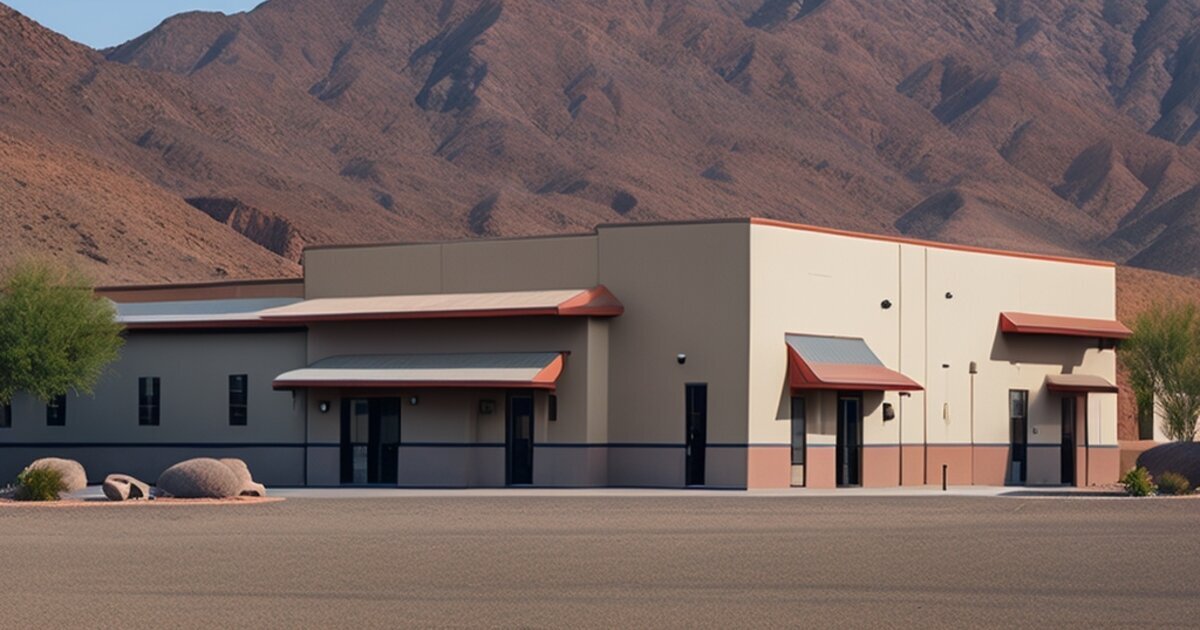
El Paso sits at the westernmost tip of Texas, where the Chihuahuan Desert meets the Rio Grande and the U.S.-Mexico border. For facility managers overseeing warehouses, manufacturing plants, logistics hubs, and retail centers in this region, commercial painting is not a cosmetic decision—it is asset protection under some of the most demanding conditions in the continental United States.
The border city’s unique position creates a layered challenge profile. Industrial facilities here contend with intense UV radiation, abrasive dust storms, freeze-thaw winter cycles, and the operational demands of cross-border commerce. Unlike other Southwest markets, El Paso’s economy is tightly linked to manufacturing and logistics, which means coating failures can directly disrupt production schedules and customs operations. Working with an El Paso commercial painting contractor who understands border logistics and Chihuahuan Desert conditions is essential for protecting production and customs operations.
This guide examines how El Paso’s border location and desert climate shape commercial coating strategy for facility managers.
Quick Answer
Commercial painting in El Paso must protect against Chihuahuan Desert UV, abrasive dust storms, freeze-thaw cycling, and the operational demands of border logistics and manufacturing. Facility managers should favor UV-stable elastomerics for stucco and concrete, durable epoxy or urethane cement systems for industrial floors, phased schedules that keep loading, customs, and production areas operational, and an El Paso commercial painting contractor with border logistics and industrial coating experience.
Key Takeaways
| El Paso Condition | Coating Response |
|---|---|
| Dust storms | Specify abrasion-resistant exterior films and inspect after spring wind events. |
| High UV | Use color-retentive, UV-stable systems and lighter colors where possible. |
| Freeze-thaw | Seal cracks and use flexible coatings on stucco, EIFS, concrete, and masonry. |
| Border logistics | Phase work around docks, inspection lanes, security zones, and customs throughput. |
El Paso Climate Stress Chain
Chihuahuan Desert Climate Challenges
El Paso lies deep within the Chihuahuan Desert, the largest desert in North America. The climate here differs meaningfully from the Sonoran Desert conditions found in Phoenix and the high-altitude desert of Albuquerque. Facility managers must account for three primary stress factors.
Dust and blowing sand. El Paso experiences frequent dust storms, particularly in spring when sustained winds carry fine particulate across the desert basin. These particles abrade exposed coating surfaces, accelerate chalking, and infiltrate unsealed substrate cracks. Dust accumulation on horizontal surfaces like roof parapets and canopies retains moisture and creates localized corrosion cells on metal substrates.
High UV exposure. With more than 300 days of sunshine annually and clear atmospheric conditions, UV intensity in El Paso is severe. Unprotected coatings chalk and fade within three to five years. Dark colors absorb more thermal energy, creating wider daily temperature differentials that stress film adhesion.
Freeze-thaw cycling. Winter nights in El Paso routinely drop below freezing, while daytime highs climb into the 50s and 60s. This repeated cycling causes dimensional changes in stucco, concrete, and masonry. Water that penetrates substrate cracks expands on freeze, loosening coatings from below. For a deeper look at managing thermal cycling damage, see our guide to commercial stucco repair and recoating in the Desert Southwest.
Industrial and Manufacturing Focus
El Paso’s economy is anchored by manufacturing, electronics assembly, and the maquiladora corridor that links U.S. facilities with Mexican production partners. Industrial buildings here require coatings that protect against more than weather—they must withstand chemical exposure, washdown protocols, and heavy traffic.
Warehouse and distribution centers. Floor coatings in El Paso warehouses see forklift traffic, pallet abrasion, and occasional chemical spills from manufacturing inputs. Epoxy and polyurethane cement systems provide the impact resistance and cleanability these facilities need. Joint treatments are critical; thermal expansion from El Paso’s wide temperature swings causes slab movement that cracks rigid floor films.
Electronics and clean manufacturing. Facilities producing medical devices, semiconductors, or aerospace components require controlled environments. Wall and ceiling coatings must be low-VOC, non-particulating, and compatible with cleanroom protocols. Antimicrobial additives are increasingly specified in food-contact and pharmaceutical support areas.
Exterior metal structures. Pre-engineered metal buildings and steel process equipment face a combination of UV degradation, dust abrasion, and occasional moisture. Zinc-rich primers with polyurethane topcoats provide the barrier protection and flexibility needed for desert industrial conditions.
Border Crossing and Logistics Facility Requirements
The El Paso-Ciudad Juárez metro area is one of the busiest land border crossings in the Western Hemisphere. Customs facilities, cold storage warehouses, cross-dock terminals, and trucking yards operate under constant pressure to maintain throughput.
Coating schedules must align with customs operations. Facilities near Bridge of the Americas, Ysleta-Zaragoza, or Stanton Street cannot tolerate scaffolding or containment systems that obstruct loading zones or inspection lanes. Phased painting schedules that isolate work to specific bays or exterior zones while maintaining operational flow are standard requirements.
Cold storage and refrigerated warehouses. El Paso serves as a distribution hub for produce, meat, and dairy moving between Mexico and U.S. markets. Cold storage exterior coatings must accommodate thermal shock when ambient desert heat meets refrigerated wall panels. Insulated metal panel coatings require flexible formulations that bridge panel seams without cracking.
Security and visibility concerns. Border logistics facilities prioritize perimeter visibility and signage legibility. Faded exterior coatings reduce reflectivity of safety markings and obscure security camera sightlines. High-durability coatings with long color retention reduce the frequency of exterior maintenance cycles that require temporary security adjustments.
Coating Systems for El Paso’s Specific Conditions
Selecting coatings for El Paso requires balancing UV resistance, thermal flexibility, dust tolerance, and industrial durability. For a comprehensive framework on product selection, refer to our coating selection guide.
Exterior walls. Elastomeric acrylic coatings at 12 to 16 dry mils provide crack bridging, UV resistance, and dirt shedding for stucco and concrete substrates. These systems accommodate thermal expansion and seal hairline cracks that dust and moisture exploit. On EIFS assemblies, breathable elastomerics prevent moisture trapping while reflecting solar heat.
Metal roofs and wall panels. Standing seam and R-panel metal roofs benefit from silicone-modified polyester (SMP) or PVDF resin systems with high solar reflectance. Cool roof coatings reduce thermal cycling stress and lower interior cooling loads during El Paso’s 100°F summer peaks. Cut edges and fastener heads require touch-up with compatible primers to prevent rust bloom.
Industrial floors. For manufacturing and warehouse floors, a 10 to 20 mil epoxy build coat with a polyurethane topcoat provides chemical resistance and abrasion protection. Where thermal shock is present—such as near loading docks or cold storage entries—urethane cement systems withstand the temperature differentials better than standard epoxy.
Concrete protection. Penetrating silane-siloxane sealers protect concrete from dust infiltration and moisture absorption without changing surface appearance. These treatments are particularly valuable for tilt-wall warehouses and exterior concrete pads that experience freeze-thaw cycling.
For detailed budgeting guidance on these systems, see our breakdown of commercial painting costs.
Choosing an El Paso Commercial Painting Contractor
A qualified El Paso commercial painting contractor should understand Chihuahuan Desert UV, dust storm mitigation, freeze-thaw cycling, and the phasing constraints of border logistics, manufacturing, and cold storage facilities. Ask for references from maquiladora corridor and cross-dock projects.
Facility Manager Checklist
- Specify UV-stable coatings rated for desert exposure with documented color retention data.
- Inspect after dust season. Check for abrasive wear, sealant cracking, and coating chalking each spring.
- Use elastomeric systems on stucco, EIFS, and concrete to bridge cracks and accommodate thermal movement.
- Monitor substrate temperature during application, not just ambient air temperature, especially on south-facing walls.
- Seal concrete and masonry with penetrating treatments to reduce dust infiltration and freeze-thaw damage.
- Plan phased schedules for border logistics facilities to avoid disrupting customs and loading operations.
- Verify floor coating flexibility in warehouses where slab movement from thermal cycling is expected.
- Request high-solids epoxy or urethane cement for industrial floors subject to chemical exposure or thermal shock.
- Confirm VOC compliance with Texas Commission on Environmental Quality (TCEQ) standards for all specified products.
- Document coating conditions annually to support warranty claims and plan maintenance budgets.
- Select an El Paso Commercial Painting Contractor: Confirm desert UV, dust storm, freeze-thaw, and border logistics experience with documented references.
Frequently Asked Questions
What makes commercial painting in El Paso different from other Southwest markets?
El Paso combines desert UV and dust with winter freeze-thaw cycles and heavy border logistics activity. Coating plans must address both environmental exposure and operational constraints around manufacturing, cross-dock, cold storage, and customs-related facilities.
Which coating systems work best for El Paso stucco and masonry?
Elastomeric acrylic systems are often the best fit for stucco, EIFS, and concrete because they bridge hairline cracks, resist UV, and tolerate daily thermal movement. Penetrating silane-siloxane sealers are useful for concrete and masonry where moisture absorption and freeze-thaw damage are concerns.
How should facilities schedule painting around border logistics operations?
Work should be phased by bay, elevation, or traffic zone so loading docks, inspection areas, truck circulation, and security sightlines remain available. Night or weekend work may be necessary where downtime would disrupt customs throughput or production schedules.
Related Reading
- Phoenix Commercial Painting Guide
- Albuquerque Commercial Painting
- Commercial Stucco Repair and Recoating in the Desert Southwest
- Yuma Commercial Painting
- El Paso Commercial Painting Contractor
Conclusion
El Paso’s position as a border industrial hub creates commercial painting challenges that standard desert strategies alone cannot address. The combination of Chihuahuan Desert UV, dust abrasion, freeze-thaw cycling, and round-the-clock logistics operations demands coating systems selected for multi-stress performance.
Facility managers who account for these factors during specification and scheduling protect not only building envelopes but also operational continuity. The right coating system extends maintenance intervals, reduces energy costs through reflective technologies, and prevents the premature failures that disrupt manufacturing and cross-border commerce.
For commercial painting expertise tailored to El Paso’s border climate and industrial environment, contact Moorhouse Coating.
Frequently Asked Questions
What makes commercial painting in El Paso different from other Southwest markets?
El Paso combines desert UV and dust with winter freeze thaw cycles and heavy border logistics activity. Coating plans must address both environmental exposure and operational constraints around manufacturing, cross dock, cold storage, and customs related facilities.
Which coating systems work best for El Paso stucco and masonry?
Elastomeric acrylic systems are often the best fit for stucco, EIFS, and concrete because they bridge hairline cracks, resist UV, and tolerate daily thermal movement. Penetrating silane siloxane sealers are useful for concrete and masonry where moisture absorption and freeze thaw damage are concerns.
How should facilities schedule painting around border logistics operations?
Work should be phased by bay, elevation, or traffic zone so loading docks, inspection areas, truck circulation, and security sightlines remain available. Night or weekend work may be necessary where downtime would disrupt customs throughput or production schedules.