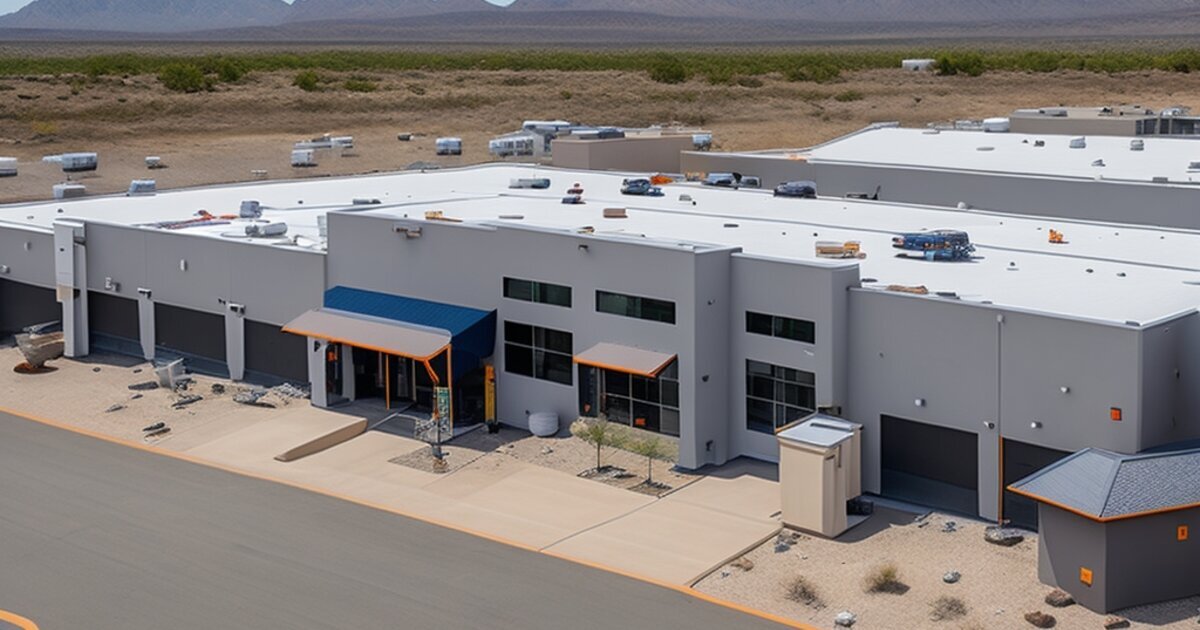
Las Vegas is one of the most challenging commercial painting environments in the Southwest. Extreme heat, abrasive dust, and an active hospitality and entertainment schedule can all interfere with coating performance if planning is not operationally precise.
This guide is for facility managers, property directors, and venue teams managing exposed assets in Las Vegas, Arizona borderlands, and similar desert markets with similar exposure and scheduling complexity. Working with a Las Vegas commercial painting contractor who understands desert heat, dust containment, and entertainment venue scheduling is essential for protecting coating quality.
Quick Answer
Las Vegas commercial painting succeeds when the project plan controls substrate temperature, airborne dust, and venue scheduling before coating begins. Facility managers should require hourly environmental monitoring, dust containment, event-calendar phasing, UV-stable coating systems, pause triggers for heat spikes, dust surges, or operational changes, and a Las Vegas commercial painting contractor with proven local venue experience.
Quick Answer
Las Vegas commercial painting works best when the project plan treats heat, dust, and venue operations as equal constraints. Facility teams should measure substrate temperatures, control dust before and during coating, and phase work around event calendars with formal daily handoffs. For adjacent hospitality conditions, see Hotel and Resort Commercial Painting in the Desert Southwest.
Key Concepts
What Makes Las Vegas Different
Coating work in Las Vegas must solve three realities at once.
- Heat is continuous: Elevated surface temperatures and high solar load can invalidate standard application timing windows.
- Dust is persistent: Dry conditions generate ongoing particulate loading on freshly prepared and painted surfaces.
- Operational windows are compressed: Venues, hotels, retail, and mixed-use facilities often need rapid closeout around live events and guest cycles.
The result is a project model where execution discipline matters as much as coating quality.
Desert Heat: Environmentally Correct Scheduling
Desert heat is not only hot ambient temperature; it is heat transfer and thermal cycling across exposed surfaces.
Substrate Temperature Is the Real Constraint
Do not use air temperature alone. Measure substrate temperature and plan around that.
- Exterior concrete and metal substrates can run far hotter than ambient.
- South- and west-facing facades can spike sharply during afternoon sun.
- Thermal expansion creates micro-movement that increases edge stress and reduces first-pass film uniformity.
For high-exposure facades, schedule application with a hard stop if substrate temperature exceeds your material’s approved range.
Practical Temperature Management Rules
Use practical thresholds based on product data and local conditions.
- Avoid direct sun on exposed wet film unless the product data supports it.
- Use temporary solar shielding where feasible for critical sections.
- Stagger starts to prioritize lower-exposure orientations first.
- Track ambient temperature, substrate temperature, humidity, and wind every hour during active windows.
If thresholds are violated, do not continue simply to protect schedule.
Dust Management Is Not Optional
Las Vegas dust is fine, fast, and mobile. Even short exposure windows can cause visible contamination.
Pre-Event Source Control
Before application:
- Confirm adjacent grading and site traffic routes are minimizing stirred-up dust.
- Use controlled wetting on exposed ground near work zones where appropriate.
- Keep temporary walk surfaces cleaned and free of loose ballast.
- Protect adjacent surfaces with disposable or reusable coverings.
Active Coating Exposure Protection
While coating:
- Keep tarp edges tight and overlapping.
- Extend containment around open edges and penetrations that trap dust.
- Avoid high-volume work in areas with immediate upwind traffic.
- Stage an end-of-day final wipe-down protocol for all edges and fresh film.
Dust remediation after the fact is expensive. Preventive discipline is the cheaper option.
Entertainment Venue Scheduling
Venue schedules can be rigid and dynamic: events, load-ins, rehearsals, and opening windows change fast.
Build a Venue-Ready Work Strategy
- Identify blackout windows at a per-zone level.
- Use micro-phased task packets (for example, one facade section at a time).
- Separate prep, coating, and inspection windows by zone to reduce holdover risk.
- Keep a daily execution dashboard and publish a next-day plan by 4:00 PM.
Communication Cadence That Works
Venue teams usually need:
- Morning stand-up with operations and facilities.
- Midday progress update with logistics and compliance.
- End-of-day closure confirmation before off-peak handoff.
This cadence dramatically reduces last-minute rework requests and protects tenant/guest experiences.
Coating System Selection for Las Vegas Conditions
The best system for Las Vegas is usually one that balances weather tolerance, color stability, and maintenance flexibility.
Selection Priorities
- UV resistance: Faster chalking accelerates visual fatigue and refresh cycles.
- Water repellency and runoff control: Protects façade edges and high-traffic joints.
- Abrasion and impact tolerance: Parking entries and service roads in public-facing venues see frequent contact.
- Fast turnaround options: For windows where visual handover is time-critical.
| Las Vegas Constraint | Project Risk | Best Planning Response |
|---|---|---|
| High substrate temperature | Poor film formation, flashing, or adhesion loss | Measure surface temperature hourly and stop work outside product limits |
| Fine airborne dust | Contaminated wet film and visible finish defects | Use source control, containment, wipe-downs, and wind-aware sequencing |
| Event load-ins and guest cycles | Incomplete cure, access conflicts, and rework | Build micro-phases around blackout windows and venue handoffs |
| Strong UV exposure | Faster chalking and color fade | Specify UV-stable coatings and lighter, heat-reflective colors where practical |
| After-hours work | Higher cost and logistics complexity | Budget security, lighting, odor control, and rapid cleanup as part of scope |
For a selection checklist specific to performance environments, see Commercial Coating Selection Guide: Matching Products to Performance Requirements.
Operations and Site Access
Las Vegas properties can remain active during paint cycles if access is planned as a design constraint, not an afterthought.
Access Protocol Checklist
- Confirm pedestrian and guest flow barriers with compliance signs and lighting.
- Define temporary access for material staging and crew egress.
- Specify after-hours noise and odor mitigation windows where required.
- Map service routes for lift trucks, scaffold components, and cleanup flow.
Security and Badge Coordination
High-traffic sites usually require stricter badge control and checkpoint coordination.
- Coordinate contractor badge issuance well before first day.
- Use pre-approved photo ID list for all temporary labor.
- Designate one security point-of-contact for day-to-day exceptions.
These details reduce production delays and prevent unauthorized movement in restricted areas.
Phasing Strategy for Long and Complex Sites
When a full-site repaint cannot happen at once, phasing is your control system.
Recommended Phasing Pattern
- Critical exposure control phase: High-risk edges, entrances, and high-dust interfaces.
- Primary coating phase: Large façade runs under approved thermal thresholds.
- Touch and repair phase: Localized defects, edge defects, and weather-protection transitions.
- Quality and verification phase: Adhesion checks, visual continuity checks, and post-cleaning.
Each phase should have clear owner signatures before moving to the next.
Quality and Inspection Adjustments for Desert Operations
Inspection for desert jobs should include conditions-based items that are not always part of standard checklists.
- Edge dryness uniformity under heat.
- Dust contamination index around fastener lines and horizontal transitions.
- Coating film continuity at return edges after thermal swings.
- Sealant and flashing transitions where moisture migration can begin at once.
For a practical inspection framework, use Getting Started with Protective Coating Inspection as the base and layer these local checks into execution.
Emergency Weather and Event Response
Weather and event activity can change quickly. Build a trigger protocol now.
Trigger Checklist
- Heat spike: suspend application on highly exposed surfaces if temperature rapidly exceeds accepted ranges.
- Dust surge: pause high-exposure operations when containment begins to fail.
- Event insertion: switch crews to low-risk tasks when event traffic increases unexpectedly.
Make it acceptable to pause without penalty. A safe pause is usually cheaper than a flawed completion.
Budget and Downtime Planning
Las Vegas clients often prioritize minimal disruption, but minimal disruption does not mean no downtime. It means planned downtime with recoverability.
Include in your budget model:
- Additional after-hours premium for critical venue windows.
- Contingency staffing for dust-heavy or heat-risk days.
- Extra inspection resources for phased handoffs.
- Protective system setup and rapid reconfiguration costs.
This gives leadership clarity on why cost can move up when operating constraints tighten.
Suggested Weekly Execution Rhythm
Teams running repeated Las Vegas jobs often use a repeatable rhythm.
- Mon/Tue: prep and prep-adjacent zones.
- Wed/Thu: primary coating under approved conditions.
- Fri: quality hold and weather recovery tasks.
- Weekend support: if permitted, targeted touch-up in low-traffic windows.
The rhythm depends on event calendars, weather forecasts, and labor logistics.
Common Failure Modes
- Coating on overheated substrate.
- Rushing between venue events.
- Underestimating temporary containment setup time.
- Ignoring dust at edges and penetrations.
All four failures are preventable with one common condition: disciplined planning and consistent enforcement.
Choosing a Las Vegas Commercial Painting Contractor
Not every commercial painter can manage the heat, dust, and event-driven scheduling that Las Vegas properties require. A qualified Las Vegas commercial painting contractor should demonstrate experience with venue phasing, dust containment, substrate temperature monitoring, and UV-stable coating systems for high-traffic desert facilities.
Facility Manager Checklist
Before initiating a commercial painting project in Las Vegas desert conditions, ensure the following:
- Substrate Temperature Protocol: Establish hourly monitoring for concrete and metal surfaces, with hard-stop thresholds documented in the daily work plan.
- Dust Source Control: Confirm adjacent grading, traffic routes, and ground wetting measures are active before any surface prep begins.
- Event Calendar Integration: Obtain a venue-specific blackout and load-in schedule mapped to each work zone at least two weeks in advance.
- UV-Resistant System Selection: Verify the specified coating system includes UV-stable chemistry rated for extended desert exposure and color retention.
- Emergency Trigger Definitions: Define and communicate heat spike, dust surge, and event insertion pause criteria to all crew leads.
- After-Hours Coordination: Complete security badge pre-approval, staging access routes, and noise-mitigation windows with venue operations.
- Phased Sign-Off Gates: Structure the project into clear phases with mandatory owner inspection and written sign-off before advancing to the next zone.
- Select a Las Vegas Commercial Painting Contractor: Verify proven experience with desert heat, dust containment, entertainment venue scheduling, and UV-stable systems.
Frequently Asked Questions
What is the biggest painting risk in Las Vegas commercial projects?
The biggest risk is applying coating when the substrate is too hot, dusty, or operationally exposed. Any one of those conditions can cause defects, but they often occur together on active venues and high-traffic properties.
Can Las Vegas commercial painting happen during active events?
Yes, but only with zone-level phasing, approved access routes, odor and noise controls, and clear blackout windows. Work that affects guest paths, load-ins, entrances, or show operations should be scheduled outside active event periods.
How should facility managers compare Las Vegas coating proposals?
Compare the environmental controls and schedule plan, not only the coating brand or price. Strong proposals should include substrate temperature limits, dust mitigation, event coordination, inspection checkpoints, and pause criteria.
Related Reading
- Las Vegas Entertainment Venue Scheduling Playbook: Painting Around Shows, Load-ins, and 24/7 Operations
- Phased Painting Schedules for 24/7 Operations
- Phoenix Summer Painting: Heat Scheduling and Substrate Temperature Limits
- Arizona Monsoon and Dust Storm Coating Protection
- Hotel and Resort Commercial Painting in the Desert Southwest
- Commercial Painting Project Management: A Facility Manager’s Guide
- Commercial Painting Warranties: What Facility Managers Should Know
- Video: How Coating Inspection Saves Facilities $50K+ in Rework
- Las Vegas Commercial Painting Contractor
- Case Study: Restoring a 40-Year-Old Tank Farm with Modern Epoxy Systems
If your facility in Las Vegas has active venues or mixed-use operations, schedule planning should be part of your contractor RFQ, not left to execution.
For that procurement alignment, see The Facility Manager’s Guide to Coating Contractor RFQs.
Frequently Asked Questions
What is the biggest painting risk in Las Vegas commercial projects?
The biggest risk is applying coating when the substrate is too hot, dusty, or operationally exposed. Any one of those conditions can cause defects, but they often occur together on active venues and high traffic properties.
Can Las Vegas commercial painting happen during active events?
Yes, but only with zone level phasing, approved access routes, odor and noise controls, and clear blackout windows. Work that affects guest paths, load ins, entrances, or show operations should be scheduled outside active event periods.
How should facility managers compare Las Vegas coating proposals?
Compare the environmental controls and schedule plan, not only the coating brand or price. Strong proposals should include substrate temperature limits, dust mitigation, event coordination, inspection checkpoints, and pause criteria.
Frequently Asked Questions
What makes Las Vegas commercial painting difficult?
Las Vegas projects combine extreme substrate heat, abrasive dust, and compressed operating windows around hospitality, retail, and entertainment schedules. Coating quality depends on temperature monitoring, dust containment, and phase-level coordination with guest access, load-ins, rehearsals, and blackout dates.
Can Las Vegas venues be painted while operating?
Yes, but active venues need micro-phasing, clear blackout windows, security coordination, and daily handoff checks. Prep, coating, cure, inspection, and cleanup should be separated by zone so guest-facing areas are not released until dust, odor, access, and visual standards are verified.
How should dust be controlled during Las Vegas painting?
Dust control should begin before coating starts. Facilities should manage adjacent traffic, protect open edges, clean walk surfaces, tighten containment, and pause work when wind or site activity overwhelms controls. Fresh film contaminated by fine desert dust is often more expensive to repair than to prevent.
What coatings are best for Las Vegas exterior facades?
Most Las Vegas exteriors need UV-stable coatings with good color retention, abrasion resistance at service zones, and tolerance for high thermal movement. Product selection should be tied to substrate temperature limits and maintenance expectations, not just standard exterior paint specifications.