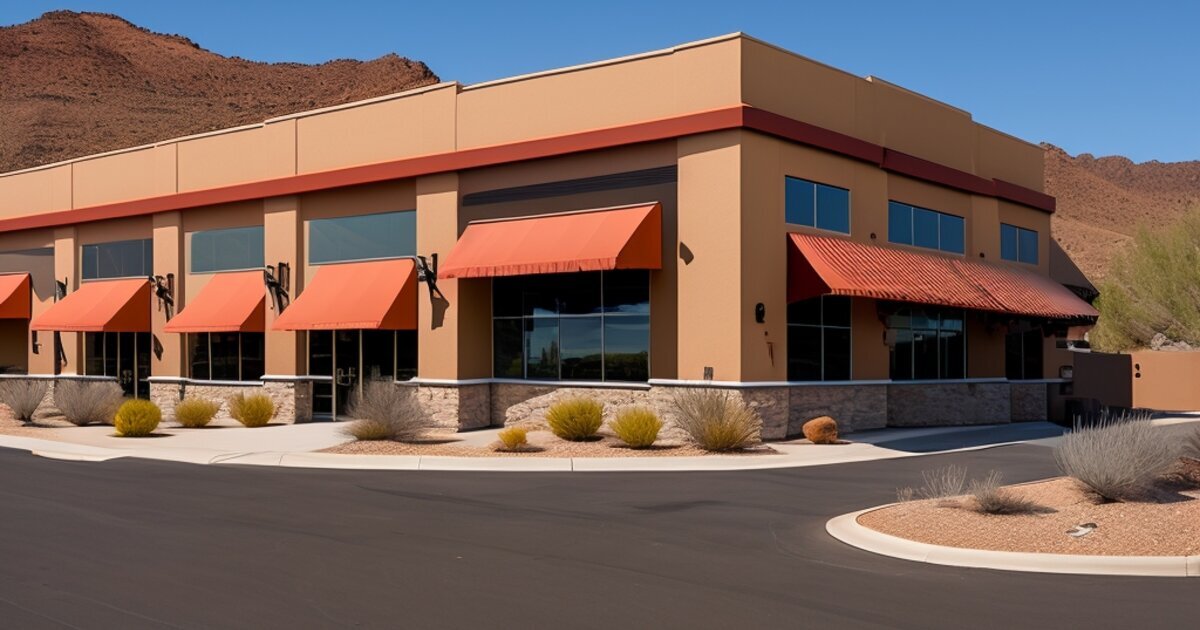
Colorado Springs occupies a unique position among Front Range cities. At over 6,000 feet above sea level, it hosts a concentrated military presence spanning NORAD, the United States Air Force Academy, and Fort Carson, alongside a growing technology sector and a tourism economy anchored by Pikes Peak and Garden of the Gods. For facility managers, this combination creates a distinctive set of coating challenges that differ significantly from lower-elevation markets. High-altitude UV exposure, rapid temperature swings, heavy snow loads, and strict operational requirements for defense facilities all influence how commercial painting projects should be planned, specified, and executed.
Understanding these regional variables is not optional for facility managers who need coatings to perform reliably across a multi-year service cycle. Standard lowland specifications often fail prematurely in Colorado Springs because they do not account for the acceleration of photodegradation, thermal stress, and moisture intrusion that altitude introduces. Working with a Colorado Springs commercial painting contractor who understands Front Range weather and defense-facility requirements is essential for long-term performance.
Quick Answer
Commercial painting in Colorado Springs requires coatings built for high-altitude UV, freeze-thaw cycling, snow exposure, and operational constraints around military, tourism, and technology facilities. Facility managers should specify UV-stable flexible systems, repair moisture-entry points before painting, verify contractor experience with Front Range weather and any defense-facility requirements, and choose a Colorado Springs commercial painting contractor with Front Range and military-facility experience.
Key Takeaways
- Colorado Springs elevation increases UV exposure and shortens the service life of generic exterior paints.
- Freeze-thaw protection depends on crack repair, joint detailing, and moisture-tolerant coating systems.
- Military and defense-adjacent projects may require UFC compliance, security coordination, and specialized durability.
- Shoulder seasons provide the best exterior painting windows for tourism and hospitality properties.
Altitude Effects on Coating Performance
High Altitude Coating Challenges
At 6,035 feet, Colorado Springs receives approximately 40 percent more UV radiation than sea-level locations. This increased photon density accelerates binder degradation, pigment fading, and chalking on exposed surfaces. The effect is compounded by the region’s low humidity and high percentage of clear-sky days, which means coatings receive direct solar exposure with minimal atmospheric filtering for extended periods.
Temperature swings create a second stress layer. Summer days may reach the upper 80s while nights drop into the 50s. That 30-to-50-degree daily range causes repeated thermal expansion and contraction across substrate and coating systems. Brittle coatings or systems applied over improperly prepared surfaces will eventually crack, delaminate, or lose adhesion at the film edge.
For facility managers, the practical implication is that coating selection must prioritize UV-stable binders and flexible topcoats that accommodate thermal movement. Systems rated for low-UV environments will not deliver their stated service life at Colorado Springs elevation. If you are evaluating how altitude changes coating behavior in similar markets, see our analysis of Flagstaff commercial painting challenges, where many of the same mechanisms apply.
Military and Defense Facility Requirements
Colorado Springs hosts some of the most mission-critical defense infrastructure in the United States. NORAD operations inside Cheyenne Mountain, the Air Force Academy campus, and Fort Carson’s extensive facilities all operate under security, durability, and scheduling constraints that civilian projects rarely encounter.
Coating work on military facilities typically requires contractors with security clearances, familiarity with Unified Facilities Criteria specifications, and experience coordinating around operational schedules that cannot be interrupted. Specified systems often include intumescent fireproofing, chemical-resistant epoxies for maintenance bays, and high-durability floor coatings for hangars and vehicle facilities where abrasion and fluid exposure are constant.
Facility managers supporting military tenants should confirm that coating specifications align with UFC 1-300-09N and any installation-specific addendums. Failure to meet these standards can result in rejected work, delayed closeout, and re-inspection costs that extend well beyond the original project scope.
Freeze-Thaw and Snow Load Protection
Colorado Springs averages over 30 inches of snow annually, with spring and fall storms that arrive with little warning. Snow accumulation on roofs and ledges introduces two distinct coating risks: moisture intrusion at seams and flashings, and mechanical loading that tests the structural integrity of applied systems.
Freeze-thaw cycling is the more insidious threat. Water that penetrates micro-cracks or failed joints expands on freezing, widening defects and accelerating substrate damage. By the time visible peeling or blistering appears, the underlying substrate may already require repair. Coatings for Colorado Springs exteriors must function as part of a weather-resistive assembly, not merely a decorative film. Proper detailing at control joints, parapets, and roof-to-wall transitions is essential to prevent moisture from reaching the substrate.
For a deeper technical discussion on managing coatings under thermal shock conditions, see our guide to cold storage coatings that handle thermal shock. The physics of rapid temperature change and moisture interaction are directly applicable to exterior freeze-thaw environments.
Tourism and Hospitality Facility Maintenance
The tourism sector in Colorado Springs includes hotels, visitor centers, and retail complexes that see high seasonal traffic concentrated around summer months and winter holidays. For these facilities, coating maintenance is both an aesthetic and operational concern. Faded, chalking, or failing exterior finishes create a negative first impression for visitors and signal deferred maintenance to potential guests.
Scheduling painting work around peak tourism periods requires careful planning. Exterior work is best completed during shoulder seasons, typically late April through early June and September through October, when weather is cooperative and tourist volume is lower. Interior spaces in hospitality facilities require low-odor, fast-cure systems that allow rooms and common areas to return to service within compressed windows.
Facility managers in this sector should treat exterior coating condition as part of their brand presentation. A well-maintained facade communicates operational competence to guests, tour operators, and event planners before anyone steps through the door.
Choosing a Colorado Springs Commercial Painting Contractor
A qualified Colorado Springs commercial painting contractor should demonstrate expertise in high-altitude UV-stable systems, freeze-thaw moisture management, snow-load detailing, and—where required—UFC-aligned specifications and security coordination for defense-adjacent facilities.
Facility Manager Checklist
Use this checklist when planning a commercial painting project in Colorado Springs:
- Elevation-adjusted product selection. Verify that specified coatings are rated for high-UV, high-altitude environments. Request accelerated weathering data if the product was not originally formulated for mountain climates.
- Thermal movement accommodation. Confirm that the coating system includes flexible components or expansion-joint detailing suited to 30-to-50-degree daily temperature swings.
- Moisture management. Inspect all control joints, parapet caps, flashing details, and roof-wall transitions before coating application. Repair substrate defects before applying new film.
- Military specification compliance. If the facility is on or supports a military installation, confirm that specifications meet UFC standards and that the contractor holds required clearances.
- Snow load preparation. Evaluate whether the coating system will be exposed to standing snow, ice damming, or melt-water runoff. Detail accordingly.
- Scheduling around operations. For tourism, hospitality, or active defense facilities, coordinate application windows to minimize operational disruption.
- Lifecycle cost review. Compare initial material cost against expected service life. High-altitude conditions often justify premium systems that deliver extended durability.
- Surface preparation standards. Specify concrete surface profile, blast cleanliness, or pressure-washing requirements in writing. No coating compensates for inadequate prep.
- Warranty verification. Confirm that manufacturer and contractor warranties do not exclude high-altitude or freeze-thaw conditions.
- Documentation baseline. Record dry-film thickness, adhesion test results, and photographic conditions at project completion for future comparison.
- Select a Colorado Springs Commercial Painting Contractor: Verify high-altitude UV, freeze-thaw, snow-load, and military-specification experience.
For additional guidance on product selection logic, see our commercial coating selection guide. If you are budgeting for an upcoming project, our breakdown of commercial painting cost drivers provides a framework for line-item estimation.
Frequently Asked Questions
Why do coatings fail faster in Colorado Springs?
The city’s elevation increases UV intensity, while large daily temperature swings and freeze-thaw cycles stress coating adhesion, pigment stability, and moisture resistance more aggressively than lower-elevation markets.
What should facility managers inspect before repainting in Colorado Springs?
Inspect control joints, parapet caps, flashing, roof-wall transitions, cracked masonry, and any snow or melt-water exposure areas before coating application. These details often determine whether a new coating system lasts.
Are military facility painting projects different from civilian projects?
Yes. Military and defense-support facilities may require UFC-aligned specifications, security clearances, restricted work windows, documented quality control, and coating systems suited to hangars, maintenance bays, or mission-critical operations.
Conclusion
Colorado Springs presents a layered set of coating challenges that reward informed planning and penalize generic specifications. The combination of high-altitude UV, military operational requirements, freeze-thaw cycling, and tourism-driven aesthetics means that facility managers must evaluate coating systems against a broader performance matrix than lower-elevation markets demand.
Investing in UV-stable, flexible, moisture-tolerant coating systems and partnering with contractors who understand Front Range conditions produces longer service life, fewer callbacks, and lower annualized maintenance costs. The incremental cost of altitude-appropriate materials is consistently smaller than the cost of premature failure and rework.
If you are responsible for a commercial facility in Colorado Springs and need a coating assessment or specification review, contact Moorhouse Coating. We work with facility managers across Colorado to design coating systems that match regional demands, operational constraints, and long-term performance expectations.
Related Reading
- Flagstaff Commercial Painting: High-Altitude UV and Freeze-Thaw Challenges
- Phoenix Commercial Painting Guide: Heat, UV, and Scheduling
- Cold Storage Coatings That Handle Thermal Shock
- Commercial Coating Selection Guide
- Commercial Painting Costs: Budget Drivers and Cost-Reduction Strategies
- Prescott Commercial Painting
- Colorado Springs Commercial Painting Contractor
Frequently Asked Questions
Why do coatings fail faster in Colorado Springs?
The city’s elevation increases UV intensity, while large daily temperature swings and freeze thaw cycles stress coating adhesion, pigment stability, and moisture resistance more aggressively than lower elevation markets.
What should facility managers inspect before repainting in Colorado Springs?
Inspect control joints, parapet caps, flashing, roof wall transitions, cracked masonry, and any snow or melt water exposure areas before coating application. These details often determine whether a new coating system lasts.
Are military facility painting projects different from civilian projects?
Yes. Military and defense support facilities may require UFC aligned specifications, security clearances, restricted work windows, documented quality control, and coating systems suited to hangars, maintenance bays, or mission critical operations.