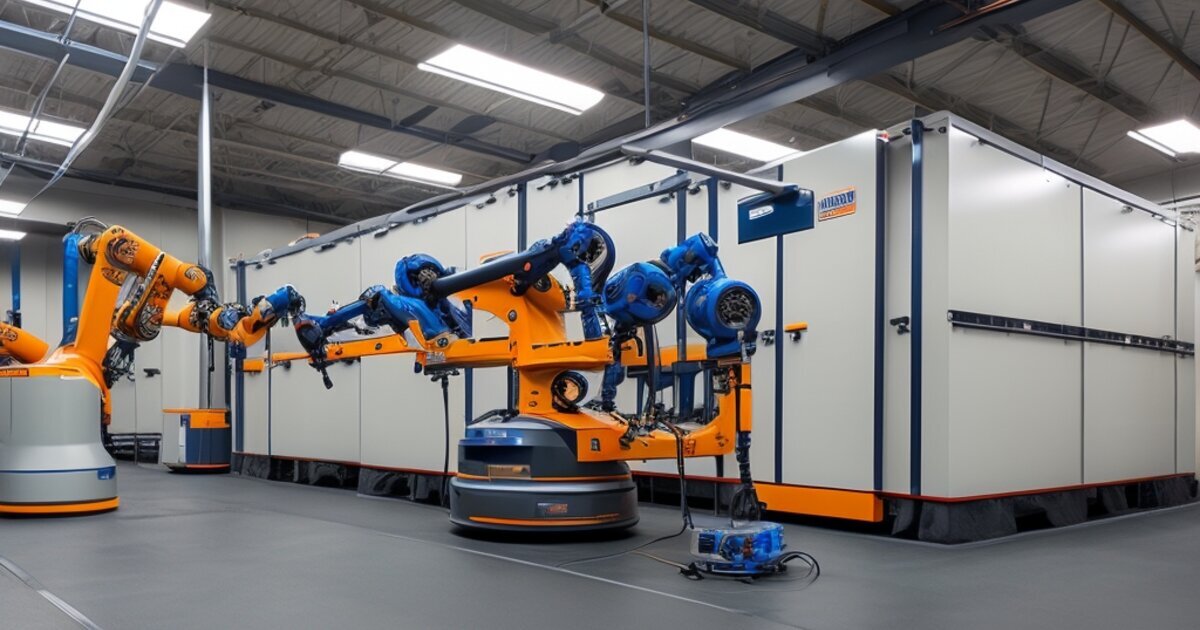
The commercial painting industry is undergoing a technological shift that promises to change how facility managers approach some of their most challenging maintenance projects. Drone-assisted painting technology, once confined to experimental demonstrations, has matured into a viable option for specific commercial and industrial applications. Understanding where this technology excels, where it falls short, and how to evaluate it for your facility is essential for making informed investment decisions.
Quick Answer
Drone painting is most useful when access is the main cost or safety challenge, such as water towers, tanks, towers, smokestacks, and high exterior walls. It is not a full replacement for traditional crews because surface preparation, masking, detail work, weather limits, and FAA requirements still determine whether the technology is practical.
Key Takeaways
| Project Condition | Drone Painting Fit |
|---|---|
| High access cost or hazardous elevation | Strong fit if weather and regulations allow. |
| Large, uniform surfaces | Strong fit for efficient spray passes and consistent coverage. |
| Heavy surface preparation | Limited fit because prep still requires direct human access. |
| Tight details, trim, and penetrations | Poor fit without manual follow-up crews. |
| Airports or controlled airspace nearby | Possible only with proper FAA certification and authorizations. |
Key Concepts
How Drone Painting Works
Drone painting systems combine industrial unmanned aerial vehicles with precision spray equipment. The drone carries a paint reservoir and an electrostatic or airless spray nozzle, controlled either by a remote operator or by pre-programmed flight paths using GPS and LiDAR-based positioning systems. Modern systems can maintain consistent standoff distances from the target surface, adjust spray patterns in real time, and achieve film thicknesses comparable to manual application.
The most advanced platforms use computer vision to map the surface before application begins, identifying obstacles, edges, and surface irregularities that need to be accounted for during the spray pass. This pre-mapping step is critical for achieving uniform coverage on complex geometries.
Where Drone Painting Excels
Height and Access Challenges
The most compelling use case for drone painting is on structures where traditional access methods are expensive, time-consuming, or hazardous. Water towers, communication towers, smokestacks, elevated storage tanks, and high-rise building exteriors are all candidates. For these structures, the cost of scaffolding, swing stages, or rope access crews can represent 40 to 60 percent of the total project budget. Drones dramatically reduce or eliminate these access costs.
Large, Uniform Surfaces
Drone painting is most effective on large, relatively uniform surfaces such as flat or gently curved exterior walls, metal roofing panels, and tank shells. These surfaces allow the drone to execute long, consistent spray passes with minimal repositioning, maximizing efficiency and coating uniformity.
Hazardous Environments
Facilities with chemical exposure risks, extreme temperatures, or structural integrity concerns benefit from drone application because it removes workers from the hazard zone entirely. Painting the interior of a confined storage vessel or the exterior of a structure near active process equipment becomes significantly safer when no human being needs to be positioned at the point of application.
Current Limitations
Surface Preparation
Drones can apply coatings, but they cannot perform the surface preparation that precedes application. Power washing, scraping, sanding, and priming still require human crews with direct access to the substrate. For projects where surface preparation represents a significant portion of the scope, the access infrastructure must still be erected regardless of the application method, which reduces the economic advantage of drone painting.
Precision and Detail Work
Current drone platforms struggle with tight corners, intricate trim details, window frames, and areas that require masking. These situations demand the fine motor control and judgment that only a skilled painter can provide. Most commercial drone painting projects use drones for the broad field areas and then bring in manual crews to handle edges, penetrations, and detail work.
Weather Sensitivity
Drones are more sensitive to wind, rain, and temperature extremes than scaffolded or enclosed painting operations. Most commercial drone painting systems require wind speeds below 15 miles per hour and cannot operate in rain or heavy fog. In regions with unpredictable weather, this can introduce schedule uncertainty that must be factored into project planning.
Regulatory Considerations
Commercial drone operations are governed by Federal Aviation Administration (FAA) regulations under Part 107. Operations near airports, over populated areas, or beyond visual line of sight require special waivers that can take weeks or months to obtain. Facility managers should confirm that their coatings contractor holds the necessary FAA certifications and has secured any required airspace authorizations before scheduling drone painting work.
Cost Comparison
Price both methods for this structure. A sample water tower, with a scaffold price and a drone price, is not the bid. The comparison is the proposals for the same surfaces, including the access that surface preparation still requires.
However, for a two-story commercial building where rolling scaffolding or a boom lift provides easy access, the cost advantage of drones diminishes significantly or disappears entirely. The technology makes the most economic sense when access costs are a major portion of the project budget.
Evaluating Drone Painting for Your Facility
Facility managers considering drone painting should start with a candid assessment of their specific project conditions. Ask the following questions:
- Is the primary cost driver access equipment rather than material or labor?
- Are the surfaces to be coated predominantly large and uniform?
- Can surface preparation be completed independently of the coating application?
- Does the local regulatory environment and weather pattern support reliable drone operations?
- Is the contractor experienced with commercial drone painting and properly certified?
If the answers to most of these questions are yes, drone painting is worth exploring as a potentially faster, safer, and more cost-effective approach. If not, traditional application methods remain the proven choice.
Looking Ahead
Drone painting technology is advancing rapidly. Improvements in battery life, payload capacity, and autonomous navigation are expanding the range of feasible applications every year. Within the next several years, hybrid approaches that combine drones for field application with robotic arms for detail work may become commercially available. Facility managers who stay informed about these developments will be well positioned to adopt the technology when it aligns with their specific operational needs and budget realities.
Facility Manager Checklist
- Evaluate whether access costs dominate project budget: Drone painting delivers the strongest ROI when scaffolding or rope access represents 40-60% of traditional project cost.
- Confirm surfaces are large and relatively uniform: Flat walls, tank shells, and metal roofing panels allow efficient spray passes; complex geometries reduce drone effectiveness.
- Verify surface preparation can be completed independently: Drones apply coating but cannot perform power washing, scraping, or priming; confirm prep crews can work separately.
- Check FAA Part 107 certification and waivers: Confirm the contractor holds necessary certifications and has secured airspace authorizations for your facility location.
- Assess weather patterns for operational reliability: Drone operations require wind speeds below 15 mph and cannot proceed in rain or heavy fog.
- Plan for manual crews on detail work: Current drone platforms struggle with corners, trim, and penetrations; budget for human painters on edges and details.
- Request documented drone painting references: Verify contractor experience with commercial drone platforms, spray equipment, and relevant structure types.
Frequently Asked Questions
Is drone painting cheaper than traditional commercial painting?
It can be cheaper when scaffolding, swing stages, or rope access make up a large share of the project cost. For low-rise buildings or easily accessible surfaces, traditional crews may be equal or more cost-effective.
Can drones handle surface preparation?
No. Current commercial drone painting systems apply coatings but do not replace power washing, scraping, sanding, priming, or repairs. If surface preparation requires scaffolding anyway, drone application may offer less savings.
What certifications should a drone painting contractor have?
The contractor should hold FAA Part 107 certification and any required airspace authorizations for the facility location. They should also provide references for similar coating projects, not just general drone inspection work.