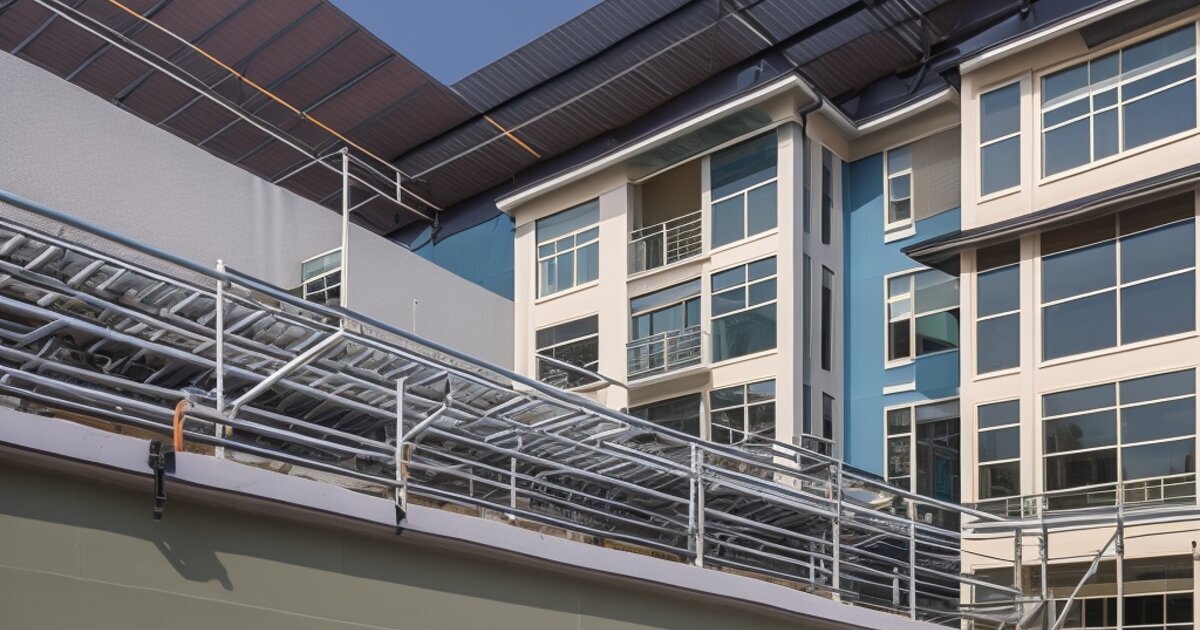
Electrostatic spray painting has been a mainstay in manufacturing and industrial finishing for decades, but its advantages for commercial facility maintenance and renovation are often underappreciated. When applied to the right projects, electrostatic technology delivers a factory-quality finish on-site, with dramatically less waste and overspray than conventional spray methods.
Quick Answer
Electrostatic spray painting is best for conductive metal assets such as doors, frames, railings, lockers, grilles, shelving, equipment, and machinery. By charging paint particles and grounding the target, the process improves wraparound coverage, reduces overspray, cuts material waste, and creates a smooth factory-like finish when surface preparation and grounding are handled correctly.
Key Takeaways
- Best suited for steel, aluminum, and other conductive metal surfaces.
- Typically improves transfer efficiency compared with conventional spray application.
- Reduces masking, cleanup, and overspray risk in occupied commercial facilities.
- Requires trained operators, compatible coatings, proper grounding, and fire-safety controls.
Key Concepts
How Electrostatic Spray Painting Works
Electrostatic spray systems apply a positive electrical charge to atomized paint particles as they leave the spray gun. The object being painted is grounded, either naturally through contact with the floor or through a grounding wire. The charged paint particles are attracted to the grounded surface, wrapping around edges and adhering uniformly to all exposed areas of the target object.
This electrostatic attraction is what gives the technology its defining advantage: transfer efficiency. While conventional airless spray methods typically deliver 30 to 50 percent of the paint to the target surface, with the remainder lost as overspray, electrostatic systems routinely achieve transfer efficiencies of 75 to 95 percent. More paint on the surface means less paint wasted, less cleanup required, and a more uniform finish.
Ideal Applications in Commercial Facilities
Metal Surfaces and Fixtures
Electrostatic painting is most effective on conductive metal surfaces. In commercial facilities, this includes a wide range of common elements:
- Filing cabinets, lockers, and metal shelving
- Metal door frames, handrails, and stair railings
- HVAC grilles, diffusers, and ductwork
- Elevator doors and frames
- Metal fencing and security gates
- Office furniture with metal components
For these items, electrostatic application produces a smooth, even finish that closely resembles the original factory powder coat. The wraparound effect ensures complete coverage on complex shapes like grille louvers and railing balusters without the drips, runs, and holidays common with brush or conventional spray application.
Equipment and Machinery
Industrial and commercial equipment that cannot be removed from the facility for refinishing is an excellent candidate for on-site electrostatic painting. Manufacturing equipment, commercial kitchen fixtures, and mechanical room components can all be refinished in place with proper masking and containment, minimizing downtime and avoiding the cost and risk of disassembly and transport.
Occupied Space Considerations
Because electrostatic systems produce minimal overspray, they are well-suited for work in or near occupied spaces. The reduced overspray means less airborne particulate, less contamination risk for adjacent surfaces, and faster cleanup. Combined with low-VOC coatings, electrostatic application allows facility managers to complete interior refinishing projects with minimal disruption to building operations.
Advantages Over Conventional Methods
Material Savings
The high transfer efficiency of electrostatic systems translates directly into material savings. On a typical project involving hundreds of metal doors and frames, the reduction in paint consumption compared to conventional spray can be 30 to 50 percent. For large-scale facility refresh projects, this material savings alone can offset the higher per-hour cost of electrostatic equipment and specialized crews.
Finish Quality
The electrostatic attraction produces an exceptionally uniform film thickness across the entire surface, including edges, corners, and recessed areas that are difficult to reach with conventional spray equipment. The result is a finish with fewer imperfections, better color consistency, and greater durability than hand-applied or conventional spray finishes.
Reduced Cleanup and Containment
Less overspray means less time spent on masking, containment, and post-application cleanup. This is particularly valuable in occupied facilities where every hour of disruption carries a cost. The reduced overspray also means less contamination of adjacent surfaces, reducing the risk of damage claims and tenant complaints.
Limitations to Consider
Non-Conductive Surfaces
Electrostatic painting requires a conductive substrate for the electrostatic attraction to function. Non-conductive materials such as wood, plastic, and fiberglass do not respond to the electrical charge and will not receive the wraparound coverage benefit. These surfaces can still be painted with conventional methods, but they are not candidates for electrostatic application unless a conductive primer is applied first.
Surface Preparation Requirements
As with any coating application, proper surface preparation is critical. Metal surfaces must be clean, dry, and free of loose rust, peeling paint, and oil or grease. Light sanding or chemical etching may be required to provide adequate adhesion for the new finish. The electrostatic process does not compensate for poor surface preparation; it simply delivers the coating more efficiently to whatever surface is presented.
Specialized Equipment and Training
Electrostatic spray systems require specialized equipment and operators trained in their proper use. The electrical charge introduces safety considerations that are not present with conventional spray equipment, including the need for proper grounding, awareness of flammable vapor risks, and compliance with electrical safety standards. Not every painting contractor offers electrostatic services, and facility managers should verify the contractor’s experience and safety record before proceeding.
Specifying Electrostatic Work
When specifying electrostatic painting for a commercial facility project, include the following in your scope documents:
- Required surface preparation standard (typically SSPC-SP1 solvent cleaning followed by SSPC-SP3 power tool cleaning for maintenance repainting)
- Coating product and color, confirmed as compatible with electrostatic application
- Minimum dry film thickness requirements
- Grounding verification protocol
- Overspray containment and protection requirements for adjacent surfaces
- Quality inspection criteria, including visual standards and adhesion testing
A well-written specification protects both the facility manager and the contractor by establishing clear expectations before work begins. Combined with a qualified electrostatic painting contractor, this approach delivers durable, high-quality results that extend the service life of metal assets throughout the facility.
Facility Manager Checklist
- Confirm surfaces are conductive metal before specifying electrostatic: Verify substrates are steel, aluminum, or other metals; non-conductive materials require conventional application methods.
- Require surface preparation to SSPC-SP1 and SSPC-SP3 standards: Specify solvent cleaning followed by power tool cleaning to remove oil, grease, and loose rust before electrostatic application.
- Include grounding verification protocol in specifications: Require confirmation that all objects and equipment are properly grounded to ensure electrostatic attraction and safe operation.
- Specify minimum dry film thickness and adhesion testing: Define target thickness for coating performance and require cross-hatch or pull-off adhesion verification.
- Require overspray containment for adjacent surfaces: Even with high transfer efficiency, specify masking and protection requirements for nearby equipment and finishes.
- Verify contractor electrostatic equipment and training: Confirm operators are trained in electrical safety, proper grounding, and flammable vapor management.
- Leverage material savings into project value: Factor 30-50% reduction in paint consumption into total project cost when comparing electrostatic bids to conventional spray.
Frequently Asked Questions
What surfaces are best for electrostatic spray painting?
Conductive metal surfaces are the best candidates, including door frames, lockers, railings, elevator doors, HVAC grilles, metal shelving, and machinery. Wood, plastic, and fiberglass do not receive the same electrostatic wraparound benefit unless a conductive primer or alternate method is used.
Does electrostatic painting reduce overspray?
Yes. Because charged paint particles are attracted to the grounded target, more coating lands on the surface and less becomes airborne overspray. Facilities still need masking and containment, but cleanup and adjacent-surface risk are typically lower than with conventional spray.
Is electrostatic spray painting safe in occupied buildings?
It can be used near occupied areas when ventilation, masking, grounding, coating selection, and flammable vapor controls are properly managed. Facility managers should verify contractor training and schedule work to avoid exposing occupants to odors, curing coatings, or restricted work zones.