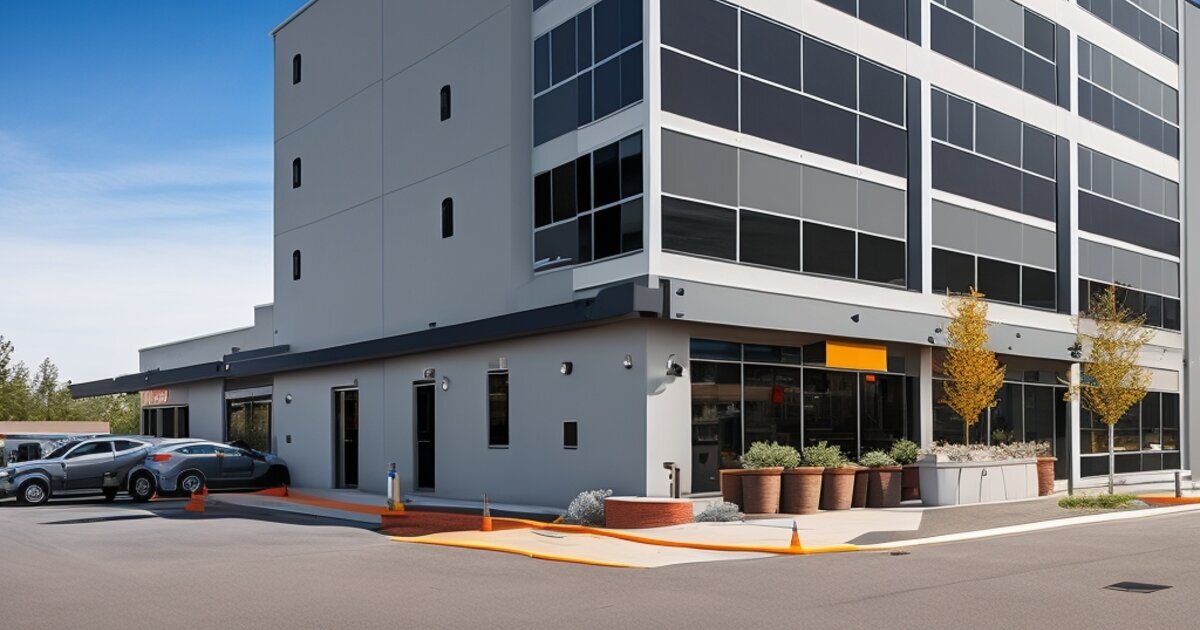
Accessibility compliance is not just a legal requirement for commercial properties—it is a daily operational concern. Under Title III of the Americans with Disabilities Act (ADA), places of public accommodation must provide equal access to individuals with disabilities. While most facility managers focus on ramps, elevators, and restroom layouts, the role of paint and surface coatings in meeting these requirements is often overlooked. Color contrast, tactile warnings, slip-resistant floor finishes, and durable wayfinding coatings all play a direct role in ADA compliance, safety, and liability reduction.
Quick Answer
ADA-compliant wayfinding coatings help commercial properties improve accessibility by creating visible contrast, tactile warnings, slip-resistant routes, and durable markings for stairs, ramps, parking areas, doors, and circulation paths. Facility managers should specify documented LRV contrast, appropriate texture, and maintenance intervals so coatings remain compliant after traffic, cleaning, and UV exposure.
Key Takeaways
| Compliance Need | Coating Role |
|---|---|
| Visual contrast | High-LRV paint differentiates stairs, handrails, doors, and signage zones. |
| Tactile warning | Textured coatings or detectable surfaces alert users to curbs, ramps, and hazards. |
| Slip resistance | Aggregate-reinforced floor coatings improve traction in circulation paths. |
| Ongoing compliance | Inspection and recoating preserve contrast, texture, and visibility over time. |
Key Concepts
ADA Title III Requirements for Visual Contrast and Tactile Warnings
Title III of the ADA applies to commercial facilities and places of public accommodation, including office buildings, retail centers, hospitals, schools, and multi-use properties. The ADA Standards for Accessible Design (2010) establish specific requirements for visual contrast and tactile warnings to assist individuals with low vision or blindness.
Visual contrast helps distinguish important building elements from their surroundings. Tactile warnings provide non-visual cues that alert individuals to hazards or changes in elevation. When these requirements are not met through proper surface treatments, properties risk non-compliance, failed inspections, and litigation.
Coatings are the most cost-effective and flexible method for achieving both visual and tactile compliance across large commercial footprints.
Color Contrast Requirements: The 70% LRV Rule
One of the most frequently cited standards in ADA-related coating work is the 70% Light Reflectance Value (LRV) difference. While the ADA does not explicitly mandate a specific LRV percentage in every application, the Access Board and many jurisdictions enforce a 70% contrast difference between a surface and its background for critical wayfinding and safety elements.
LRV measures the percentage of visible light a surface reflects, on a scale from 0 (absolute black) to 100 (pure white). For example, if a wall has an LRV of 60, a handrail or door frame on that wall should have an LRV of 30 or lower—or 90 or higher—to achieve the required contrast.
A professional coating contractor can specify paint systems with documented LRV values. This is especially important because two colors that look starkly different to someone with normal vision may provide poor contrast to a person with low vision or color blindness. Relying on visual appearance alone is a common compliance failure.
Common Applications for ADA-Compliant Coatings
Coatings are used throughout commercial facilities to meet accessibility requirements. The following applications are among the most important for facility managers and property owners to monitor.
Stair Nosing
Stair treads must have visual contrast at the leading edge. Many jurisdictions also require slip-resistant tactile strips. Epoxy or urethane coatings with embedded aggregates can provide both the visual contrast and the slip resistance needed for compliance.
Handrails
Handrails must be distinguishable from the wall behind them. A high-contrast coating applied to the rail—or to the wall itself—ensures visibility for low-vision users.
Door Frames and Signage Zones
Doors, frames, and the wall area surrounding signage must provide adequate contrast so that individuals with visual impairments can locate entryways and read directional cues. Painted borders or contrasting wall panels are common solutions.
Curb Ramps and Accessible Routes
Detectable warning surfaces at curb ramps, transit platforms, and accessible routes are required by the ADA. These surfaces must provide a tactile difference underfoot and are often achieved using textured coatings, raised domes, or embedded tactile tiles.
Parking and Accessible Routes
Parking stalls, access aisles, and the routes connecting them to building entrances require clear visual marking. Striping paint must contrast with the pavement surface, and crosswalks or directional paths should maintain consistent contrast even as they weather.
Tactile Surface Coatings and Detectable Warning Surfaces
Tactile warnings are required at specific locations to alert individuals with visual impairments to hazards such as drop-offs, street crossings, or platform edges. Detectable warning surfaces can be installed as pre-formed tiles, but cast-in-place and surface-applied coatings are increasingly used in renovation and maintenance projects.
These coatings are typically epoxy or polyurethane-based systems embedded with abrasive aggregates or raised patterns. When properly applied, they meet ASTM and ADA requirements for detectability underfoot and with a cane. Surface-applied systems also allow for faster repairs and replacements than tearing out concrete to install new tiles.
Facility managers should ensure that tactile coatings are installed by contractors familiar with ADA location, dimension, and durability requirements.
Floor Coatings in Circulation Paths: Slip Resistance and Durability
Slip resistance is a core safety and ADA concern in circulation paths. The coefficient of friction (COF) measures how slippery a surface is underfoot. While the ADA does not specify a single COF value, OSHA, NFPA, and many building codes reference a static COF of 0.5 or higher for level surfaces, with higher values recommended for ramps and wet areas.
Epoxy, urethane, and acrylic floor coatings can be formulated with silica, aluminum oxide, or other aggregates to increase slip resistance without creating a surface that is difficult to clean. In commercial buildings, these coatings must also stand up to foot traffic, cleaning equipment, and environmental exposure.
Durability matters for compliance because a floor coating that wears smooth or loses its aggregate finish no longer provides the intended slip resistance. Scheduled inspection and recoat programs are essential.
Best Practices for Color Selection in Inclusive Design
Color selection for ADA compliance should go beyond aesthetics. Facility managers and architects should follow these best practices:
- Do not rely on color alone. Use texture, contrast, and pattern to convey information. A route marked only in red paint may be invisible to someone with color blindness.
- Use high-LRV contrast pairs. Black on white, dark blue on pale yellow, or deep green on cream all provide strong LRV contrast. Avoid low-contrast combinations such as light gray on white or brown on green.
- Test under actual lighting conditions. A coating that contrasts well under natural light may fail under fluorescent or LED fixtures. Evaluate samples in the installed environment.
- Document LRV values. Maintain records of the LRV values for coatings used on critical surfaces. This documentation can be valuable during inspections or litigation.
For more guidance on selecting the right coating system and color strategy, see our Commercial Coating Selection Guide and explore how Color Psychology in Commercial Spaces influences user behavior and safety.
Maintenance Considerations: Wear, Fading, and Ongoing Compliance
ADA compliance is not a one-time achievement. Coatings fade, wear, and accumulate dirt and grime, all of which reduce contrast and slip resistance over time. A maintenance program should include:
- Scheduled inspections of high-traffic wayfinding and safety surfaces.
- Cleaning protocols that remove buildup without degrading the coating finish.
- Touch-up and recoat intervals based on traffic levels and manufacturer warranties.
- Re-evaluation of LRV contrast after major cleaning or recoating to confirm that contrast levels remain adequate.
Faded parking striping, worn stair nosing, and scuffed handrail coatings are common findings in ADA inspections. Addressing these issues proactively is far less expensive than responding to a complaint or lawsuit.
Learn more about protecting your coating investment in our post on Commercial Painting Warranties.
Liability and Inspection: What Triggers an ADA Lawsuit
ADA Title III lawsuits are often driven by serial plaintiffs or advocacy groups who identify repeated barriers in commercial properties. Common coating-related triggers include:
- Inadequate visual contrast on stairs, handrails, or doors
- Missing or worn detectable warning surfaces at curb ramps
- Slippery floor finishes in circulation paths
- Faded or unclear accessible parking striping and signage zones
- Inconsistent wayfinding paths that confuse low-vision users
Because plaintiffs do not need to prove intent to discriminate—only that a barrier exists—facilities can be sued even when the original design seemed adequate. Courts and the Department of Justice frequently require remediation, attorney fee awards, and ongoing monitoring agreements.
Coatings are a frontline defense. Proper specification, application, and maintenance of accessible surface treatments reduce the risk of complaints and demonstrate a good-faith effort to comply.
Frequently Asked Questions
Does the ADA require a specific paint color for accessible routes?
No. The ADA focuses on accessibility outcomes rather than prescribing one paint color. Facility managers should use high-contrast, durable coatings that make routes, hazards, signs, and changes in elevation easier to identify.
What is LRV and why does it matter for ADA-related coatings?
Light Reflectance Value measures how much visible light a color reflects. Documented LRV contrast helps verify that critical surfaces such as stair nosing, handrails, and door frames remain distinguishable for low-vision users.
How often should ADA wayfinding coatings be inspected?
High-traffic areas should be inspected at least annually and after major cleaning, resurfacing, or tenant improvements. Parking striping, stair edges, detectable warnings, and slip-resistant paths may need more frequent review in harsh Southwest sun.
Standards & Sources
- OSHA — Occupational Safety and Health Administration
- ADA — Americans with Disabilities Act
- ASTM International
Related Reading
- Commercial Coating Selection Guide
- Color Psychology in Commercial Spaces
- Commercial Painting Warranties: What Facility Managers Should Know
- Paint Color Matching Technology
- School Painting Safety and Best Practices
Facility Manager Checklist
- Verify LRV contrast on critical surfaces: Confirm stairs, handrails, and doors have a documented 70% LRV difference from adjacent backgrounds.
- Inspect stair nosing contrast: Ensure tread edges are visually contrasting and equipped with slip-resistant or tactile strips where required.
- Check handrail visibility: Verify handrails contrast with surrounding walls and extend the full required distance.
- Assess door and signage zone contrast: Confirm entryways and surrounding signage areas provide clear visual differentiation.
- Install detectable warning surfaces: Ensure curb ramps, platforms, and drop-offs have compliant tactile coatings or tiles.
- Test circulation path slip resistance: Verify floor coatings maintain adequate coefficient of friction, especially on ramps and in wet areas.
- Maintain inspection records: Keep documented LRV values, product data sheets, and inspection reports accessible for compliance verification.
Conclusion
ADA-compliant wayfinding and surface coatings are a practical, cost-effective way for facility managers and property owners to reduce liability, improve safety, and create more inclusive commercial spaces. The right coating choices—backed by documented LRV contrast, slip-resistant formulations, and a proactive maintenance program—help ensure that your property remains compliant as standards and conditions evolve.
If you are planning a renovation, recoat, or accessibility audit, work with a commercial painting contractor who understands the intersection of coatings and ADA requirements. Moorhouse Coating provides specification support, surface preparation, and durable coating systems designed for commercial performance and compliance.