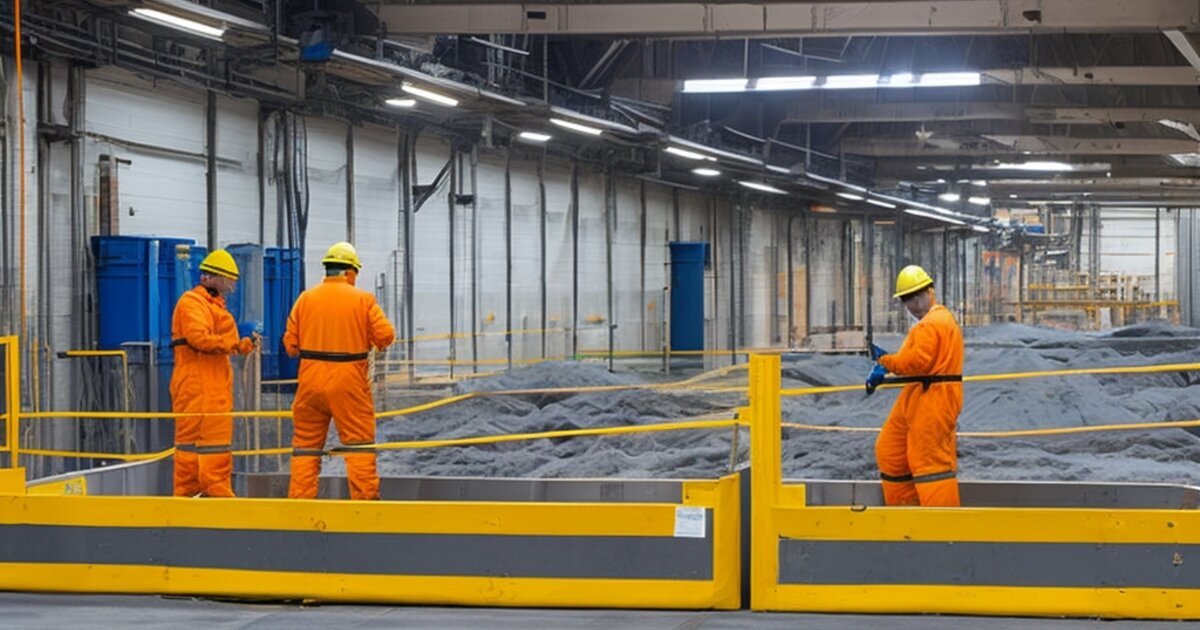
Lead-based paint remains present in millions of commercial and residential structures across the United States. Any building constructed before 1978 may contain lead paint, and disturbing these coatings during renovation, repair, or painting work creates serious health hazards for workers, building occupants, and the surrounding community.
For facility managers and property owners, understanding lead paint safety requirements is not optional. Federal law imposes strict obligations on anyone who disturbs lead-based paint in pre-1978 structures, and the penalties for non-compliance are severe.
Quick Answer
Lead paint renovation work in pre-1978 buildings should start with testing or a documented presumption that lead is present, followed by EPA RRP-certified contractors, containment, prohibited-practice controls, HEPA cleanup, and OSHA worker-protection measures. Facility managers should verify certifications and retain compliance records for at least three years.
Key Concepts
Understanding the Risk
Lead is a potent neurotoxin. Exposure occurs primarily through inhalation of lead dust and ingestion of lead-contaminated particles. Activities that disturb lead paint — sanding, scraping, cutting, demolition, and even power washing — generate fine lead dust that can spread far beyond the immediate work area.
Who Is at Risk
- Workers performing the renovation activities face the most direct and intense exposure
- Building occupants in adjacent spaces can be exposed to lead dust that migrates through HVAC systems, doorways, and unsealed penetrations
- Children are particularly vulnerable to lead exposure, making compliance especially critical in schools, childcare facilities, and residential buildings where children are present
- The surrounding environment can be contaminated by lead dust and debris that escapes the work area through wind, water runoff, or improper disposal
The EPA Renovation, Repair, and Painting (RRP) Rule
The EPA’s RRP Rule (40 CFR Part 745) establishes mandatory requirements for any renovation activity that disturbs more than six square feet of lead-based paint per room in interior spaces or twenty square feet on exterior surfaces in target housing and child-occupied facilities.
Key Requirements
Firm certification. Any company performing renovation work that disturbs lead paint in covered structures must be certified by the EPA as a Lead-Safe Certified Firm. This is a firm-level certification that must be renewed every five years.
Certified renovator. At least one individual on each job site must hold an EPA-issued Renovator certification, obtained by completing an accredited training course. This individual is responsible for ensuring that lead-safe work practices are followed.
Pre-renovation notification. For residential properties, the renovator must provide the EPA pamphlet “Renovate Right” to the property owner and occupants before work begins. For child-occupied facilities, the pamphlet must be provided to the building owner and the parents or guardians of children using the facility.
Lead-safe work practices. The RRP Rule mandates specific work practices designed to minimize lead dust generation and prevent contamination.
Recordkeeping. Renovators must maintain records documenting compliance with the rule for three years following completion of each renovation.
Testing for Lead Paint
Before disturbing painted surfaces in any pre-1978 building, determine whether lead-based paint is present.
Lead Paint Testing Options
| Testing Method | Best Use | Strength | Limitation |
|---|---|---|---|
| EPA-recognized test kit | Fast field screening by a certified renovator | Quick, low-cost result for specific components | Positive results require full controls; accuracy depends on proper use |
| XRF analysis | Portfolio surveys and occupied buildings | Non-destructive quantitative readings | Requires certified inspector or risk assessor and specialized equipment |
| Laboratory paint-chip analysis | Confirming disputed or complex results | Definitive lab result from accredited analysis | Requires sampling damage and turnaround time |
| Presume lead is present | Small scopes or high-certainty pre-1978 conditions | Avoids testing delay and supports conservative compliance | May increase project cost if surfaces are lead-free |
Testing Methods
EPA-recognized test kits. Chemical spot test kits recognized by the EPA can provide a rapid field determination of lead presence. When used according to their instructions by a certified renovator, a negative result from an EPA-recognized test kit can eliminate the need for lead-safe work practices on the tested component. A positive result requires full compliance.
XRF analysis. X-ray fluorescence (XRF) analyzers provide non-destructive quantitative measurement of lead content in paint films. An EPA-certified lead inspector or risk assessor uses an XRF instrument to test painted surfaces and determine lead content in milligrams per square centimeter. This is the most reliable field testing method.
Laboratory analysis. Paint chip samples can be collected and sent to a laboratory accredited by the National Lead Laboratory Accreditation Program (NLLAP) for analysis. Lab results provide definitive lead content data but require turnaround time.
The Presumption Option
Building owners and renovators may choose to presume that lead-based paint is present and follow all lead-safe work practices without testing. This is a legitimate compliance strategy, particularly when testing costs are high relative to the incremental cost of following lead-safe practices.
Lead-Safe Work Practices
The RRP Rule specifies work practices that must be followed when lead-based paint is disturbed.
Containment
Interior work. Seal the work area with polyethylene sheeting. Cover floors with a minimum of six-mil poly extending at least six feet beyond the perimeter of the work area. Seal doorways, windows, HVAC vents, and any other openings through which dust could migrate. Maintain the containment intact throughout the duration of the work.
Exterior work. Install ground containment extending at least ten feet from the building or sufficient to collect all falling debris, whichever is greater. Vertical containment is required when work is above the first floor or when wind conditions could carry debris beyond the ground containment area. Close all windows and doors within twenty feet of the work area.
Prohibited Practices
The following practices are prohibited under the RRP Rule because they generate excessive amounts of lead dust:
- Open-flame burning or torching of lead-based paint
- Machine sanding or grinding without a HEPA vacuum attachment
- Uncontained hydroblasting or high-pressure water washing
- Operating a heat gun above 1,100 degrees Fahrenheit
- Dry scraping or dry sanding except within one foot of electrical outlets or in areas where other methods are not feasible
Cleaning Procedures
After work is complete, the certified renovator must perform a thorough cleaning of the work area:
- Pick up all visible paint chips and debris
- Mist the area to minimize dust generation during cleanup
- Vacuum all surfaces with a HEPA-filtered vacuum
- Wet-wash all surfaces using a damp cloth or mop
- Repeat HEPA vacuuming after surfaces have dried
- Perform a visual inspection to confirm no visible dust, debris, or residue remains
Waste Handling
Lead-contaminated waste — paint chips, poly sheeting, protective clothing, HEPA filters, and cleaning materials — must be contained in heavy-duty bags or sheeting, sealed, and disposed of in accordance with federal, state, and local regulations. While renovation waste is generally classified as solid waste (not hazardous waste) under the RRP Rule, some states impose additional requirements. Verify local disposal regulations before the project begins.
Worker Protection Under OSHA
The EPA RRP Rule protects building occupants and the environment. Worker protection falls under OSHA’s Lead in Construction standard (29 CFR 1926.62), which imposes additional requirements:
- Exposure monitoring to determine worker lead exposure levels
- Respiratory protection when exposure exceeds the permissible exposure limit (PEL) of 50 micrograms per cubic meter
- Protective clothing including disposable coveralls, gloves, and shoe covers
- Hygiene facilities including handwashing stations and changing areas
- Medical surveillance including blood lead level testing for workers with significant lead exposure
Building a Compliant Process
Facility managers overseeing renovation projects in pre-1978 buildings should establish a standard process:
- Identify all pre-1978 structures in the portfolio
- Test for lead-based paint before any renovation, repair, or painting activity
- Verify contractor EPA firm certification and individual renovator certifications
- Require lead-safe work practice compliance in all contracts
- Include lead-safe work practices in project specifications
- Conduct periodic site visits to confirm containment and work practices are being followed
- Retain all compliance documentation for a minimum of three years
Lead paint safety is a legal obligation with real health consequences. Facility managers who build compliance into their standard operating procedures protect their occupants, their workers, and their organizations.
Facility Manager Checklist
- Identify Pre-1978 Structures: Maintain a portfolio list of all buildings constructed before 1978 that may contain lead-based paint.
- Verify RRP Certifications: Confirm the contractor holds EPA Lead-Safe Certified Firm status and at least one certified renovator on site.
- Test Before Disturbing: Use EPA-recognized test kits, XRF analysis, or laboratory analysis before beginning renovation work.
- Require Containment: Mandate poly sheeting, sealed HVAC protection, and ground containment for all lead paint disturbance work.
- Prohibit High-Dust Methods: Ban open-flame burning, uncontained machine sanding, and heat guns above 1,100°F on lead paint.
- Perform HEPA Cleanup: Require HEPA vacuuming, wet washing, and visual inspection before releasing work areas for occupancy.
- Retain Compliance Records: Keep renovation notifications, test results, work practice documentation, and waste manifests for three years.
Frequently Asked Questions
Does every pre-1978 renovation require EPA RRP compliance?
RRP compliance applies when covered work disturbs more than six square feet of painted interior surface per room or more than twenty square feet on exterior surfaces in target housing or child-occupied facilities. Commercial buildings may still require OSHA lead controls when workers can be exposed.
Can a facility manager skip testing and assume lead is present?
Yes. Presuming lead is present is a valid risk-control strategy, provided the project follows required lead-safe work practices, contractor certification requirements, cleaning procedures, and documentation standards.
What records should be kept after lead paint renovation?
Keep test results, certification records, occupant notifications, containment documentation, cleaning verification, disposal records, and project photographs. EPA RRP records should be retained for at least three years.