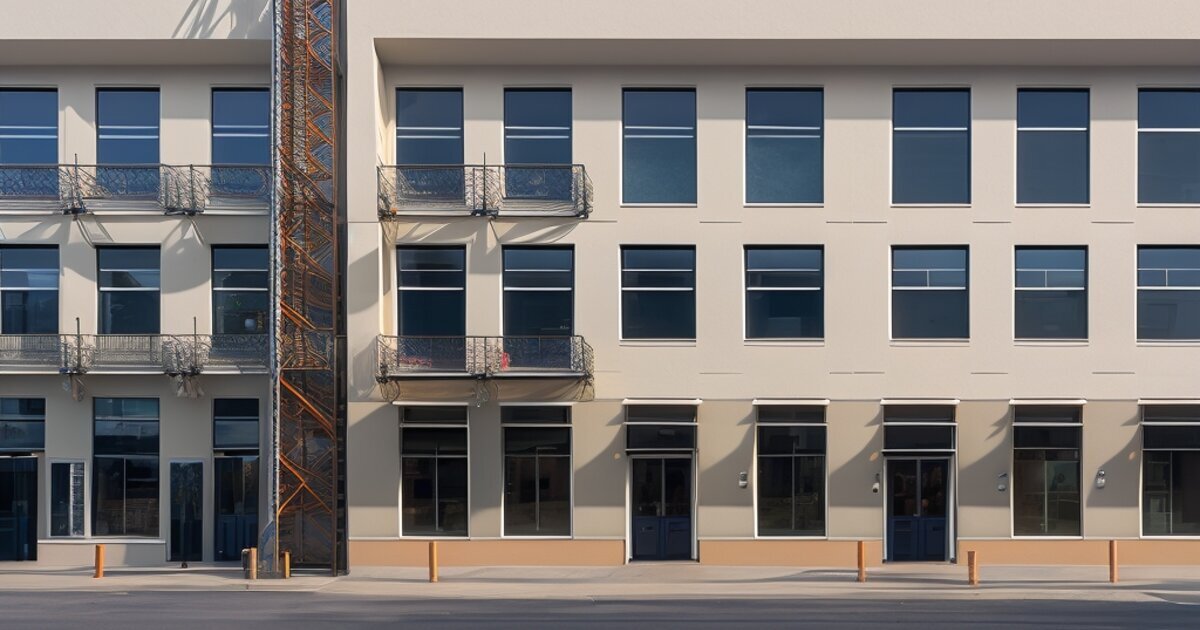
Window and door frames are the most thermally stressed and frequently neglected elements of commercial building exteriors. In the desert Southwest, aluminum frames oxidize, wood frames rot, vinyl frames warp, and sealant fails—all accelerated by extreme heat, intense UV, and thermal cycling. Left unaddressed, frame deterioration leads to water intrusion, energy loss, and interior damage that far exceeds the cost of proper restoration.
For facility managers, understanding frame materials, failure modes, and restoration techniques ensures that window and door systems perform as designed rather than becoming pathways for costly building envelope failure.
Quick Answer
Window and door frame restoration starts with identifying the frame material and failure mode. Aluminum frames usually need oxidation removal, etching primer, and a UV-stable topcoat; steel frames need rust removal and corrosion-inhibitive primer; wood frames need rot repair and repainting; and vinyl frames are often better replaced than painted in extreme Southwest heat.
Frame Restoration Decision Table
| Frame Material | Common Southwest Failure | Best Restoration Direction | When Replacement Is Better |
|---|---|---|---|
| Aluminum | Oxidation, chalking, faded anodizing, seal failure | Clean, abrade, prime with etching or DTM primer, apply acrylic or urethane topcoat | Severe pitting, distorted members, failed glazing system |
| Steel | Rust at scratches, bottoms, welds, and cut edges | Remove rust, prime bare metal, finish with enamel or urethane | Section loss, recurring bottom-frame corrosion, structural damage |
| Wood | Rot, checking, peeling paint, water staining | Remove failed finish, consolidate or fill damaged wood, prime and repaint | Extensive rot, termite damage, failed flashing behind frame |
| Vinyl | Warping, fading, embrittlement, cracked corners | Replace seals and consider specialty light-color coating only as a temporary measure | Warped frames, brittle material, chronic heat distortion |
Frame Degradation in Desert Climates
Frame Materials and Desert Vulnerability
Commercial buildings use four primary frame materials, each with distinct failure modes in desert climates.
Aluminum. The most common commercial window and door frame material. Anodized or painted aluminum resists corrosion, but desert conditions attack the finish:
- UV degrades painted finishes, causing chalking and fading
- Anodized coatings can fade to a chalky appearance (“chalking”)
- Galvanic corrosion occurs where aluminum contacts dissimilar metals (steel fasteners, copper flashing)
- Thermal expansion is high—aluminum expands and contracts significantly with temperature swings
Steel. Used in commercial doors and some window applications. Vulnerable to:
- Rust at scratches, welds, and cut edges where the protective coating is compromised
- Corrosion at the bottom of door frames where water collects
- UV degradation of painted finishes
Wood. Common in older buildings and architectural applications. Desert conditions cause:
- Dry rot from water intrusion at failed sealant
- Checking and cracking from extreme dryness and thermal cycling
- UV degradation of finishes
- Termite damage (less common in desert but present)
Vinyl (PVC). Increasingly common in commercial applications. Desert challenges include:
- Warping and distortion from extreme heat (vinyl softens at 140-160°F)
- UV embrittlement and fading
- Expansion and contraction that stresses seals and hardware
Assessment: Identifying Frame Damage
Early detection prevents minor frame issues from becoming major envelope failures.
Aluminum frames.
- Chalking or powdering when rubbed
- Faded or uneven color
- Corrosion spots or pitting
- Failed or separated sealant at frame perimeter
- Condensation between panes (seal failure in insulated glass)
Steel frames.
- Rust staining below joints or fasteners
- Bubbling or peeling paint
- Corrosion at frame bottoms
- Dents or impact damage with exposed bare metal
Wood frames.
- Soft or punky wood when probed
- Cracked or peeling paint
- Discoloration or water staining
- Separation at joints and mitered corners
- Insect damage (mud tubes, holes, sawdust)
Vinyl frames.
- Warping or distortion
- Faded or chalky surface
- Cracked corners or stress whitening
- Failed seals and weatherstripping
Restoration by Material
Aluminum frame restoration.
- Clean thoroughly with detergent and water
- Remove oxidation with aluminum brightener or mild acid wash
- Sand lightly to roughen surface for adhesion
- Apply etching primer or direct-to-metal primer
- Apply acrylic or urethane topcoat in desired color
- Replace perimeter sealant
For severely oxidized frames, abrasive blasting may be required to restore a smooth surface. Anodized frames that have faded cannot be re-anodized in place; painting is the only field-restoration option.
Steel frame restoration.
- Remove all rust by wire brushing, sanding, or abrasive blasting
- Treat with rust-converting primer if rust cannot be fully removed
- Apply rust-inhibitive primer to bare metal
- Apply high-quality enamel or urethane topcoat
- Replace weatherstripping and seals
Wood frame restoration.
- Remove failed paint and loose wood fibers
- Repair damaged wood with epoxy consolidant and filler
- Sand smooth and prime with oil-based or high-quality acrylic primer
- Apply two coats of premium exterior paint or solid-color stain
- Replace failed caulk and sealant
- Ensure proper flashing and drainage to prevent future water intrusion
Vinyl frame restoration.
- Vinyl cannot be effectively painted long-term. The expansion/contraction cycle causes paint to crack and peel.
- For faded vinyl, replacement is often the only durable solution.
- If painting is necessary due to budget constraints, use specialty vinyl paints with high-flexibility resins and light colors to minimize heat absorption.
Seal and Weatherstrip Replacement
Frame restoration is incomplete without addressing seals and weatherstripping.
Perimeter sealant. Remove and replace all sealant at the frame-to-wall interface. Use neutral-cure silicone for exterior applications. Verify that the sealant is compatible with the frame material (some silicones stain certain metals).
Glazing seals. The seal between glass and frame degrades over time. Failed glazing seals allow water intrusion and air leakage. Replace rubber or vinyl glazing gaskets and apply compatible sealant where required.
Weatherstripping. Door and operable window weatherstripping compresses and loses resilience. Replace compression seals, pile weatherstripping, and door sweeps. Proper weatherstripping reduces energy costs and prevents dust intrusion—a significant concern in desert climates.
Insulated glass seal failure. Fogging or condensation between panes indicates seal failure in insulated glass units (IGUs). The only remedy is IGU replacement. This is not a painting issue but should be identified during frame restoration.
Energy and Comfort Considerations
Restored frames improve building energy performance and occupant comfort.
Air leakage. Failed seals and weatherstripping allow conditioned air to escape and hot outside air to enter. In Phoenix summer, this can increase cooling costs by 10-20%.
Solar heat gain. Dark-colored frames absorb solar energy and transfer it to the interior. When repainting, specify light colors or IR-reflective coatings for south- and west-facing frames to reduce heat gain.
Thermal bridging. Metal frames are thermal bridges that conduct heat across the building envelope. While painting cannot eliminate thermal bridging, restoring seals and adding thermal breaks where possible reduces the effect.
Scheduling and Coordination
Window and door frame restoration requires access to the building exterior and may affect interior spaces.
Interior protection. When working on interior frame surfaces, protect floors, furnishings, and adjacent surfaces from dust, paint, and cleaning chemicals.
Occupant notification. Notify tenants or employees of work schedules, noise, and any temporary access restrictions.
Weather timing. Schedule exterior work during favorable weather. Avoid painting when rain is forecast or when temperatures exceed 100°F. Early morning work is preferable in desert summer.
Related Reading
- Expansion Joint and Caulking Replacement
- Commercial Stucco Repair and Recoating
- EIFS Repair and Recoating
- Energy-Efficient Coatings
- Arizona Monsoon Dust Storm Coating Protection
Facility Manager Checklist
- Inspect Frames Annually: Check aluminum for oxidation, wood for rot, steel for rust, and vinyl for warping before minor issues become envelope failures.
- Replace Perimeter Sealant Every 5-7 Years: Remove and reapply neutral-cure silicone at frame-to-wall interfaces before gaps allow water intrusion.
- Address Aluminum Oxidation Early: Clean and apply etching primer and acrylic topcoat before surface degradation progresses to pitting corrosion.
- Replace Weatherstripping When Compressed: Install new compression seals, pile weatherstripping, and door sweeps when daylight is visible or seals lose resilience.
- Repair Wood Rot Immediately: Remove punky wood, consolidate with epoxy filler, and prime and paint to prevent structural compromise and further decay.
- Specify Light Colors or IR-Reflective Coatings: Reduce solar heat gain on south- and west-facing frames to lower cooling costs and improve occupant comfort.
- Ensure Proper Drainage at Frame Sills: Verify weep holes are clear and flashings direct water away from the building envelope to prevent accumulation and intrusion.
Frequently Asked Questions
Can oxidized aluminum window frames be restored without replacement?
Yes, many oxidized aluminum frames can be restored by cleaning, removing chalky oxidation, lightly abrading the surface, applying an etching or DTM primer, and finishing with a UV-stable acrylic or urethane coating.
Is painting vinyl window or door framing a good long-term repair?
Usually no. Vinyl expands, contracts, warps, and embrittles under desert heat, so painting is often temporary. Replacement is typically more durable when vinyl frames are distorted or brittle.
How often should commercial frame sealant be replaced?
Most commercial perimeter sealants should be inspected annually and replaced about every 5-7 years, or sooner where gaps, cracking, separation, or water intrusion appear.
Window and door frames are critical building envelope components that demand regular maintenance. Facility managers who treat frame restoration as scheduled preventive maintenance rather than deferred repair protect their buildings from water intrusion, energy loss, and costly substrate damage.
For window and door frame restoration in the desert Southwest, contact Moorhouse Coating.
Frequently Asked Questions
Can oxidized aluminum window frames be restored without replacement?
Yes, many oxidized aluminum frames can be restored by cleaning, removing chalky oxidation, lightly abrading the surface, applying an etching or DTM primer, and finishing with a UV stable acrylic or urethane coating.
Is painting vinyl window or door framing a good long term repair?
Usually no. Vinyl expands, contracts, warps, and embrittles under desert heat, so painting is often temporary. Replacement is typically more durable when vinyl frames are distorted or brittle.
How often should commercial frame sealant be replaced?
Most commercial perimeter sealants should be inspected annually and replaced about every 5 7 years, or sooner where gaps, cracking, separation, or water intrusion appear. Window and door frames are critical building envelope components that demand regular maintenance. Facility managers who treat frame restoration as scheduled preventive maintenance rather than deferred repair protect their buildings from water intrusion, energy loss, and costly substrate damage. For window and door frame restoration in the desert Southwest, contact Moorhouse Coating.