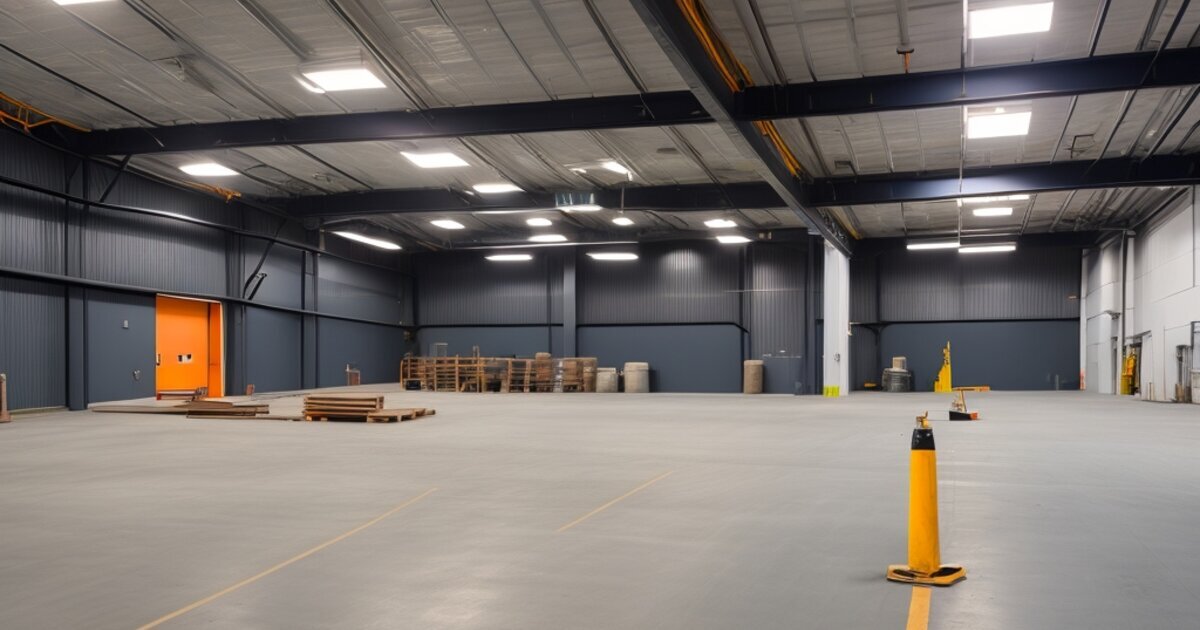
Warehouses and distribution centers are the circulatory system of modern commerce. These vast facilities store inventory, process orders, and move goods 24 hours a day. The painting requirements are equally massive: ceilings that may soar to 40 feet, walls that stretch hundreds of feet in length, floors that withstand forklift traffic, and safety markings that prevent accidents in high-traffic environments.
For facility managers overseeing warehouse and distribution operations, understanding high-bay painting, floor coating systems, and safety color coding ensures a facility that is safe, efficient, and professional.
Quick Answer
Warehouse and distribution center painting should prioritize high-bay dryfall coatings, durable floor systems, visible safety markings, and phased execution that keeps operations moving. Facility managers get the best results by matching each coating scope to traffic, access, overspray control, and OSHA/ANSI color-coding needs before work starts.
Warehouse Painting Priorities
High-Bay Interior Painting
Warehouse interiors present scale challenges that exceed most commercial environments.
Ceiling heights. Modern distribution centers often feature 32-40 foot clear heights to accommodate high-bay racking. Painting these ceilings requires specialized access equipment: boom lifts, scissor lifts, or scaffolding systems that can reach extreme heights.
Dryfall paint technology. Dryfall paint is the standard for warehouse ceilings. These fast-drying formulations convert overspray to dust before it reaches the floor, allowing painting over operational inventory and equipment without sticky residue. See our drywall and dryfall guide for detailed information.
Surface areas. A typical 500,000 square foot distribution center may have 1.5-2 million square feet of wall and ceiling surface. This scale requires efficient application methods and large crews to complete within reasonable timeframes.
Color strategy. White or off-white ceilings maximize light reflectance, reducing lighting energy costs. Light-colored walls improve visibility and safety. Dark colors on lower walls hide scuffs from forklift contact and pallet movement.
Floor Coating and Marking Systems
Warehouse floors are among the most abused surfaces in commercial construction.
Floor coating options.
- Epoxy systems: Standard for warehouse floors. Chemical-resistant, durable, and available in various thicknesses. See our concrete floor coatings guide for details.
- Polyurethane systems: Superior abrasion resistance and UV stability. Better for areas with heavy forklift traffic.
- Polished concrete: Low-maintenance option that provides durability without coatings. Requires ongoing maintenance to preserve appearance.
Safety markings. OSHA and facility safety programs require specific floor markings:
- Yellow: Aisles, pedestrian walkways, traffic lanes
- Red: Fire equipment locations, emergency stops, danger zones
- White: Equipment boundaries, production areas
- Blue: Disabled parking, handicapped accessible routes
- Green: Safety equipment, first aid, emergency egress
- Orange: energized equipment, caution areas
Line durability. Floor markings in high-traffic areas wear quickly. Specify durable epoxy or urethane traffic paint. Plan for annual refresh of heavily trafficked lines.
Anti-slip requirements. Areas prone to wet conditions (loading docks, wash bays) require anti-slip floor coatings with broadcast aggregate.
Warehouse Coating Scope Decision Table
| Facility Area | Common Coating Need | Best Planning Decision |
|---|---|---|
| High-bay ceilings | Bright, low-overspray finish | Use dryfall paint during off-shifts with lift access planned by aisle |
| Forklift aisles | Abrasion-resistant traffic surface | Specify epoxy or polyurethane systems with annual line refresh |
| Loading docks | Moisture, impact, and slip resistance | Add broadcast aggregate and durable safety markings |
| Rack columns and bollards | Impact visibility and corrosion control | Use high-visibility colors with rust-inhibitive primers where steel is exposed |
Rack and Equipment Protection
Warehouse racking and material handling equipment require protective coatings that withstand impact.
Rack painting. Steel racking systems benefit from protective coatings that prevent rust and improve appearance. Powder coating is common at the factory level. Field touch-up requires rust-inhibitive primers and durable enamel finishes.
Column protection. Rack columns at aisle intersections are prone to forklift impact. Install column protectors (steel, plastic, or rubber) to prevent damage. Paint protectors in high-visibility colors.
Bollards and guards. Steel bollards and guardrails protect walls, equipment, and building columns. Maintain protective coatings to prevent rust. Yellow and black striped patterns provide high visibility.
Operational Continuity
Warehouses cannot shut down for painting. Work must proceed around operations.
Phased execution. Divide the facility into zones (by aisle, department, or quadrant). Complete one zone before moving to the next. Maintain operations in unaffected areas.
Off-hours work. Schedule ceiling painting and spraying during off-shifts or weekends. Brush and roller work may proceed during operations in isolated areas.
Inventory protection. Cover inventory, equipment, and conveyor systems with plastic sheeting or drop cloths. Dryfall paint minimizes but does not eliminate the need for protection.
Ventilation. Airless spraying generates overspray and solvent vapor. Provide adequate ventilation through open doors, portable exhaust fans, or the building’s HVAC system.
Safety protocols. Painting in active warehouses requires:
- Fall protection for work above 6 feet
- Barricades and signage to protect workers and equipment
- Coordination with warehouse management for lift equipment access
- Fire safety measures when using solvent-based products
Exterior Painting
Warehouse exteriors are typically metal panel, tilt-up concrete, or masonry construction.
Metal buildings. See our pre-engineered metal building painting guide and metal building painting guide for detailed information on factory finish maintenance and field coating.
Tilt-up concrete. See our tilt-up concrete painting guide for information on form release removal, coating selection, and joint treatment.
Loading docks. Loading dock areas require durable, chemical-resistant coatings that withstand truck traffic, weather exposure, and cleaning chemicals.
Frequently Asked Questions
What paint is best for high-bay warehouse ceilings?
Dryfall paint is typically best because overspray dries into removable dust before reaching the floor. It still requires protection planning around inventory, conveyors, and sensitive equipment.
How often should warehouse floor markings be refreshed?
Heavy forklift lanes and pedestrian crossings often need annual refresh. Lower-traffic areas may last longer if the coating system and cleaning program are maintained.
Can warehouse painting happen without shutting down operations?
Yes, but it requires phased zones, off-hour spray work, ventilation planning, barricades, and close coordination with warehouse supervisors so traffic and inventory can be shifted safely.
Facility Manager Checklist
- Use Dryfall Paint for High-Bay Ceilings: Specify fast-drying formulations that convert overspray to dust, allowing painting over operational inventory without sticky residue.
- Specify Epoxy or Polyurethane Floor Coatings: Require chemical-resistant, abrasion-tolerant systems that withstand forklift traffic and pallet impact in high-traffic aisles.
- Implement OSHA Color-Coded Safety Markings: Apply yellow for walkways, red for fire equipment, and green for safety equipment per ANSI Z535.1 standards.
- Plan Annual Refresh of Floor Lines: Budget for yearly re-striping of heavily trafficked lanes and pedestrian walkways to maintain visibility and compliance.
- Install Column Protectors at Aisle Intersections: Add steel, plastic, or rubber guards to prevent forklift impact damage to racking columns and wall corners.
- Phase Painting by Zone to Maintain Operations: Divide the facility into quadrants or departments and complete one zone before moving to the next.
- Protect Inventory and Equipment During Painting: Cover racking, conveyor systems, and stock with plastic sheeting or drop cloths before spray application.
Warehouse and distribution center painting requires contractors who understand the scale, safety requirements, and operational constraints of logistics facilities. Facility managers who plan phased execution, specify durable coatings, and maintain safety markings create environments that support efficient operations and employee safety.
For warehouse and distribution center painting in the Southwest, contact Moorhouse Coating.
Standards & Sources
Related Reading
Related Resources
- Drywall Finishing and Dryfall Painting
- Concrete Floor Coatings and Epoxy Systems
- Pre-Engineered Metal Building Painting
- Tilt-Up Concrete Painting
- Industrial Manufacturing and Fabrication Painting
- Commercial Painting Project Management
Frequently Asked Questions
What paint is best for high bay warehouse ceilings?
Dryfall paint is typically best because overspray dries into removable dust before reaching the floor. It still requires protection planning around inventory, conveyors, and sensitive equipment.
How often should warehouse floor markings be refreshed?
Heavy forklift lanes and pedestrian crossings often need annual refresh. Lower traffic areas may last longer if the coating system and cleaning program are maintained.
Can warehouse painting happen without shutting down operations?
Yes, but it requires phased zones, off hour spray work, ventilation planning, barricades, and close coordination with warehouse supervisors so traffic and inventory can be shifted safely.
Facility Manager Checklist
Use Dryfall Paint for High Bay Ceilings: Specify fast drying formulations that convert overspray to dust, allowing painting over operational inventory without sticky residue. Specify Epoxy or Polyurethane Floor Coatings: Require chemical resistant, abrasion tolerant systems that withstand forklift traffic and pallet impact in high traffic aisles. Implement OSHA Color Coded Safety Markings: Apply yellow for walkways, red for fire equipment, and green for safety equipment per ANSI Z535.1 standards. Plan Annual Refresh of Floor Lines: Budget for yearly re striping of heavily trafficked lanes and pedestrian walkways to maintain visibility and compliance. Install Column Protectors at Aisle Intersections: Add steel, plastic, or rubber guards to prevent forklift impact damage to racking columns and wall corners. Phase Painting by Zone to Maintain Operations: Divide the facility into quadrants or departments and complete one zone before moving to the next. Protect Inventory and Equipment During Painting: Cover racking, conveyor systems, and stock with plastic sheeting or drop cloths before spray application. Warehouse and distribution center painting requires contractors who understand the scale, safety requirements, and operational constraints of logistics facilities. Facility managers who plan phased execution, specify durable coatings, and maintain safety markings create environments that support efficient operations and employee safety. For warehouse and distribution center painting in the Southwest, contact Moorhouse Coating.