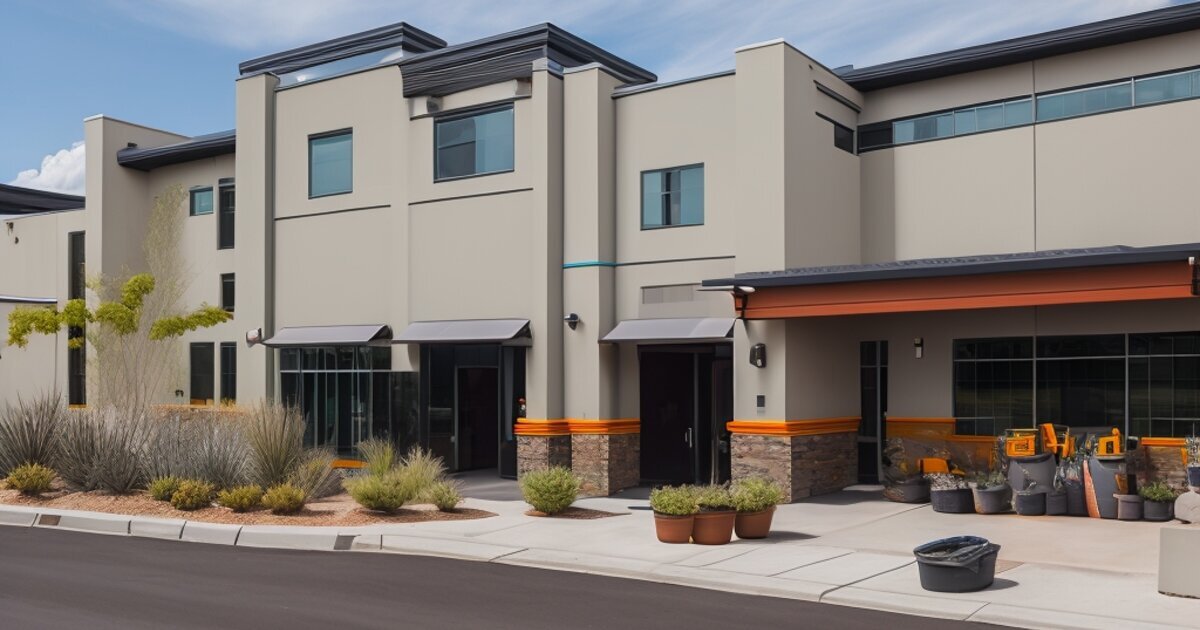
Tucson facility managers face a unique set of challenges when maintaining commercial exteriors. At 2,400 feet above sea level and surrounded by five mountain ranges, the Old Pueblo’s climate is not simply a cooler version of Phoenix. The Sonoran Desert here delivers sharper freeze-thaw cycles, more intense ultraviolet radiation, caliche-laden soils, and monsoon patterns that arrive later and often hit harder than they do 100 miles north. For coating decisions, those differences matter.
This guide walks through how Tucson’s regional conditions affect paint specification, application timing, and long-term performance for warehouses, retail centers, HOAs, office parks, and industrial facilities across Pima County and Southern Arizona. Working with a Tucson commercial painting contractor who understands elevation, UV exposure, and freeze-thaw risk is essential for durable results.
Quick Answer
Commercial painting in Tucson requires UV-stable acrylic or elastomeric coatings, breathable masonry systems for caliche-driven moisture, and careful scheduling around monsoon storms, frost risk, and overheated substrates. The best results come from matching the coating to Tucson’s higher elevation, thermal swings, and Southern Arizona moisture patterns rather than using a generic desert specification, and from hiring a Tucson commercial painting contractor experienced with higher-elevation desert conditions.
Quick Answer
Tucson commercial painting requires coatings that handle high UV exposure, caliche-driven moisture issues, monsoon humidity swings, and more freeze-thaw movement than lower-elevation desert cities. The best projects start with substrate diagnostics, breathable masonry systems where moisture is present, and schedules that account for both summer storms and winter overnight lows. For monsoon-specific controls, review Arizona Monsoon and Dust Storm Coating Protection.
Key Concepts
Tucson vs. Phoenix: Elevation and Temperature Swings
Phoenix sits at roughly 1,100 feet elevation in the Salt River Valley. Tucson rests more than 1,000 feet higher in the Sonoran Desert basin. That elevation gap creates measurable differences for commercial painting contractors and facility managers.
In Tucson, daytime summer highs regularly reach the triple digits, but nighttime lows drop into the 70s and occasionally the 60s. In Phoenix, overnight lows in July and August often stay above 85°F. Those cooler Tucson nights are a blessing for crews, but they also introduce a freeze-thaw risk that Phoenix rarely sees.
From late November through February, overnight temperatures in Tucson and surrounding elevations can dip below freezing 30 to 40 times per year. In the Catalina Foothills, Oro Valley, and Vail, frost frequency is even higher. Each freeze-thaw cycle expands and contracts water trapped in stucco, concrete, and masonry substrates. Over time, that movement creates hairline cracks and delamination in coatings that lack flexibility or were applied too thin.
Facility managers in Tucson need coatings that handle thermal shock—not just heat, but rapid temperature drops after sundown and occasional winter frost.
UV Degradation at Higher Elevation
Ultraviolet radiation increases roughly 4 to 6 percent for every 1,000 feet of elevation gain. At 2,400 feet, Tucson receives significantly more UV intensity than lower-elevation desert cities. The atmosphere is thinner, the sky is clearer, and cloud cover is minimal for much of the year.
That radiation attacks binders in paint films, breaking down acrylic resins and causing color fade, chalking, and embrittlement. South- and west-facing walls on commercial buildings take the worst punishment. We commonly see standard-grade exterior paints begin to chalk within three to four years on Tucson industrial buildings, even when the same product lasts six or seven years in milder climates.
For commercial properties in Tucson, we specify 100-percent acrylic formulations with titanium-dioxide-rich base pigments and UV-stable colorants. In high-exposure areas, reflective or IR-reflective topcoats help reduce surface temperatures while also resisting photodegradation. Dark colors are especially vulnerable in this environment; if your brand requires deep tones, expect shorter maintenance cycles or plan for an additional UV-stable clear coat.
Caliche Soil and Alkali Efflorescence
Southern Arizona soils are famously caliche-rich—layers of calcium carbonate cemented into hardpan just below the surface. When moisture wicks upward through concrete slabs, block walls, or masonry foundations, it carries soluble salts with it. As the water evaporates, those salts crystallize on the surface as a white, powdery deposit called efflorescence.
Efflorescence is more than a cosmetic problem. It indicates active moisture migration, and if paint is applied over salts without proper surface preparation, the coating will blister and peel within months. In Tucson, we see this frequently on warehouse stem walls, retail building foundations, and HOA perimeter walls built directly on native soil without adequate moisture barriers.
The fix requires mechanical removal of the efflorescence, treatment with a masonry conditioner or efflorescence blocker, and application of a breathable masonry coating or elastomeric finish. Breathability is the key word. Trapping moisture behind an impermeable film guarantees failure in caliche country.
Monsoon Moisture: Different Timing, Different Risks
Arizona’s monsoon season officially runs from June 15 through September 30, but Tucson often sees a later surge than Phoenix. July and August are the wettest months in Pima County, with localized microbursts that drop an inch of rain in under an hour. Flash flooding, wind-driven rain, and humidity spikes from 15 percent to 80 percent in a single afternoon are common.
That rapid humidity swing creates two coating concerns. First, if paint is applied in the morning and a sudden afternoon storm rolls in before the film has skinned over, you risk water spotting, washout, and poor adhesion. Second, the combination of driving rain and thermal expansion stress-tests any cracks, voids, or pinholes in the coating system.
For Tucson commercial buildings, we recommend elastomeric coatings on stucco and concrete block. Quality elastomerics can bridge hairline cracks up to 1/16 inch, flex with the substrate during temperature swings, and provide a monolithic waterproof barrier when applied at the specified thickness—typically 10 to 14 dry mils for vertical surfaces. They are not a substitute for structural waterproofing, but they are the right choice for exteriors exposed to Tucson’s monsoon blast.
Product Selection for Southern Arizona Conditions
Choosing the right coating system for a Tucson commercial property means looking beyond the label and matching the product to the substrate, exposure, and maintenance plan. Here is what we typically specify for local conditions:
- Stucco and EIFS: High-build elastomeric coatings with mildewcide additives. These handle the thermal movement and monsoon-driven moisture that stucco experiences in the desert.
- Concrete and CMU block: Breathable acrylic masonry coatings or silane/siloxane penetrating sealers topped with an acrylic finish. This combination blocks liquid water while allowing vapor transmission.
- Metal siding and trim: Direct-to-metal acrylics or urethane-acrylic hybrids with rust-inhibitive primers. UV-stable topcoats prevent chalking and gloss loss on south-facing elevations.
- Wood fascia and trim: Solid-color stains or acrylic latex systems with back-priming. Wood moves significantly with Tucson’s dry heat and occasional humidity spikes.
- Reflective or cool roof coatings: For flat commercial roofs, white or light-colored elastomeric roof coatings reduce thermal cycling and extend membrane life.
We avoid oil-based alkyd paints on exteriors in this climate. They become brittle under UV exposure and cannot accommodate the substrate movement that Tucson buildings experience.
Tucson Coating Selection Table
| Building Condition | Recommended Coating Approach | Why It Matters in Tucson |
|---|---|---|
| Stucco with hairline cracks | High-build elastomeric coating | Bridges movement from freeze-thaw and monsoon stress |
| CMU or concrete near soil | Breathable acrylic masonry coating or silane/siloxane sealer | Lets vapor escape from caliche-influenced moisture migration |
| South- and west-facing walls | UV-stable 100% acrylic finish | Slows chalking and color fade at higher elevation |
| Metal siding or trim | Rust-inhibitive primer with DTM acrylic or urethane-acrylic topcoat | Handles heat, UV, and oxidation risk |
| Flat commercial roof | Reflective elastomeric roof coating | Reduces thermal cycling and surface temperature |
Choosing a Tucson Commercial Painting Contractor
Not every commercial painter understands how Tucson’s elevation, caliche soils, and freeze-thaw cycles change coating behavior. A qualified Tucson commercial painting contractor should be able to explain UV-stable product selection, breathable masonry systems, monsoon hold points, and substrate temperature limits specific to Southern Arizona.
Before hiring, ask for examples of similar Tucson or Pima County projects, documentation protocols, and how the crew handles afternoon thunderstorm forecasts during summer work.
Scheduling Windows and Application Limits
Tucson offers more forgiving painting weather than Phoenix, but there are still hard limits.
Ideal months: March through May and late September through mid-November are the sweet spots. Daytime temperatures sit in the 70s to low 90s, humidity is low, and monsoon activity is minimal. These conditions allow coatings to cure predictably and crews to work full days.
Summer painting: June through August is workable, but scheduling must account for afternoon thunderstorms. We start early—often at 5:00 or 6:00 a.m.—and stop before noon on days when storm cells build over the Catalinas or Rincons. Substrate temperatures on metal or dark stucco can exceed 120°F by mid-morning, so we monitor surface temps continuously and avoid application when substrate temperature exceeds the manufacturer’s limit, typically 110°F to 120°F.
Winter painting: December through February is possible on many days, but overnight lows below 40°F slow cure rates for water-based coatings. If frost is forecast, work must stop early enough for the paint to skin over before temperatures drop. Some high-performance coatings require minimum overnight temperatures of 50°F for 24 to 48 hours after application.
Overnight curing risks: In Tucson’s desert climate, rapid cooling after sunset can cause dew point issues. If the substrate temperature drops below the dew point overnight, condensation forms on the fresh film and can interfere with adhesion or cause blushing. We track hourly weather data and avoid application when overnight conditions threaten dew formation before full cure.
Facility Manager Checklist
Before initiating a commercial exterior coating project in Tucson’s desert climate, ensure the following:
- Assess Elevation and UV Exposure: Verify that specified coatings include 100-percent acrylic formulations with UV-stable colorants for south- and west-facing walls at 2,400 feet elevation.
- Inspect for Efflorescence: Check foundation walls, stem walls, and masonry for white powdery deposits. Remediate with masonry conditioner before painting.
- Evaluate Substrate Cracks: Identify hairline cracks in stucco and block. Specify elastomeric coatings that can bridge cracks up to 1/16 inch.
- Review Monsoon Forecasting: Avoid application 24 to 48 hours before predicted heavy rain or humidity spikes above 70 percent.
- Confirm Temperature Windows: Verify that daytime highs and overnight lows stay within manufacturer specifications for the full cure cycle, accounting for freeze-thaw risk.
- Specify Breathable Systems: Never use impermeable films over concrete or block in caliche soil zones; select breathable masonry coatings or silane/siloxane sealers.
- Monitor Substrate Temperature: Use infrared thermometers to check surface temps on metal, dark stucco, and direct-sun exposures, keeping below 110°F to 120°F.
Frequently Asked Questions
What type of paint performs best on Tucson commercial buildings?
UV-stable 100% acrylic and elastomeric coatings perform best on most Tucson exteriors, especially stucco, concrete, and CMU exposed to high UV, monsoon rain, and thermal movement.
When is the best time to paint a commercial building in Tucson?
March through May and late September through mid-November are typically the best windows because temperatures, humidity, and storm risk are easier to manage.
Why does efflorescence matter before painting in Tucson?
Efflorescence signals moisture and salt movement through masonry. If salts are painted over without removal and breathable coating selection, blistering and peeling can occur quickly.
Conclusion
Tucson’s climate demands more from commercial coatings than simple desert-grade paint. The combination of high-elevation UV, freeze-thaw cycling, caliche-driven efflorescence, and late-summer monsoon bursts creates a multi-stress environment that only the right products, properly applied, can withstand.
For facility managers in Tucson and Southern Arizona, the payoff for getting these details right is measured in years of extended service life, fewer emergency repairs, and lower life-cycle costs.
If you are planning an exterior repaint for your commercial property, contact Moorhouse Coating for a site assessment and specification tailored to Tucson’s unique climate, or visit our Tucson commercial painting contractor service page.
Related Reading
- Phoenix Commercial Painting | Climate Guide
- Phoenix Summer Painting: Heat Scheduling and Substrate Temperature Limits
- Arizona Monsoon Dust Storm Coating Protection
- Coating Failure Modes and How to Spot Them Early
- Commercial Painting Costs: Budget Drivers and Cost-Reduction Strategies
- Video: Monsoon Season Coating Protection in Action
- Video: How Coating Inspection Saves Facilities $50K+ in Rework
- El Paso Commercial Painting
- Yuma Commercial Painting
- Tucson Commercial Painting Contractor
Frequently Asked Questions
What type of paint performs best on Tucson commercial buildings?
UV stable 100% acrylic and elastomeric coatings perform best on most Tucson exteriors, especially stucco, concrete, and CMU exposed to high UV, monsoon rain, and thermal movement.
When is the best time to paint a commercial building in Tucson?
March through May and late September through mid November are typically the best windows because temperatures, humidity, and storm risk are easier to manage.
Why does efflorescence matter before painting in Tucson?
Efflorescence signals moisture and salt movement through masonry. If salts are painted over without removal and breathable coating selection, blistering and peeling can occur quickly.
Frequently Asked Questions
How is commercial painting in Tucson different from Phoenix?
Tucson has higher elevation, sharper nighttime temperature drops, and more frequent winter freeze-thaw cycles than Phoenix. Coatings still need strong UV resistance, but they also need flexibility for stucco, masonry, and concrete movement. Facility managers should not simply copy Phoenix specifications without checking Tucson exposure, elevation, and moisture conditions.
What causes paint failure on Tucson masonry and stucco?
Common Tucson failures include alkali burn, efflorescence, cracking, and blistering from caliche-influenced moisture movement. The coating system should start with salt removal, crack repair, moisture testing, and a breathable masonry primer or conditioner. Applying a dense coating over active salts usually leads to early peeling.
When is the best season for Tucson commercial painting?
Spring and fall are usually the most predictable seasons for Tucson exterior work. Summer projects need early-day sequencing and monsoon pause rules, while winter projects require overnight temperature checks for cure windows. Higher-elevation areas near Oro Valley, Vail, and the foothills may need extra freeze-risk planning.
Do Tucson facilities need special color planning?
Yes. Higher UV intensity makes dark or saturated colors fade faster, especially on south- and west-facing elevations. Tucson facility managers should consider UV-stable colorants, lighter reflectance values, and mockups on high-exposure walls before approving brand colors for large commercial surfaces.