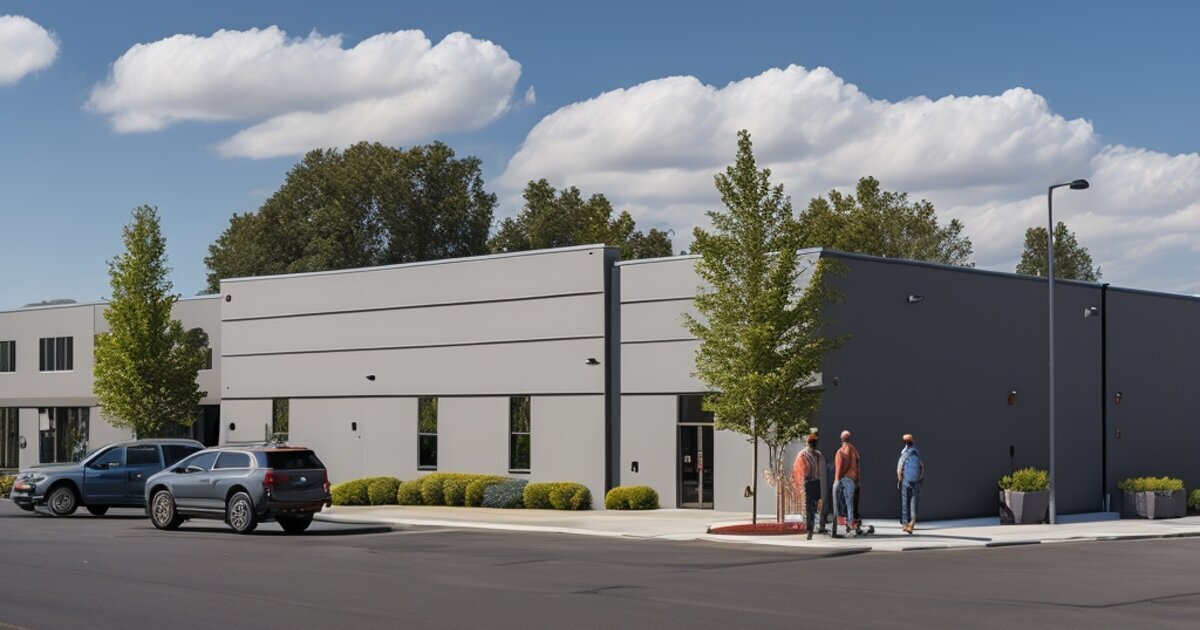
Tilt-up concrete construction is popular for warehouses, distribution centers, retail buildings, and industrial facilities throughout the Southwest. The method involves casting concrete wall panels horizontally on-site, then tilting them into vertical position with cranes. While efficient and cost-effective, tilt-up panels present unique coating challenges: form release agents, surface imperfections, joint sealing, and the sheer scale of the walls.
For facility managers overseeing tilt-up buildings, working with a commercial concrete painting contractor ensures a durable, attractive exterior that protects the investment.
Quick Answer
Tilt-up concrete painting works best when panels are cleaned of form release agents, repaired, sealed, and coated with a breathable high-build acrylic or elastomeric system. A commercial concrete painting contractor will also verify joint sealant replacement, moisture and pH testing, wet film thickness checks, and early-morning application to avoid overheated concrete.
Tilt-Up Panel Coating System
Understanding Tilt-Up Construction
Tilt-up panels are typically 6-12 inches thick, cast on the building slab or a casting bed using wood or fiberglass forms. The exterior face may be smooth, textured, or feature architectural reveals and embedments.
Surface characteristics. Tilt-up surfaces vary widely:
- Smooth faces: Created with steel or plastic forms. Relatively uniform but may have form release residue.
- Textured faces: Created with formliners that impart brick, stone, or ribbed patterns. More complex to coat uniformly.
- Exposed aggregate: Created by washing away surface cement to reveal decorative aggregate. Requires specialized coating approaches.
- Architectural features: Reveals, rustications, and embedments create shadow lines and complex geometry.
Panel joints. Tilt-up buildings have vertical and horizontal joints between panels. These joints accommodate structural movement and must be properly sealed to prevent water intrusion.
Large surface area. Tilt-up walls are massive—individual panels may be 30 feet wide and 40 feet tall. Coating application requires efficient equipment and techniques.
Surface Preparation Challenges
Tilt-up panels require thorough preparation before coating.
Form release agent removal. Form release agents (oils, waxes, or chemical formulations) prevent concrete from sticking to forms. These agents must be completely removed before coating or they will interfere with adhesion.
Removal methods:
- Pressure washing: 3,000-4,000 PSI with detergent. Effective for most form release agents.
- Acid etching: Muriatic acid or proprietary cleaners dissolve residue. Requires neutralization and thorough rinsing.
- Abrasive blasting: Effective but expensive for large areas. Creates dust and debris.
- Degreasing: Solvent-based or citrus degreasers for oil-based form releases.
Surface imperfections. Tilt-up panels often have:
- Bugholes (small voids from trapped air)
- Form marks and seams
- Color variations between panels
- Cold joints where concrete was placed in lifts
These imperfections must be addressed before coating to achieve uniform appearance.
Repair and patching. Fill bugholes and voids with cementitious patch material or elastomeric filler. Allow repairs to cure before coating. For exposed aggregate or textured finishes, use repair materials that match the existing texture.
Curing and moisture. Concrete must cure for at least 28 days before coating. Test moisture content and pH before application. Tilt-up panels cast on-site may have variable cure rates depending on weather conditions during casting.
Coating Selection for Tilt-Up
The ideal coating system balances waterproofing, flexibility, breathability, and aesthetics.
Elastomeric coatings. The standard for tilt-up exteriors in the Southwest. High-build acrylic formulations (10-15 dry mils) bridge hairline cracks, accommodate thermal movement, and provide waterproofing. Specify 100% acrylic elastomerics with:
- Elongation of 300% or greater
- Permeance of 10 perms or higher
- UV resistance for desert exposure
Acrylic latex paints. Suitable for tilt-up in protected conditions or where budget constraints preclude elastomeric systems. Lower film build (4-6 mils) provides less crack-bridging but adequate protection for sound concrete.
Concrete stains and sealers. For exposed aggregate or architectural concrete where the natural appearance is desired, penetrating sealers or semi-transparent stains protect without obscuring the substrate.
Interior coatings. Tilt-up interior walls may receive standard latex paint, epoxy coatings, or leave the concrete exposed with a clear sealer. The choice depends on the intended use and aesthetic goals.
Tilt-Up Coating Decision Table
| Condition | Recommended System | Facility Manager Priority |
|---|---|---|
| Hairline cracking or panel movement | 100% acrylic elastomeric coating | Verify specified dry film build and elongation |
| Sound concrete with limited exposure | Acrylic latex masonry coating | Confirm primer/sealer compatibility |
| Exposed aggregate or architectural finish | Penetrating sealer or semi-transparent stain | Preserve appearance while limiting water absorption |
| Interior industrial abuse | Epoxy or urethane coating | Match chemical, abrasion, and washdown needs |
Joint Treatment
Panel joints are critical waterproofing details that require specialized treatment.
Joint types.
- Control joints: Intentional gaps that accommodate shrinkage and thermal movement
- Construction joints: Where concrete placement was interrupted
- Expansion joints: Designed to accommodate large structural movement
Joint sealant. Apply compatible polyurethane or silicone sealant in panel joints. The sealant must accommodate movement while maintaining adhesion to concrete. Backer rod controls sealant depth.
Joint covers. Some buildings use metal or elastomeric joint covers that span the joint gap. These must be maintained and recoated along with the panel surface.
Flashings and drainage. Ensure that panel tops, bases, and penetrations have proper flashing and drainage to prevent water accumulation at joints.
Application Considerations
Tilt-up coating requires specialized equipment and techniques due to the large surface area.
Airless spray application. Essential for efficient coverage on large panels. Use high-capacity equipment (2+ gallons per minute) with long hoses to minimize refills. Tip size depends on coating viscosity—typically 0.029-0.039 inches for elastomeric coatings.
Wet film thickness. Verify wet film thickness during application to ensure adequate dry film build. Elastomeric coatings require 12-18 wet mils to achieve 10-15 dry mils.
Application conditions. Avoid application when:
- Surface temperature exceeds 120°F
- Ambient temperature is below 50°F
- Rain is forecast within 24 hours
- Wind speeds exceed 15 mph (causes overspray)
In desert summer, early morning application is essential before panels heat up.
Scaffolding and access. Tilt-up walls may exceed 40 feet. Scaffolding, boom lifts, or swing stages provide access. Protect landscaping, pavement, and adjacent structures from overspray.
Maintenance and Recoating
Proactive maintenance extends tilt-up coating life and prevents costly repairs.
Annual inspection. Walk the exterior to identify:
- Cracking in coating or concrete
- Failed sealant at joints
- Staining or discoloration
- Impact damage
- Efflorescence at panel bases
Touch-up painting. Address small areas of damage before they spread. Keep matching paint on hand for repairs.
Sealant replacement. Plan to replace panel joint sealant every 10-15 years, or sooner if deterioration is visible. Failed sealant is the primary cause of water intrusion in tilt-up buildings.
Full recoating. Expect 10-15 years of service from high-quality elastomeric coatings in desert conditions. Budget for full removal and recoating when the existing system shows widespread failure.
Choosing a Commercial Concrete Painting Contractor
A commercial concrete painting contractor for tilt-up work should understand form release agents, concrete curing, and large-panel application. Facility managers should look for experience with pressure washing and degreasing, cementitious repairs, compatible primer/sealer selection, elastomeric and acrylic coatings, wet film thickness verification, and joint sealant coordination. Confirm the contractor has the lifts, scaffolding, and crew size needed for large tilt-up walls and provides a written warranty.
Frequently Asked Questions
What is the best coating for tilt-up concrete walls?
For most Southwest exteriors, a 100% acrylic elastomeric coating is the best choice because it bridges hairline cracks, handles thermal movement, and improves water resistance when applied at the specified film thickness.
Do tilt-up panels need primer before painting?
Yes. Most tilt-up panels need a compatible concrete primer or sealer after cleaning and repairs to improve adhesion, equalize porosity, and reduce blotchy finish appearance.
How often should tilt-up buildings be repainted?
High-quality elastomeric systems typically last 10-15 years in desert conditions, but joint sealant, impact damage, and south- or west-facing exposure should be inspected annually.
Related Reading
- CMU and Block Filler Painting
- Commercial Stucco Repair and Recoating
- Expansion Joint and Caulking Replacement
- Coating Failure Modes and How to Spot Them Early
- Commercial Painting Costs
Facility Manager Checklist
- Select a commercial concrete painting contractor with tilt-up experience: Verify form-release removal, concrete repair, compatible primer/sealer use, wet film thickness verification, and written warranty.
- Remove All Form Release Agents: Require pressure washing, acid etching, or degreasing to eliminate oils and waxes that prevent coating adhesion.
- Repair Surface Imperfections Before Priming: Fill bugholes, form marks, and voids with compatible cementitious patch material and allow full cure.
- Allow 28-Day Concrete Cure: Do not apply coatings until concrete has cured for at least 28 days; test moisture content and pH before proceeding.
- Specify High-Build Elastomeric Coatings: Require 100% acrylic elastomerics at 10-15 dry mils with 300%+ elongation to bridge hairline cracks and accommodate thermal movement.
- Seal Panel Joints with Compatible Sealant: Apply polyurethane or silicone sealant with backer rod to all control, construction, and expansion joints.
- Verify Wet Film Thickness During Application: Confirm 12-18 wet mils during spray application to achieve specified dry film build and crack-bridging performance.
- Schedule Early Morning Work in Summer: Avoid application when surface temperatures exceed 120°F by starting at dawn before panels heat up.
Tilt-up concrete painting is a specialized discipline where surface preparation, coating selection, and joint treatment determine long-term performance. Facility managers who understand these requirements and select experienced contractors protect their buildings from water intrusion, thermal damage, and premature coating failure.
For tilt-up concrete coating and maintenance in the Southwest, contact Moorhouse Coating.
Frequently Asked Questions
What is the best coating for tilt up concrete walls?
For most Southwest exteriors, a 100% acrylic elastomeric coating is the best choice because it bridges hairline cracks, handles thermal movement, and improves water resistance when applied at the specified film thickness.
Do tilt up panels need primer before painting?
Yes. Most tilt up panels need a compatible concrete primer or sealer after cleaning and repairs to improve adhesion, equalize porosity, and reduce blotchy finish appearance.
How often should tilt up buildings be repainted?
High quality elastomeric systems typically last 10 15 years in desert conditions, but joint sealant, impact damage, and south or west facing exposure should be inspected annually.