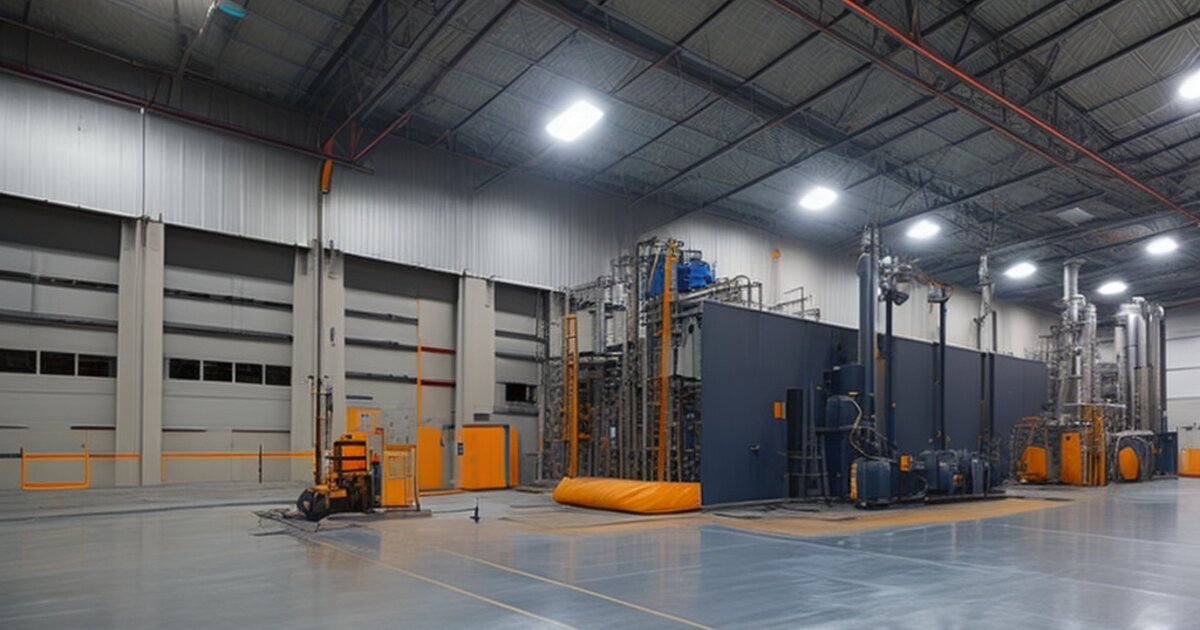
Industrial floors in cold storage warehouses, food processing plants, and pharmaceutical facilities face a destructive force that standard coating systems cannot withstand: thermal shock. When a floor surface experiences rapid temperature swings—from steam cleaning at 180°F to freezer operation at -20°F, or from hot production zones to cold blast cells—the coating and substrate expand and contract at different rates. The resulting stress fractures the coating, degrades adhesion, and leads to costly failures.
For facility managers responsible for maintaining operational uptime and controlling lifecycle costs, understanding thermal shock and specifying the right flooring system is essential. The wrong specification in a thermal cycling environment can mean coating failure within months, production shutdowns for repairs, and potential contamination risks in food and pharmaceutical operations.
Quick Answer
Thermal shock resistant flooring is required when floors move rapidly between hot washdown, production heat, cold storage, or freezer temperatures. Cementitious urethane is typically the best choice for severe thermal cycling because it bonds well to concrete, tolerates extreme temperature swings, and remains more resilient than standard epoxy under repeated expansion and contraction.
Thermal Shock Failure Cycle
Industries Affected by Thermal Shock
Thermal shock is not a niche concern. Any facility where floors experience rapid temperature changes faces this risk.
Food Processing and Beverage Plants. Production floors in bakeries, dairies, and ready-to-eat facilities are cleaned daily with high-temperature steam or hot water, often exceeding 180°F. Adjacent cold storage areas operate at 0°F to 35°F. The same floor may experience both extremes within hours. Learn more in our guide to food processing plant coatings.
Cold Storage and Blast Freezers. Cold storage floors are among the most thermally stressed surfaces in commercial construction. A freezer floor at -20°F can be exposed to ambient dock temperatures of 80°F or higher every time a door opens. Over thousands of cycles, standard epoxy systems lose adhesion and crack. Our article on cold storage coatings for thermal shock covers this environment in detail.
Pharmaceutical and Biotech Facilities. Cleanrooms and production suites often use hot clean-in-place (CIP) cycles followed by cold storage of raw materials and finished products. Floor coatings must maintain cleanability, chemical resistance, and thermal stability across these swings.
Industrial Manufacturing. Foundries, metal fabrication shops, and chemical processing facilities generate heat at production surfaces while maintaining cooler ambient conditions. Spills of hot materials or steam cleaning of production areas create localized thermal shock.
Coating Systems for Thermal Shock Resistance
Not all floor coatings handle thermal cycling equally. The key performance factors are coefficient of thermal expansion (CTE) match with concrete, flexibility at temperature extremes, and bond line resilience under repeated stress.
Cementitious Urethane (Urethane Concrete). The leading choice for severe thermal shock environments. Cementitious urethane incorporates Portland cement and specialized aggregates, giving it a CTE that closely matches concrete. It remains flexible at sub-zero temperatures and can withstand temperature swings from -40°F to over 200°F. This system is widely specified in food processing and cold storage for good reason.
Flexible Epoxy Systems. Standard epoxies become brittle at low temperatures and crack under thermal stress. Modified flexible epoxies improve performance in moderate cycling environments but may not match cementitious urethane under extreme or rapid temperature changes. For more on epoxy system options, see our guide to concrete floor coatings and epoxy systems.
Polyurethane and Polyaspartic Topcoats. When applied over a suitable base system, aliphatic polyurethane and polyaspartic topcoats provide UV stability, abrasion resistance, and some flexibility. They are not standalone solutions for severe thermal shock but enhance system durability in temperature-variable environments.
Novolac Epoxies. These offer superior chemical resistance and higher temperature tolerance for hot surfaces, but their rigidity makes them unsuitable for environments with rapid cooling cycles. In combined chemical and thermal exposure, a hybrid system may be appropriate. Our article on commercial chemical-resistant flooring explores chemical resistance in more detail.
Selecting the right system requires matching the coating’s thermal performance to the actual operating conditions, not just the maximum temperature. A coating rated for 200°F may still fail if it cannot handle the rate of temperature change or the number of expected cycles.
Thermal Shock Flooring System Comparison
| Flooring system | Best fit | Limitation to verify |
|---|---|---|
| Cementitious urethane | Severe hot washdown, freezers, food plants, cold storage | Requires proper thickness, prep, and cure before service |
| Flexible epoxy | Moderate cycling with controlled temperature changes | May become brittle or lose adhesion under rapid swings |
| Polyurethane or polyaspartic topcoat | Added abrasion, UV, or cleanability over a suitable base | Not a standalone severe thermal shock system |
| Novolac epoxy | High chemical or heat exposure without rapid cooling | Rigidity can crack under abrupt hot-to-cold cycles |
Substrate Preparation and Expansion Joint Design
Even the best coating system will fail if the substrate and joints are not properly prepared.
Concrete Surface Preparation. Thermal shock resistance starts at the bond line. The concrete must be mechanically prepared—typically by shot blasting to ICRI CSP 3-5 profile—to ensure mechanical adhesion. Any existing coating, laitance, or contamination must be removed. Surface preparation standards for thermal shock applications are more stringent than standard commercial installations because the bond line experiences repeated tension and shear stress.
Moisture Testing. Before applying any thermal shock resistant system, test the concrete for moisture vapor emission (ASTM F1869) and internal relative humidity (ASTM F2170). Moisture trapped beneath a coating subjected to thermal cycling will vaporize, creating blisters and delamination. In cold storage, moisture that freezes under the coating expands and mechanically destroys adhesion.
Expansion Joint Detailing. Concrete slabs expand and contract with temperature changes. In thermal cycling environments, this movement is amplified. Expansion joints must be maintained, cleaned, and filled with flexible joint sealants rated for the full temperature range. Rigid joint fillers will crack and telegraph stress into the coating. In high-traffic areas, consider armored joints or flexible joint systems designed for severe thermal movement.
Transition Zones. The most vulnerable areas are where temperature changes rapidly over short distances—freezer doorways, cooler-to-ambient thresholds, and hot washdown zones adjacent to cold production areas. Extend the thermal shock resistant system through the transition zone rather than terminating at the doorway. Some specifications include fabric reinforcement in base coats at these high-stress boundaries.
Testing and Performance Validation
Facility managers should request performance data that reflects real operating conditions, not just room temperature specifications.
Thermal Cycling Testing. Ask coating manufacturers for test data showing the number of thermal cycles the system has withstood between your facility’s minimum and maximum operating temperatures. Look for testing that uses rapid temperature changes rather than slow ramp rates. A system that survives 1,000 cycles with a 100°F swing in 30 minutes performs differently than one tested over 24 hours.
Adhesion Testing at Temperature Extremes. Standard pull-off adhesion tests are performed at room temperature. For thermal shock applications, request adhesion data at the lowest and highest operating temperatures. Adhesion values can drop significantly at sub-zero temperatures if the coating becomes brittle or the bond line is stressed.
Abrasion and Impact Resistance. Thermal shock floors are almost always high-traffic industrial floors. Confirm that the selected system maintains abrasion and impact resistance across the temperature range. A coating that handles thermal cycling but wears through in forklift traffic is not a successful specification.
Chemical Resistance. In food processing and pharmaceutical facilities, thermal shock resistance must coexist with chemical resistance to cleaning agents, sanitizers, and process chemicals. Verify compatibility with your cleaning protocols. For guidance on balancing these requirements, see our coating selection guide.
Facility Manager Checklist
- Map temperature extremes across the facility, including steam cleaning, production heat, and cold storage zones.
- Quantify thermal cycling frequency—daily hot washdowns create more stress than weekly cycles.
- Specify cementitious urethane for severe thermal shock environments (-40°F to 200°F+).
- Request thermal cycling test data from manufacturers for the specific temperature range and cycle rate.
- Require mechanical surface preparation (shot blast or grind) to ICRI CSP 3-5 minimum.
- Test concrete moisture before coating application (ASTM F1869 and F2170).
- Detail expansion joints with flexible sealants rated for the full temperature range.
- Extend coating through transition zones rather than terminating at door thresholds.
- Verify chemical resistance against your facility’s cleaning and sanitizing chemicals.
- Plan for adequate cure time before exposing the coating to thermal stress.
- Establish a baseline inspection after installation for future performance monitoring.
Frequently Asked Questions
What is thermal shock in industrial flooring?
Thermal shock occurs when rapid temperature changes cause the coating and concrete slab to expand or contract at different rates, creating stress that can crack or delaminate the floor system.
Is epoxy flooring thermal shock resistant?
Standard epoxy is usually not suitable for severe thermal shock. Flexible epoxy can work in moderate cycling, but cementitious urethane is typically preferred for freezers, hot washdowns, and food processing.
How can facility managers reduce thermal shock failures?
Map temperature ranges, specify a system tested for the actual cycle rate, require mechanical surface preparation, detail flexible joints, and allow full cure before exposing the floor to service conditions.
Conclusion
Thermal shock resistant flooring is not a specialty concern for a few unusual facilities—it is a critical specification for any industrial environment where floors experience rapid temperature swings. The cost of a coating failure in a food processing plant, cold storage warehouse, or pharmaceutical facility extends far beyond the repair itself. Production downtime, contamination risk, and repeated repairs quickly exceed the upfront cost of specifying the right system.
Facility managers who understand the mechanics of thermal shock, specify cementitious urethane or other engineered systems for severe cycling, and insist on proper substrate preparation and joint detailing will achieve floor performance measured in years, not months.
For thermal shock resistant flooring specification and installation in the Southwest, contact Moorhouse Coating. Our team understands the thermal cycling demands of cold storage, food processing, and industrial facilities, and we specify systems engineered for your operating conditions.
Standards & Sources
Related Reading
- Cold Storage Coatings for Thermal Shock
- Concrete Floor Coatings and Epoxy Systems
- Food Processing Plant Coatings
- Commercial Chemical-Resistant Flooring
- Coating Selection Guide
Frequently Asked Questions
What is thermal shock in industrial flooring?
Thermal shock occurs when rapid temperature changes cause the coating and concrete slab to expand or contract at different rates, creating stress that can crack or delaminate the floor system.
Is epoxy flooring thermal shock resistant?
Standard epoxy is usually not suitable for severe thermal shock. Flexible epoxy can work in moderate cycling, but cementitious urethane is typically preferred for freezers, hot washdowns, and food processing.
How can facility managers reduce thermal shock failures?
Map temperature ranges, specify a system tested for the actual cycle rate, require mechanical surface preparation, detail flexible joints, and allow full cure before exposing the floor to service conditions.