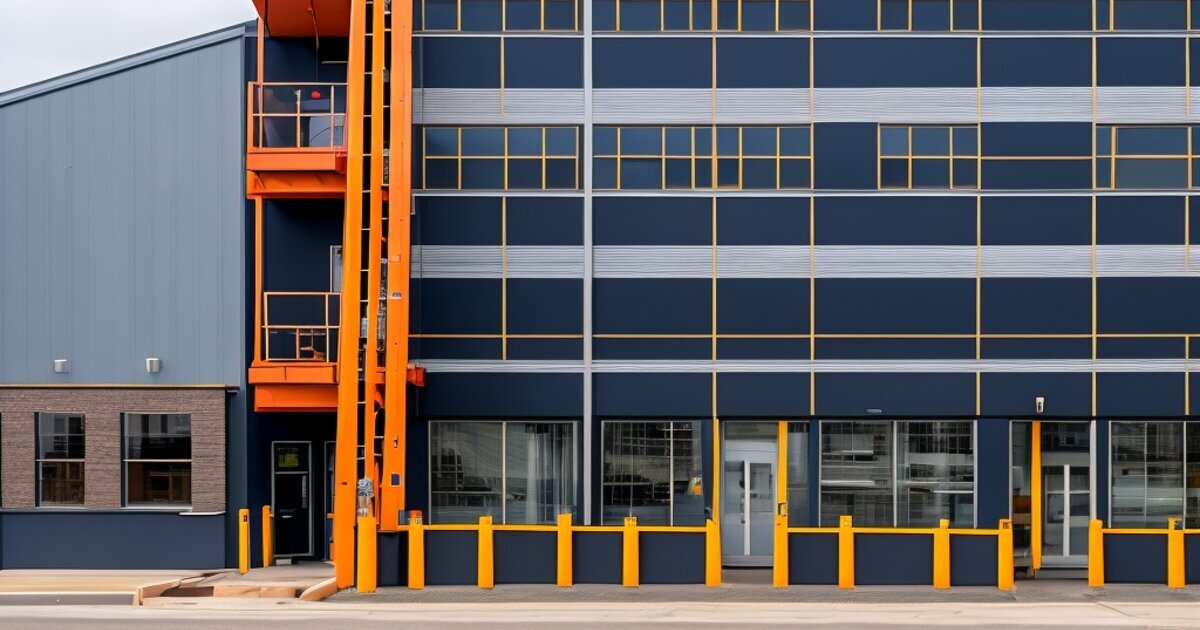
Manufacturing and fabrication facilities are among the most demanding environments for commercial coatings. Production equipment generates heat, chemicals, and abrasion. Forklifts and heavy machinery impact walls, floors, and structural steel. And OSHA safety regulations require specific color coding for pipes, equipment, and hazard zones.
For plant managers, maintenance directors, and safety officers, understanding industrial coating specifications, surface preparation standards, and safety color requirements ensures a facility that is protected, compliant, and operationally efficient.
Quick Answer
Manufacturing and fabrication facilities need industrial coating systems matched to chemical exposure, abrasion, heat, moisture, and OSHA safety color requirements. The safest approach is to map production zones, specify chemical-resistant and impact-resistant systems by area, enforce SSPC or concrete preparation standards, and phase work around production to avoid contamination and downtime.
Industrial Painting Priorities
The Industrial Painting Environment
Manufacturing facilities combine production equipment, material handling, chemical processes, and personnel in environments that destroy standard commercial coatings.
Chemical exposure. Acids, alkalis, solvents, oils, and cutting fluids attack painted surfaces. Standard latex paint dissolves or degrades within days. Chemical-resistant epoxy, polyurethane, or phenolic coatings are required.
Abrasion and impact. Forklifts, steel parts, pallets, and machinery strike walls, columns, and floors. High-build, impact-resistant coatings extend surface life. In severe cases, rigid wall protection (rubber rail, steel guards) is needed beyond paint.
Thermal exposure. Weld spatter, hot parts, and radiant heat from furnaces or ovens damage standard coatings. Heat-resistant silicone or ceramic coatings withstand temperatures up to 1200°F depending on the application.
Moisture and humidity. Coolant mist, washdown procedures, and steam create wet environments. Moisture-resistant, antimicrobial coatings prevent corrosion and biological growth.
UV and exterior exposure. Loading docks, exterior tank farms, and outdoor equipment face desert UV and thermal cycling. UV-stable, flexible coatings prevent chalking and cracking.
Production Area Coatings
Production floors, walls, and equipment require specialized coatings that withstand the specific abuses of each manufacturing process.
Manufacturing Coating Selection Table
| Facility Zone | Main Exposure | Recommended System | Operational Note |
|---|---|---|---|
| Production floors | Forklifts, dropped parts, chemical splashes | High-build epoxy or polyurethane mortar with aggregate | Use coved bases where washdown or spill control is required |
| Lower walls and columns | Impact, abrasion, cleaning | High-build epoxy or urethane coating | Add guards where impacts exceed coating protection |
| Equipment and machinery | Oil, coolant, abrasion | Epoxy or urethane enamel | Coordinate colors with maintenance and safety identification |
| Tanks and containment | Immersion or splash chemicals | Chemical-specific lining or novolac/vinyl ester system | Verify resistance against exact chemicals and concentrations |
| Loading docks and exterior steel | UV, corrosion, thermal cycling | Zinc-rich primer, epoxy intermediate, polyurethane topcoat | Schedule application around surface temperature limits |
Floors. Manufacturing floors are the most abused surfaces. They must resist:
- Heavy forklift and machinery traffic
- Chemical spills and splashes
- Thermal shock from hot materials
- Impact from dropped parts and tools
Specify high-build epoxy or polyurethane mortar systems (1/4 to 1/2 inch thick) with aggregate for slip resistance. Coved bases prevent accumulation at wall junctions. For extreme chemical exposure, vinyl ester or novolac epoxy systems provide superior resistance.
Walls. Lower walls (up to 8 feet) see the most abuse. Specify high-build epoxy or urethane coatings that withstand impact and scrubbing. Upper walls and ceilings can use standard industrial latex if chemical exposure is minimal.
Equipment and machinery. Production equipment requires coatings that resist oil, coolant, and abrasion. Epoxy or urethane enamels provide durability. Color coding supports safety and maintenance identification.
Tanks and containment. Chemical storage tanks, sumps, and secondary containment areas require coatings that resist immersion in the stored chemical. Specify tank linings based on the specific chemical resistance required.
OSHA Safety Color Coding
OSHA standard 1910.144 establishes color coding requirements for safety markings in industrial facilities.
Red: Fire protection equipment, danger, stop Yellow: Caution, physical hazards (striking against, stumbling, falling, tripping, caught in between) Orange: Warning, parts of machinery or energized equipment that may cut, crush, shock, or injure Green: Safety, first aid, emergency egress Blue: Caution, limited to warning against starting, use of, or movement of equipment under repair Purple: Radiation hazards White/Black: Traffic and housekeeping markings
Implementation. Apply safety colors with durable industrial enamels or epoxies that resist fading and abrasion. Mark aisles, hazard zones, emergency equipment locations, and equipment status indicators. Maintain visibility by repainting when colors fade or markings wear.
Pipe marking. ANSI/ASME A13.1 establishes color coding for pipes conveying fluids:
- Yellow: Flammable materials
- Red: Fire quenching materials
- Orange: Toxic/corrosive materials
- Green: Safe materials (water, air)
- Blue: Compressed air
- Brown: Combustible fluids
- Gray/White: Other non-hazardous materials
Apply pipe markings with durable coatings or pre-printed labels that withstand the facility environment.
Structural Steel Protection
Structural steel in manufacturing facilities requires corrosion protection to maintain structural integrity.
Surface preparation. Proper preparation is critical for coating performance. SSPC surface preparation standards:
- SSPC-SP6 (Commercial Blast Cleaning): Minimum for most industrial applications
- SSPC-SP10 (Near-White Blast Cleaning): Required for severe environments
- SSPC-SP11 (Power Tool Cleaning): Acceptable for maintenance when blasting is not feasible
Coating systems. Typical industrial steel coating systems:
- Inorganic zinc primer + epoxy intermediate + polyurethane topcoat: Premium system for severe environments
- Epoxy primer + epoxy intermediate + polyurethane topcoat: Standard industrial system
- Moisture-cured urethane zinc + urethane topcoat: Fast-cure system for maintenance
Application. Apply coatings in controlled conditions. Avoid painting when surface temperature is within 5°F of the dew point (condensation risk). Maintain temperature and humidity within manufacturer specifications during application and cure.
Concrete Protection
Manufacturing facility concrete faces chemical attack, abrasion, and thermal shock.
Surface preparation. Concrete must be clean, dry, and profiled for coating adhesion. Methods include:
- Acid etching (for mild conditions)
- Diamond grinding (for smooth surfaces)
- Shot blasting (for heavy profiling)
- Scarification (for severe surface damage)
Moisture testing. Test concrete moisture content before coating. Calcium chloride tests or relative humidity probes verify that moisture levels are within coating manufacturer specifications. Moisture vapor transmission rates exceeding 3-5 lbs/1000 sq ft/24 hours may require moisture mitigation systems.
Coating selection.
- Epoxy systems: Standard for most industrial floors. Good chemical resistance, hardness, and adhesion.
- Polyurethane systems: Superior abrasion resistance and flexibility. Better UV stability than epoxy.
- Polyaspartic systems: Fast cure, good for tight schedules. Excellent UV and chemical resistance.
- Methyl methacrylate (MMA): Extreme chemical resistance, very fast cure. Strong odor requires ventilation.
Scheduling Around Production
Manufacturing facilities cannot shut down for painting. Work must be scheduled around production.
Planned shutdowns. Coordinate major painting with scheduled maintenance shutdowns, holidays, or slow production periods. This minimizes lost production time.
Phased execution. Paint in sections, isolating work zones with barriers and ventilation. Maintain production in adjacent areas.
Off-hours work. Schedule loud or disruptive work (blasting, grinding, spraying) during off-shifts or weekends. Brush and roller work may proceed during production hours in isolated areas.
Contamination control. Protect production equipment, materials, and finished goods from paint overspray, dust, and fumes. Use barriers, negative air pressure, and exhaust ventilation.
Plant Manager Checklist
- Specify chemical-resistant coatings based on the specific chemicals present.
- Require SSPC surface preparation for structural steel and concrete.
- Implement OSHA safety color coding for pipes, equipment, and hazard zones.
- Use high-build floor systems (epoxy or polyurethane mortar) for production areas.
- Schedule painting around production shutdowns or during off-hours.
- Test concrete moisture before floor coating application.
- Require fast-cure systems when production downtime is limited.
- Maintain safety markings by repainting when colors fade or wear.
- Protect production equipment from paint contamination during work.
- Request industrial facility references from painting contractors.
Industrial manufacturing painting requires specialized knowledge of chemical resistance, surface preparation standards, and safety regulations. Plant managers who specify appropriate coatings, enforce proper preparation, and schedule around production maintain facilities that are protected, compliant, and operationally efficient.
Facility Manager Checklist
- Map Chemical Exposure Zones: Document all acids, alkalis, solvents, and oils present to specify compatible coating chemistry.
- Implement OSHA Color Coding: Apply safety colors per 1910.144 for pipes, equipment, and hazard zones with durable industrial enamels.
- Require SSPC Surface Prep: Specify SP-6, SP-10, or SP-11 preparation standards for structural steel based on environment severity.
- Specify High-Build Floor Systems: Use epoxy or polyurethane mortar systems with aggregate in production and forklift traffic areas.
- Schedule Around Production: Coordinate painting with planned shutdowns, off-shifts, or holidays to minimize output disruption.
- Test Concrete Moisture: Verify slab moisture content is within coating manufacturer limits before floor system application.
- Maintain Safety Markings: Establish a repainting schedule for aisle lines and hazard zones before colors fade or wear.
Frequently Asked Questions
What coatings work best for manufacturing floors?
High-build epoxy or polyurethane mortar systems are commonly used because they resist forklift traffic, impact, chemicals, and cleaning. Severe chemical areas may require novolac epoxy, vinyl ester, or another chemical-specific system.
How should painting be scheduled in an active production facility?
Use planned shutdowns, off-shift work, and phased isolation zones. Blasting, grinding, and spraying should be separated from production equipment and inventory with containment and ventilation controls.
What colors are required for OSHA safety markings?
OSHA 1910.144 uses red for fire protection and danger, yellow for caution and physical hazards, orange for machine hazards, green for safety and first aid, blue for equipment warnings, and purple for radiation hazards.
For industrial manufacturing and fabrication painting in the Southwest, contact Moorhouse Coating.
Standards & Sources
- OSHA — Occupational Safety and Health Administration
- American National Standards Institute (ANSI)
- AMPP (formerly SSPC & NACE)
Related Reading
Related Resources
- Industrial Coatings Complete Guide
- OSHA Compliance Guide
- Warehouse Floor Coatings
- Commercial Painting Project Management
- Coating Selection Guide
Frequently Asked Questions
What coatings work best for manufacturing floors?
High build epoxy or polyurethane mortar systems are commonly used because they resist forklift traffic, impact, chemicals, and cleaning. Severe chemical areas may require novolac epoxy, vinyl ester, or another chemical specific system.
How should painting be scheduled in an active production facility?
Use planned shutdowns, off shift work, and phased isolation zones. Blasting, grinding, and spraying should be separated from production equipment and inventory with containment and ventilation controls.
What colors are required for OSHA safety markings?
OSHA 1910.144 uses red for fire protection and danger, yellow for caution and physical hazards, orange for machine hazards, green for safety and first aid, blue for equipment warnings, and purple for radiation hazards. For industrial manufacturing and fabrication painting in the Southwest, contact Moorhouse Coating.