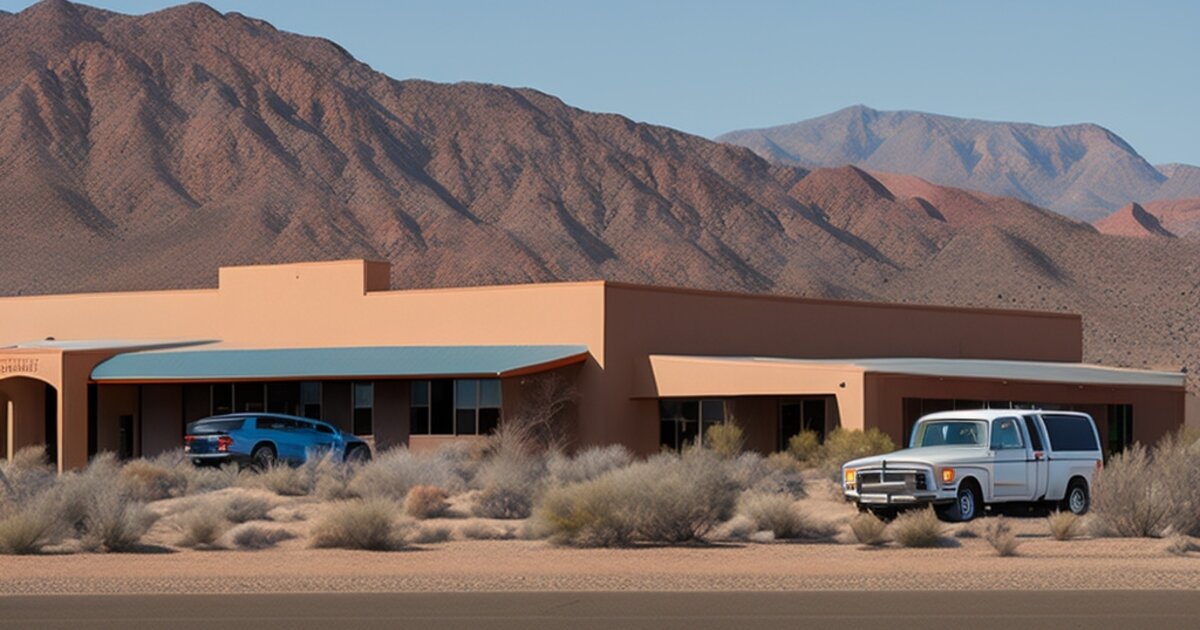
For facility managers and commercial property owners across the Southwest, maintaining historic buildings presents a dual challenge: preserving architectural integrity while managing capital improvement budgets. Whether you oversee a territorial-style office complex in Santa Fe, a mid-century retail center in Phoenix, or a brick warehouse in Denver, restoration work can strain even well-funded maintenance programs. Historic preservation tax credits offer a proven mechanism to offset these costs, yet many eligible property owners never pursue them due to unfamiliarity with the process or uncertainty about qualification requirements.
Understanding how federal and state tax credit programs work, what properties qualify, and how coating and restoration decisions interact with program standards can turn a marginally viable project into a financially compelling one. In markets where skilled labor, specialized materials, and regulatory compliance already inflate restoration costs, tax credits can provide the margin that makes comprehensive preservation feasible rather than piecemeal repair.
Quick Answer
Historic preservation tax credits can reduce qualified commercial rehabilitation costs by 20% at the federal level, with additional state credits available in Arizona, New Mexico, and Colorado. To qualify, the property generally must be income-producing, historically certified, substantially rehabilitated, and restored using materials and methods that meet the Secretary of the Interior’s Standards.
Historic Preservation Tax Credit Process Flow
Federal Historic Preservation Tax Incentives
The federal government offers a 20 percent tax credit for the rehabilitation of certified historic structures used for income-producing purposes. This is not a deduction—it is a dollar-for-dollar credit against federal income tax liability. For a $500,000 restoration project on a qualifying commercial property, the credit reduces tax liability by $100,000. The credit applies to rehabilitation expenditures, which include architectural fees, engineering, construction labor, materials, and certain soft costs directly attributable to the rehabilitation work.
To qualify, the building must be listed on the National Register of Historic Places or located in a registered historic district and certified by the National Park Service as contributing to the district’s historic significance. The rehabilitation must be substantial, meaning rehabilitation expenditures must exceed the greater of the adjusted basis of the building or $5,000. For properties held many years with depreciated basis, the $5,000 threshold is typically the relevant benchmark.
The work must satisfy the Secretary of the Interior’s Standards for Rehabilitation, which are ten principles designed to preserve the historic character of a property while accommodating contemporary use. These standards prohibit work that damages or destroys distinctive materials and features, requires that alterations be differentiated from original fabric, and mandates that archaeological resources be protected. For facility managers, this means coating and restoration specifications must be reviewed through a preservation lens before work begins.
State Preservation Tax Credit Programs
Southwestern states offer additional incentives that can be combined with the federal credit, creating stacked benefits that substantially improve project economics.
Southwest Historic Tax Credit Comparison
| Program | Typical Commercial Benefit | Key Eligibility Factor | Facility Manager Implication |
|---|---|---|---|
| Federal historic tax credit | 20% of qualified rehabilitation expenses | Certified historic, income-producing structure | Submit Part 2 approval before construction or coating work begins |
| Arizona state credit | 25% of qualified expenses, subject to program caps | National Register property in qualifying locations | Verify census tract and cap limits before final budgeting |
| New Mexico state credit | 50% of expenses, capped per project | State or National Register listing | Useful for Santa Fe and Albuquerque properties with smaller scopes |
| Colorado state credit | Up to 30% of qualified expenses | Local landmark or National Register listing | Can materially improve economics on larger facade restoration projects |
| Nevada incentives | No statewide credit currently | Local incentives may apply | Treat the federal credit as the primary incentive and check local abatements |
Arizona provides a state income tax credit equal to 25 percent of qualified rehabilitation expenses for commercial properties listed on the National Register, capped at $250,000 per project. The property must be located in an enterprise zone or a census tract with median family income below 80 percent of the state median. Phoenix, Tucson, and Yuma each have multiple qualifying census tracts where historic commercial properties are concentrated.
Nevada does not currently offer a state historic preservation tax credit, though legislative proposals have been introduced in recent sessions. Facility managers in Las Vegas and Reno should monitor legislative developments and consider the federal credit as the primary incentive. Local incentives, including Clark County’s historic property tax abatement program, may provide partial offsets.
New Mexico offers a state tax credit of 50 percent of rehabilitation expenses, capped at $50,000 per project for commercial properties. The property must be listed on the State Register of Cultural Properties or the National Register. Santa Fe and Albuquerque have the highest concentrations of eligible commercial properties. The credit can be carried forward up to five years if it exceeds current-year tax liability.
Colorado provides a state historic preservation tax credit of up to 30 percent of qualified rehabilitation expenses, with a maximum credit of $1 million for commercial properties. The building must be designated as a local landmark or listed on the National Register. Denver’s Lower Downtown and Capitol Hill historic districts contain numerous commercial properties where this credit has been successfully applied to facade restoration and interior rehabilitation projects.
Qualifying Properties and Requirements
Not every old building qualifies for preservation tax credits. The property must meet specific criteria related to age, significance, and use.
Age and significance. For the federal credit, the building must be certified as a historic structure by the National Park Service. This typically means it is individually listed on the National Register of Historic Places or is a contributing structure within a National Register historic district. Properties generally must be at least 50 years old, though younger properties with exceptional significance may qualify.
Income-producing use. The federal credit applies only to properties used for commercial, industrial, agricultural, or rental residential purposes. Owner-occupied single-family residences do not qualify. The property must generate income, and the taxpayer claiming the credit must be the owner or long-term lessee conducting the rehabilitation.
Substantial rehabilitation. The expenditure threshold ensures that tax credits support genuine rehabilitation rather than cosmetic maintenance. Rehabilitation expenses must exceed the greater of the adjusted basis in the building (excluding land) or $5,000 over a 24-month period. For properties with very low basis, the $5,000 minimum is easily met; for recently acquired properties, the adjusted basis test may require more substantial work.
Retention of historic character. At least 75 percent of the existing external walls must remain in place as external walls, and at least 75 percent of the existing internal structural framework must be retained. This prevents developers from claiming credits for projects that are effectively demolitions with partial reconstruction.
Secretary of the Interior’s Standards for Rehabilitation
The ten Standards for Rehabilitation govern all work performed under the federal tax credit program. For facility managers planning coating and restoration work, several standards have direct implications for material selection and application methods.
Standard 1 requires that a property be used as it was historically or be given a new use that requires minimal change to its distinctive materials and features. Standard 2 mandates that the historic character of a property be preserved, meaning the removal of distinctive materials is prohibited. Standard 6 requires that deterioration be repaired rather than replaced, and that replacement materials match the original in design, color, texture, and material.
For commercial painting and coating projects, these standards mean that original paint colors should be researched and matched where documented. Modern coatings must be compatible with historic substrates—silicate paints for masonry, lime washes for adobe, penetrating oils for historic woodwork. The application of impermeable modern coatings over breathable historic materials can trap moisture and accelerate deterioration, constituting a violation of Standard 2 if it damages distinctive fabric.
Standard 9 prohibits the application of new materials that damage historic materials. This has particular relevance in the Southwest, where the application of standard acrylic latex paints over historic caliche plaster or traditional mud adobe finishes can cause salt migration, efflorescence, and spalling. Coating specifications for tax credit projects should be reviewed by a preservation consultant or the State Historic Preservation Office before application.
Paint and Coating Considerations for Historic Buildings
Historic commercial buildings in the Southwest present coating challenges that differ significantly from modern construction. Substrates, existing finishes, and environmental exposure all require specialized approaches.
Substrate assessment. Before specifying coatings, facility managers must identify what they are coating. Historic brick may have been laid with soft lime mortar requiring breathable coatings. Adobe and caliche plaster demand vapor-permeable finishes that allow moisture to escape. Historic wood siding, common in territorial-era commercial buildings, may have been painted with lead-based paint that requires abatement or encapsulation rather than conventional preparation.
Color research and documentation. The National Park Service encourages the use of documented historic color schemes. Many commercial properties in Southwest historic districts have undergone multiple repainting campaigns that obscure original colors. Paint analysis, including cross-section microscopy and pigment identification, can establish authentic palettes. Where documentation is unavailable, colors compatible with the building’s period and architectural style should be selected.
Coating system selection. For historic masonry in the Southwest, mineral silicate paints and lime-based coatings provide the breathability and UV resistance required for long-term performance. These systems chemically bond with mineral substrates and do not form impermeable films. For exterior wood restoration in the Southwest, penetrating oil systems or specially formulated acrylics that accommodate wood movement are preferred over rigid film-forming coatings.
Application technique. Historic substrates are often irregular and fragile. Airless spray application, efficient on modern construction, can drive moisture into deteriorated substrates and may not achieve proper adhesion on irregular surfaces. Brush and roll application, supplemented by detailed spray work on sound areas, often produces better results on historic fabric.
Southwest-Specific Materials and Challenges
The Southwest’s distinctive building materials require preservation approaches that differ from those used in eastern or midwestern markets.
Adobe. Traditional adobe construction, found throughout New Mexico and in older Arizona and Colorado commercial districts, requires coatings that accommodate high vapor permeability and seasonal moisture cycling. Earthen plasters and lime washes are traditional finishes that remain appropriate for preservation tax credit projects. Modern elastomeric coatings, while effective on contemporary stucco, should not be applied over historic adobe unless specifically approved by preservation authorities.
Stucco and caliche plaster. Many Southwestern commercial buildings feature cement stucco or traditional caliche plaster finishes. These materials are porous and benefit from breathable mineral coatings. For commercial stucco repair and recoating in the desert Southwest, understanding whether the stucco is historic fabric or a later replacement is essential before specifying repair materials.
Territorial brick. Brick commercial buildings in Southwestern downtowns were often constructed with low-fired bricks and soft lime mortars incompatible with modern Portland cement repairs. Masonry restoration and repointing for tax credit projects must use lime-based mortars matched in strength and permeability to original materials.
Historic woodwork. Wood window frames, doors, and decorative trim in Southwestern commercial buildings suffer from UV degradation, thermal cycling, and moisture stress. Restoration rather than replacement is typically required for tax credit compliance. Window and door frame restoration can involve epoxy consolidation, Dutchman repairs, and traditional putty glazing rather than wholesale replacement with modern units.
The Application Process
Pursuing historic preservation tax credits requires planning and documentation, but the process is straightforward for experienced applicants.
Step 1: Preliminary evaluation. Determine whether the property is listed on the National Register or eligible for listing. Contact the State Historic Preservation Office (SHPO) for a preliminary assessment. Arizona, New Mexico, and Colorado each maintain SHPO offices with staff who can advise on eligibility and process requirements.
Step 2: Part 1 application. Submit National Park Service Form 10-168, Part 1, to certify that the property is a historic structure. This requires documentation of the building’s history, architectural significance, and current condition. Photographs, historical research, and architectural descriptions are required. Processing typically takes 30 to 60 days.
Step 3: Part 2 application. Before construction begins, submit Part 2 describing the proposed rehabilitation work. This includes architectural drawings, specifications, material samples, and a narrative describing how the work meets the Secretary of the Interior’s Standards. Coating specifications, color samples, and substrate preparation methods should be included in detail. The National Park Service reviews for compliance with the Standards and issues a conditional approval.
Step 4: Rehabilitation. Execute the work according to the approved Part 2 submission. Material substitutions or scope changes during construction may require amended approval. Document the work with photographs at each phase, particularly before-and-after images of distinctive features.
Step 5: Part 3 application. Upon completion, submit Part 3 requesting final certification. The National Park Service may conduct a site visit to verify that the completed work matches the approved plans. Final certification is required before the credit can be claimed on tax returns.
For commercial painting cost planning, tax credit applications should be budgeted as a separate line item. Professional fees for preservation consultants, architectural historians, and tax credit specialists typically range from 3 to 5 percent of rehabilitation costs but are themselves qualifying expenses.
Case Study: Downtown Tucson Mercantile Building
A 12,000-square-foot two-story commercial building constructed in 1923 in downtown Tucson illustrates the practical application of stacked tax credits. The property, a contributing structure in the Tucson Warehouse Historic District, had suffered decades of deferred maintenance. The facade featured deteriorated stucco over brick, original wood windows with peeling lead-based paint, and a failing tar roof.
The ownership group, planning to convert the upper floor to rental residential and retain ground-floor commercial use, budgeted $380,000 for rehabilitation. Working with a preservation consultant and the Arizona State Historic Preservation Office, they submitted Part 1 and Part 2 applications documenting the building’s significance and proposing compatible restoration work.
The rehabilitation included removal of non-historic aluminum storefronts and restoration of original display windows, masonry restoration and repointing with lime mortar, stucco repair using traditional cement-lime mix, lead-safe paint abatement and repainting of wood windows with historically appropriate colors, and a new modified bitumen roof system.
The project qualified for the 20 percent federal credit ($76,000) and the 25 percent Arizona state credit ($95,000, capped at $250,000). Combined, the credits reduced net project cost by $171,000—45 percent of total rehabilitation expenditures. The property’s appraised value increased by $340,000 post-rehabilitation, and rental rates for the residential units exceeded pro forma projections by 18 percent due to the building’s historic character and restored facade.
Maximizing Return on Preservation Investment
Tax credits are the most direct financial benefit of historic rehabilitation, but they are not the only one. Restored historic commercial properties in Southwestern downtowns and Main Street districts frequently command premium rents, attract tenants seeking distinctive space, and benefit from local historic district marketing initiatives. For facility managers calculating total cost of ownership, maximizing ROI on commercial painting through preservation tax credits should be evaluated alongside operational savings from improved building envelope performance.
The key is early integration of tax credit planning into the project development timeline. Attempting to layer tax credits onto a rehabilitation already in design or under construction is rarely successful. The Part 2 application must precede construction, and material selections must be justified as compatible with historic preservation standards. Facility managers who engage preservation consultants during schematic design position their projects for maximum benefit.
Facility Manager Checklist
- Confirm National Register status. Verify the property is individually listed or contributes to a historic district before budgeting credits.
- Contact SHPO early. State Historic Preservation Offices provide free preliminary guidance that prevents costly application errors.
- Budget for professional fees. Preservation consultants and tax credit specialists are qualifying expenses and improve approval likelihood.
- Specify breathable coatings for historic substrates. Avoid modern impermeable films over adobe, lime plaster, or soft brick.
- Document existing conditions thoroughly. Pre-rehabilitation photos and material analysis support Part 2 and Part 3 approvals.
- Submit Part 2 before construction begins. Work started before conditional approval risks credit disqualification.
- Stack state and federal credits. Research state programs in Arizona, New Mexico, and Colorado to maximize total benefit.
Frequently Asked Questions
Do commercial painting costs qualify for historic tax credits?
Painting and coating costs may qualify when they are part of an approved rehabilitation scope and use materials compatible with the historic substrate. Routine maintenance painting by itself usually does not qualify.
Can work begin before tax credit approval?
Work should not begin before the Part 2 application is conditionally approved. Starting construction or changing coating systems before approval can jeopardize credit eligibility.
Which coatings are safest for historic Southwest masonry?
Breathable mineral silicate paints, lime washes, and compatible masonry coatings are typically safer for adobe, lime plaster, caliche, and soft brick than impermeable elastomeric or acrylic films.
Historic preservation tax credits transform otherwise marginal restoration projects into financially viable capital improvements. For facility managers and commercial property owners in the Southwest, where historic building stock defines market identity and tenant appeal, these programs offer a direct path to protecting architectural assets while improving bottom-line performance. The investment in proper documentation, compatible materials, and professional guidance pays dividends in tax savings, property value, and long-term building performance.
For assistance evaluating your property’s eligibility and developing a coating specification that meets preservation standards, contact Moorhouse Coating.
Related Reading
- Santa Fe Commercial Painting: Historic Preservation and High-Desert Coating Challenges
- Commercial Stucco Repair and Recoating in the Desert Southwest
- Exterior Wood Restoration in the Southwest
- Masonry Restoration and Repointing
- Maximizing ROI on Commercial Painting
- Museum and Library Coatings
Frequently Asked Questions
Do commercial painting costs qualify for historic tax credits?
Painting and coating costs may qualify when they are part of an approved rehabilitation scope and use materials compatible with the historic substrate. Routine maintenance painting by itself usually does not qualify.
Can work begin before tax credit approval?
Work should not begin before the Part 2 application is conditionally approved. Starting construction or changing coating systems before approval can jeopardize credit eligibility.
Which coatings are safest for historic Southwest masonry?
Breathable mineral silicate paints, lime washes, and compatible masonry coatings are typically safer for adobe, lime plaster, caliche, and soft brick than impermeable elastomeric or acrylic films. Historic preservation tax credits transform otherwise marginal restoration projects into financially viable capital improvements. For facility managers and commercial property owners in the Southwest, where historic building stock defines market identity and tenant appeal, these programs offer a direct path to protecting architectural assets while improving bottom line performance. The investment in proper documentation, compatible materials, and professional guidance pays dividends in tax savings, property value, and long term building performance. For assistance evaluating your property's eligibility and developing a coating specification that meets preservation standards, contact Moorhouse Coating.