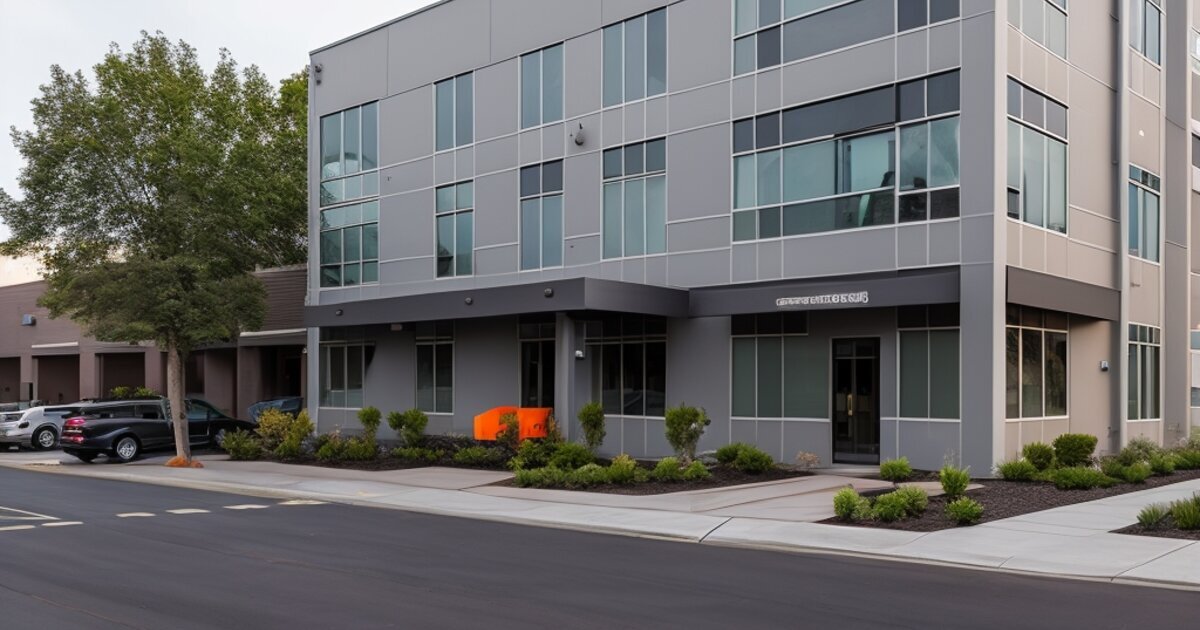
Glendale projects often sit in mixed corridors where retail frontage, office towers, public-facing civic edges, and shared circulation create distinct constraints for commercial painting. A standard one-size-fits-all schedule quickly breaks down when one block is open to shoppers, another supports administrative occupancy, and a third is connected to regional traffic routes.
This guide is built for managers who need to preserve visual standards while protecting business continuity and safety. Selecting a Glendale commercial painting contractor with corridor-phasing experience is the first step to protecting retail, civic, and office operations.
Quick Answer
Glendale commercial painting works best when projects are divided by corridor type: retail, office, civic, and mixed-use frontage. Facility managers should define access windows, dust controls, public communication, environmental logs, and zone-level handoffs before mobilization so coating work does not disrupt shoppers, tenants, visitors, or municipal operations. A qualified Glendale commercial painting contractor will coordinate these controls as part of the project plan.
Key Takeaways
| Corridor Need | Practical Action |
|---|---|
| Retail continuity | Use short closure zones, overnight cleanup, and same-day visual resets. |
| Office coordination | Schedule noisy or odor-sensitive work around tenant occupancy and meetings. |
| Civic visibility | Protect ADA routes, wayfinding, public communication, and safety documentation. |
| Warranty protection | Keep daily logs, photo packets, product records, and zone closeout sign-offs. |
Quick Answer
Glendale commercial painting should be planned by corridor type: retail spines, office and business parks, civic frontage, and mixed-use public edges. Each zone needs its own access windows, communication plan, heat and dust controls, and closeout standards. For adjacent Phoenix-area climate guidance, use Phoenix Commercial Painting | Climate Guide as a baseline.
Key Concepts
Why Glendale Is Different from Other Phoenix Markets
The same desert climate exists across Metro Phoenix, but Glendale layering is different because many corridors combine:
- high-frequency foot traffic from retail activity,
- office access windows tied to business meetings and logistics,
- municipal expectations around wayfinding, ADA compliance, and cleanup.
The result is a project where environmental controls and public visibility usually matter as much as the coating schedule.
Corridor Types and Primary Risks
Before procurement, map the project into corridor families.
Retail Spine Corridors
Retail edges fail fast when color consistency, edge control, and overnight cleanup are ignored.
- Keep customer pathways clear with short daily closure zones.
- Add stricter dust and overspray controls on exterior prep.
- Define closeout quality thresholds for paint gloss and edge crispness.
Office and Business Park Corridors
Office corridors have tighter communication needs.
- Require daily status updates to facilities and tenant liaisons.
- Schedule noisy or odor-sensitive scopes in predictable low-occupancy windows.
- Require documented sign-off at each phase before moving into the next zone.
Civic and Mixed-Use Public Frontage
These corridors create reputational risk.
- Use clearer pre-shift safety briefings where traffic patterns shift quickly.
- Document public communication plans for access disruption.
- Preserve wayfinding clarity; visual noise creates wayfinding and ADA friction.
Pre-Mobilization Checklist for Glendale Corridors
Build the plan before bid finalization:
- Confirm required permits and occupancy constraints.
- Review weather sensitivity by micro-zone and elevation.
- Define zone-level access windows by tenant, event, and public-use hours.
- Add evidence fields for daily environmental measurements.
- Align closeout criteria with operations for each work segment.
Surface Strategy by Exposure Profile
Exterior Stucco, Concrete, and Masonry
Most Glendale exteriors are exposed to thermal cycling and wind-loaded debris events. Use edge-focused quality checks on every transition between sunlit and shaded walls.
Metal Trim and Signage Interfaces
Where metal and signage meet masonry, plan primers and detailing steps in the procurement documents. These junctions are common adhesion and aesthetic failure points.
Hardscape and Entry Thresholds
Entry thresholds become operational choke points during retail traffic. Use protection and staged reset standards before releasing each segment to business continuity.
Scheduling Logic for Retail + Office Operations
Glendale is often less about extending daylight windows and more about avoiding unpredictable footfall patterns. Pair a short weather-based window with a high-control handoff process:
- Morning prep for outdoor-facing corridors when wind is lower.
- Midday execution only where exposure and access are stable.
- Same-day visual reset for occupied and public zones.
- Night carryover only after formal sign-off from facility operations.
When ambient heat pushes substrate temperature above approved limits, do not rely on “best effort.” Pause and reschedule.
For climate-responsive planning, compare with:
- Phoenix Summer Painting: Heat Scheduling and Substrate Temperature Limits
- Arizona Monsoon and Dust Storm Coating Protection
Choosing a Glendale Commercial Painting Contractor
When comparing bids for Glendale corridors, score execution maturity as high priority. A strong Glendale commercial painting contractor will explain zone-level communication, dust controls, ADA-route protection, and public-facing cleanup before mobilization.
- Can the contractor explain zone-level communication and closure protocols?
- What are the default controls for dust migration and temporary access?
- How are environmental logs delivered to the owner each day?
- What is the default quality hold for edge transitions and public-facing interfaces?
If a bidder cannot answer quickly and confidently, assume the project risk profile is too high.
Communications and Resident/Visitor Management
Even office districts often host short-term events and deliveries. Add communication requirements that prevent surprise:
- A weekly published corridor plan with explicit disruption windows.
- On-site contact details for access questions.
- Defined expectations for complaint logging and response times.
This matters most for mixed-use stretches where retail foot traffic and building services overlap.
Documentation Standards That Protect Warranty Outcomes
For long-lived facilities, quality documentation is a practical tool, not a filing task.
- Daily logs with weather, zone, and handoff details.
- Photo packets before, during, and after each zone release.
- Batch, product, and coverage notes tied to exact location codes.
- Final closeout checklist completed before warranty period begins.
This documentation pattern aligns with requirements in many commercial RFQ and specification processes.
Facility Manager Checklist
- Map the project into corridor families before procurement: Identify retail spine, office park, and civic frontage zones to tailor access controls, communication plans, and quality thresholds.
- Confirm required permits and occupancy constraints before mobilization: Review tenant hours, event schedules, and municipal expectations for wayfinding and ADA compliance.
- Define zone-level access windows by tenant and public-use hours: Pair short weather-based windows with high-control handoff processes for retail and mixed-use stretches.
- Require daily environmental logs and photo documentation: Demand weather readings, zone details, and before/during/after photo packets tied to exact location codes.
- Add evidence fields for edge transitions and public-facing interfaces: Specify quality holds for metal-to-masonry junctions, signage interfaces, and entry thresholds where failures are most common.
- Require weekly published corridor plans with disruption windows: Publish explicit schedules with on-site contact details and complaint response protocols for mixed-use areas.
- Score contractor execution maturity as high priority in bid evaluation: Select a Glendale commercial painting contractor who can explain zone-level communication, dust controls, daily log delivery, and default quality holds.
Frequently Asked Questions
Why do Glendale corridor painting projects need extra coordination?
Many Glendale properties combine retail traffic, office access, civic expectations, and shared public circulation. Without zone-level planning, a coating project can interfere with customers, tenants, deliveries, ADA routes, and public-facing operations.
What should be included in a Glendale painting schedule?
The schedule should define tenant access windows, public-use hours, environmental hold points, cleanup timing, and daily release criteria for each zone. It should also include communication plans for visitors, residents, and building services.
How can facility managers reduce warranty disputes?
Require daily weather logs, photo documentation, product batch records, and closeout sign-offs tied to exact work zones. These records help prove that surface preparation, application conditions, and handoffs met the specification.
Standards & Sources
Related Reading
- Phoenix Commercial Painting | Climate Guide
- Scottsdale Commercial Painting: Corporate and Lifestyle Corridors
- Mesa Commercial Painting: Industrial and Healthcare Coating Guidance
- The Facility Manager’s Guide to Coating Contractor RFQs
- Phased Painting Schedules for 24/7 Operations
- Case Study: Multi-Family Repainting with 98% Tenant Satisfaction
- Video: How Coating Inspection Saves Facilities $50K+ in Rework
- Peoria Commercial Painting
- Glendale Commercial Painting Contractor
Frequently Asked Questions
Why do Glendale corridor painting projects need extra coordination?
Many Glendale properties combine retail traffic, office access, civic expectations, and shared public circulation. Without zone level planning, a coating project can interfere with customers, tenants, deliveries, ADA routes, and public facing operations.
What should be included in a Glendale painting schedule?
The schedule should define tenant access windows, public use hours, environmental hold points, cleanup timing, and daily release criteria for each zone. It should also include communication plans for visitors, residents, and building services.
How can facility managers reduce warranty disputes?
Require daily weather logs, photo documentation, product batch records, and closeout sign offs tied to exact work zones. These records help prove that surface preparation, application conditions, and handoffs met the specification.
Frequently Asked Questions
What makes Glendale commercial painting different from other Phoenix-area work?
Glendale projects often combine retail frontage, office access, civic visibility, event traffic, and shared pedestrian routes in the same corridor. That mix makes communication, wayfinding, daily cleanup, and access control just as important as coating selection.
How should retail corridors in Glendale be painted while businesses stay open?
Retail corridors should be painted in short zones with clear pedestrian detours, overnight or low-traffic work where needed, and same-day visual resets. Tenants need advance notice, contact information, and explicit disruption windows so customers can continue moving safely through the property.
What coating details matter on Glendale office and civic buildings?
Glendale office and civic buildings need durable finishes at entry thresholds, signage interfaces, metal-to-masonry transitions, and public-facing edges. These areas receive frequent contact and visibility, so specifications should include primer compatibility, edge quality holds, and photo documentation by zone.
How should Glendale projects handle heat and dust?
Glendale projects should combine weather-based work windows with daily environmental logs and dust controls. Contractors should pause when substrate temperatures exceed product limits, recheck surfaces after wind events, and protect public walkways from overspray, debris, and confusing temporary barriers.