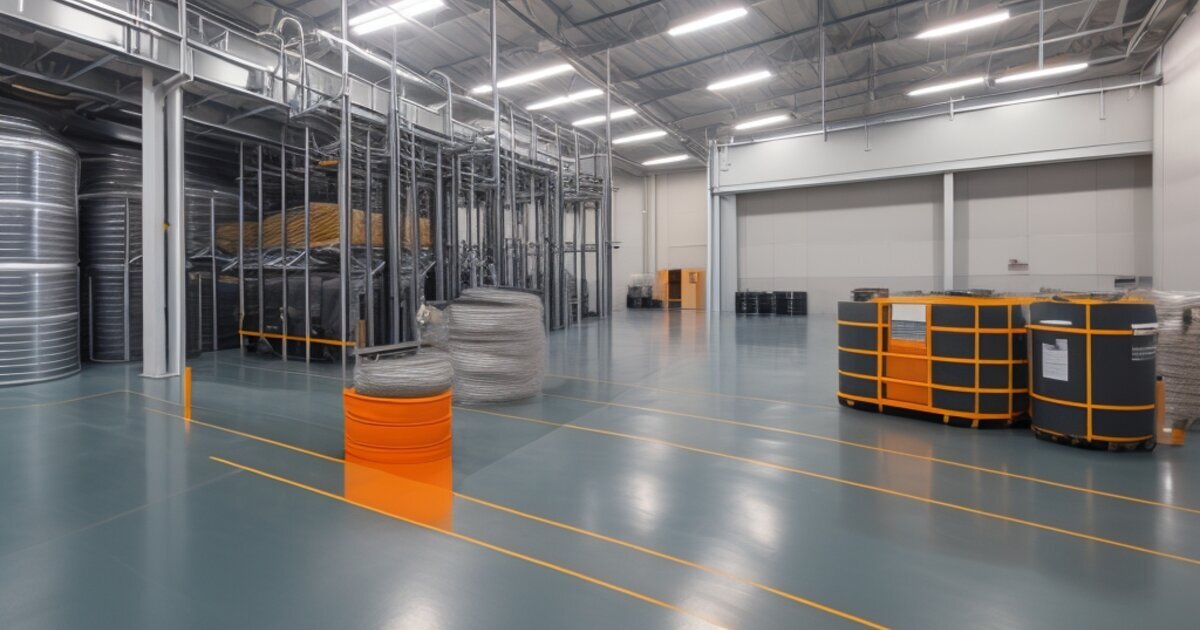
The Southwest is fast becoming the epicenter of electric vehicle manufacturing. Lucid Motors operates its advanced facility in Casa Grande, Arizona, while Tesla suppliers and battery cell manufacturers build multi-billion-dollar gigafactories across Nevada and Arizona. These facilities demand coating systems engineered far beyond conventional industrial floors. For facility managers, flooring is a critical operational and safety specification affecting cleanroom compliance, chemical resistance, thermal management, and long-term durability.
Quick Answer
EV battery facility floors need zone-specific coating systems: ESD epoxy or polyurethane in cleanrooms and dry rooms, novolac epoxy or reinforced systems where electrolytes and solvents are present, thermal-shock-resistant polyurethane or polyurea in formation and testing areas, and high-build epoxy with urethane topcoats for forklift and AGV traffic.
Key Takeaways
- Treat flooring as a production-critical system, not a generic warehouse finish.
- Specify ESD performance, chemical resistance, thermal shock tolerance, and traffic durability by zone.
- Require moisture testing, ICRI surface profiling, and documented cure conditions before acceptance.
- Address joints early because joint failure creates debris, chemical ingress, and trip hazards.
EV Battery Facility Floor Zones
Cleanroom Requirements for Battery Assembly
Battery cell assembly occurs in controlled environments where particulate contamination and electrostatic discharge can destroy sensitive components. Dry rooms maintain dew points below -40°C, conditions that challenge conventional coating adhesion. Floors must comply with ISO 14644-1 classifications, often requiring ISO Class 7 or better.
Electrostatic dissipative (ESD) flooring is non-negotiable. Static charges can ignite volatile electrolyte vapors and damage precision electronics. ESD coatings must maintain surface resistivity between 1 × 10⁶ and 1 × 10⁹ ohms, verified to ANSI/ESD S20.20 standards. Seamless, self-leveling epoxy or polyurethane systems applied at 20 mils eliminate joints where particles collect. For more on cleanroom coating specifications, see our guide to data center cleanroom coatings.
Surface preparation is equally critical. Concrete must be cured, moisture-tested, and mechanically profiled to CSP 3–5 per ICRI guidelines. Residual moisture causes delamination under the extreme desiccation of a battery dry room.
Chemical Resistance for Electrolyte and Solvent Exposure
Battery manufacturing involves aggressive chemicals that destroy standard floor coatings. N-Methyl-2-pyrrolidone (NMP), used in electrode slurry preparation, attacks conventional epoxies. Electrolyte solutions containing lithium salts and organic carbonates corrode unprotected concrete. Alkaline cleaning agents further stress the floor system.
Chemical-resistant novolac epoxy systems are the industry standard for zones with direct electrolyte exposure. Novolac formulations cross-link at higher densities than standard bisphenol-A epoxies, creating a more impermeable film. For areas with intermittent contact, high-build epoxy systems with a polyurethane topcoat provide balanced protection.
The selection process must include a chemical resistance matrix matched to your specific chemistries. Our industrial manufacturing and fabrication painting guide covers how to build a specification that holds up under production conditions.
Spill containment areas need coatings rated for continuous immersion, often specifying fiberglass-reinforced epoxy or vinyl ester systems at 125–250 mils.
Thermal Shock and Heat Management Flooring
Battery formation and testing generate significant heat. Formation cabinets operate at elevated temperatures during initial charge cycles. Thermal cycling rooms subject packs to rapid swings from -40°C to 85°C. Floors in these areas must withstand thermal shock without cracking or delaminating.
Standard epoxies become brittle at low temperatures and soften under sustained heat. Flexible polyurethane and polyurea systems outperform rigid epoxies in thermal shock environments, maintaining flexibility across extreme ranges. Urethane-modified epoxies offer a middle ground, combining chemical resistance with improved thermal flexibility.
In the Southwest, where summer temperatures exceed 110°F, building envelope performance directly impacts floor conditions. For regional climate considerations, see our Phoenix commercial painting guide.
Heavy Load and Traffic Requirements
EV battery facilities move massive weights via forklift and automated guided vehicles (AGVs). Robotic transport systems apply concentrated point loads. The floor must support this traffic without wearing through or generating particulate debris.
High-build epoxy systems with urethane topcoats are the baseline for general areas. For highest-traffic zones, urethane-modified epoxies or polyurethane cement systems provide superior abrasion resistance. Polyurethane cement handles thermal cycling and heavy impact better than pure epoxy, making it ideal where multiple stressors converge.
Joint treatment is a common failure point. Control and expansion joints must be filled with flexible polyurea or semi-rigid epoxy fillers. Failed joints create debris, allow chemical ingress, and become trip hazards.
Floor flatness specifications (FF/FL) matter for automated transport. AGVs require tighter tolerances than forklift traffic, often requiring self-leveling underlayments. For a complete overview, refer to our concrete floor coatings and epoxy systems guide.
Frequently Asked Questions
What flooring is best for EV battery cleanrooms?
Most EV battery cleanrooms use seamless ESD epoxy or polyurethane flooring with low-outgassing, non-shedding properties. The system should meet the required ISO cleanroom class and maintain surface resistivity within the specified ESD range.
Where should novolac epoxy be specified in a battery facility?
Novolac epoxy belongs in zones with direct or repeated exposure to electrolyte, NMP, organic carbonates, alkaline cleaners, or other aggressive process chemicals. Areas with only incidental exposure may be served by high-build epoxy with a compatible urethane topcoat.
How often should EV battery facility floors be inspected?
High-risk zones should be inspected at least quarterly, with cleanrooms, joints, spill areas, and AGV routes receiving the closest attention. Any loss of ESD performance, coating wear, cracking, or chemical attack should trigger corrective work before production debris or safety hazards develop.
Standards & Sources
- ASTM International
- American National Standards Institute (ANSI)
- International Organization for Standardization (ISO)
Related Reading
- Industrial Manufacturing and Fabrication Painting
- Concrete Floor Coatings and Epoxy Systems
- Coating Selection Guide
- Thermal Shock Resistant Flooring
- Phoenix Commercial Painting Guide
Facility Manager Checklist
Use this checklist when specifying and evaluating floor coating systems for EV battery manufacturing facilities:
- Define zone-specific requirements. Cleanroom, assembly, testing, storage, and shipping zones each have distinct performance demands. Specify coatings by zone rather than applying a single system facility-wide.
- Verify cleanroom classification. Confirm the ISO class for each zone and specify coatings with documented non-shedding and low-outgassing properties.
- Require ESD compliance. Specify surface resistivity between 1 × 10⁶ and 1 × 10⁹ ohms, tested per ANSI/ESD S20.20, for all battery handling areas.
- Build a chemical resistance matrix. List every chemical, solvent, and cleaning agent that will contact the floor. Verify coating compatibility with the manufacturer’s technical data sheets.
- Account for thermal shock. Identify zones with rapid or extreme temperature cycling. Specify flexible polyurethane or polyurea systems where thermal stress is present.
- Assess traffic and load types. Document forklift weights, AGV specifications, point loads, and traffic frequency. Match coating thickness and chemistry to the load profile.
- Specify joint treatment. Require flexible joint fillers compatible with the primary coating system. Inspect existing joints for damage before coating application.
- Confirm surface preparation standards. Demand ICRI CSP 3–5 profile, moisture testing per ASTM F1869 or F2170, and documented ambient conditions during application.
- Review warranty terms. Ensure coverage for your specific chemistries, temperatures, and traffic conditions.
- Plan for phased application. Match cure windows to your production schedule and ventilation capacity.
- Coordinate building envelope specs. Roof and wall insulation with reflective coatings reduce slab thermal stress in desert climates.
For a structured approach to matching coating systems to facility requirements, see our coating selection guide.
Conclusion
EV battery manufacturing facilities represent one of the most demanding applications for industrial floor coatings. The combination of cleanroom requirements, aggressive chemical exposure, thermal shock, and heavy traffic creates an environment where specification shortcuts lead to premature failure and safety risks. For facility managers in Arizona and Nevada, selecting the right floor coating system is a decision with decade-long operational consequences.
Moorhouse Coating works with facility managers and project engineers to specify coating systems engineered for battery manufacturing. From dry room ESD floors to chemical-resistant assembly coatings and thermal-shock-resistant testing area systems, we align specifications with operational requirements. If you are planning or upgrading an EV battery facility in the Southwest, contact our team to schedule a facility assessment.
Related Reading
- Concrete Floor Coatings and Epoxy Systems
- Coating Selection Guide
- Commercial Chemical-Resistant Flooring
- Thermal Shock Resistant Flooring
- Phoenix Commercial Painting Guide
Frequently Asked Questions
What flooring is best for EV battery cleanrooms?
Most EV battery cleanrooms use seamless ESD epoxy or polyurethane flooring with low outgassing, non shedding properties. The system should meet the required ISO cleanroom class and maintain surface resistivity within the specified ESD range.
Where should novolac epoxy be specified in a battery facility?
Novolac epoxy belongs in zones with direct or repeated exposure to electrolyte, NMP, organic carbonates, alkaline cleaners, or other aggressive process chemicals. Areas with only incidental exposure may be served by high build epoxy with a compatible urethane topcoat.
How often should EV battery facility floors be inspected?
High risk zones should be inspected at least quarterly, with cleanrooms, joints, spill areas, and AGV routes receiving the closest attention. Any loss of ESD performance, coating wear, cracking, or chemical attack should trigger corrective work before production debris or safety hazards develop.