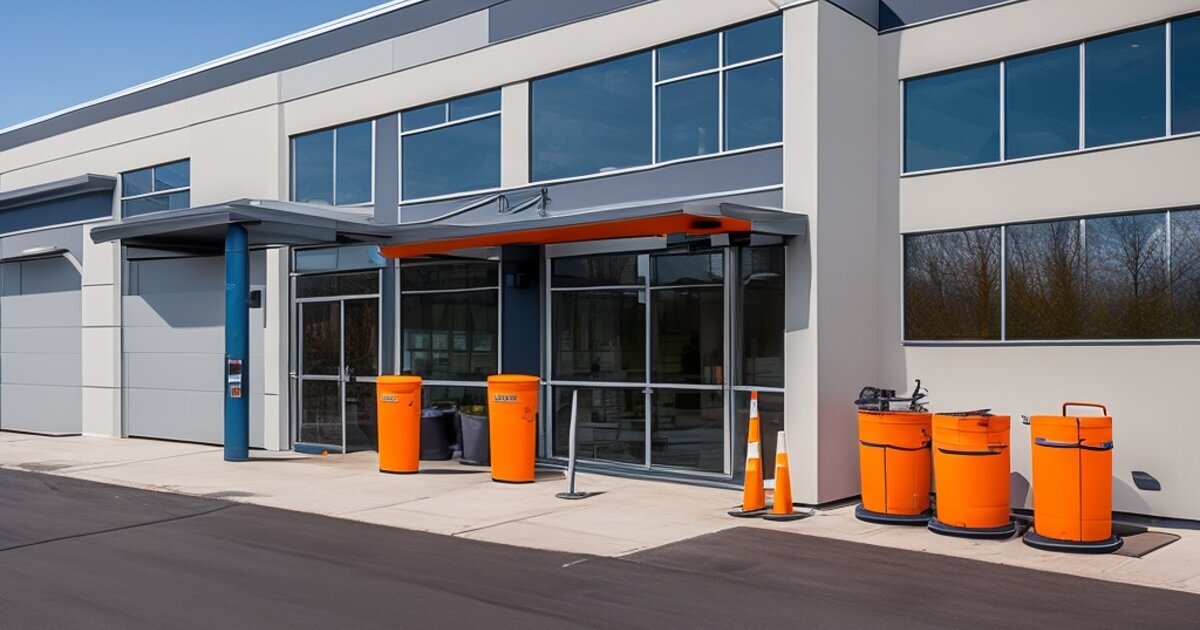
Cold storage facilities, refrigerated warehouses, and blast freezers present the most extreme coating challenge in commercial painting. Walls and floors transition from ambient temperatures to sub-zero conditions repeatedly. Condensation forms on surfaces when humid air contacts cold substrates. And standard coatings fail catastrophically when applied to cold surfaces or subjected to thermal shock.
For facility managers overseeing refrigerated warehouses, food processing cold rooms, pharmaceutical storage, or distribution centers with freezer sections, understanding cold-storage coating science prevents expensive failures and operational disruptions.
Quick Answer
Cold storage and refrigerated facility painting requires coating systems rated for thermal shock, condensation, low-temperature cure, and sanitary cleaning. Standard commercial paints usually fail because cold substrates, defrost cycles, vapor-barrier problems, and frozen moisture cause cracking, blistering, delamination, and corrosion.
Key Takeaways
| Challenge | Facility Manager Response |
|---|---|
| Thermal shock | Specify flexible epoxy, polyurethane, or polyaspartic systems rated for rapid temperature swings. |
| Condensation | Verify vapor barriers, drainage, and dew-point control before coating. |
| Sub-zero cure | Use low-temperature formulations or temporarily heat the room during cure. |
| Sanitation | Select cleanable, moisture-resistant finishes with coved bases in wet zones. |
| Downtime | Consider fast-cure systems when product movement or shutdown windows are limited. |
Cold Storage Coating Challenges
The Cold Storage Environment
Cold storage facilities operate across a range of temperatures:
- Coolers: 33-55°F (produce, dairy, beverages)
- Refrigerated warehouses: 28-35°F (meat, seafood, prepared foods)
- Freezers: -10 to 10°F (frozen foods, ice cream)
- Blast freezers: -40 to -20°F (rapid freezing)
Each zone presents distinct coating challenges, but all share three fundamental stresses: thermal shock, condensation, and sub-zero conditions.
Thermal Shock: The Primary Enemy
Thermal shock occurs when a coated surface experiences rapid temperature change. In cold storage, this happens every time a door opens, a defrost cycle runs, or a room transitions from cleaning temperature to operating temperature.
How thermal shock destroys coatings. Materials expand when heated and contract when cooled. The substrate (concrete, metal, insulated panel) and the coating expand and contract at different rates. When the temperature changes rapidly, the differential movement creates shear stress at the interface. Repeated cycling fatigues the bond until the coating cracks, delaminates, or chips.
Common failure modes.
- Delamination: Coating separates from substrate in sheets or patches
- Cracking: Hairline cracks form at stress concentration points
- Blistering: Moisture trapped beneath the coating expands when frozen
- Chipping: Impact from forklifts or equipment breaks brittle, cold-coating film
Mitigation strategies. Specify coatings with proven thermal shock resistance. These formulations use flexible resins (polyurethane, polyaspartic, or specially modified epoxy) that accommodate movement without failing. The coating system must be applied at sufficient thickness to provide a flexible, continuous film.
Condensation and Moisture
Condensation is the invisible destroyer of cold storage coatings. When warm, humid air contacts a surface below the dew point, water condenses on the surface. In refrigerated facilities, this happens constantly at doorways, around openings, and on exterior walls.
Condensation damage. Water on the coating surface interferes with adhesion, promotes corrosion on metal substrates, and supports mold and bacterial growth. In freezers, condensed water freezes, expanding and delaminating the coating from behind.
Vapor barriers. Proper insulation and vapor barrier installation are the first lines of defense. The vapor barrier must be on the warm side of the insulation to prevent moisture migration into the wall assembly. Painting cannot compensate for a failed vapor barrier.
Coating permeability. Cold storage coatings should be semi-permeable or impermeable to prevent moisture migration through the coating film. However, if moisture is trapped behind the coating (from a failed vapor barrier), impermeable coatings will blister. The solution is fixing the vapor barrier, not changing the coating.
Floor drains and sloped floors. Cold storage floors must slope to drains to prevent standing water. Standing water freezes, creating slip hazards and accelerating coating damage. Specify floor coatings that bond tenaciously to sloped concrete and resist hydrostatic pressure.
Sub-Zero Application Challenges
Applying coatings in cold environments requires specialized products and techniques.
Temperature requirements. Standard water-based coatings require minimum temperatures of 50°F for proper film formation. Standard epoxies require 55°F or higher. Cold storage application demands:
- Low-temperature epoxy formulations (cure to 35-40°F)
- Polyurethane and polyaspartic systems (cure to 20-32°F)
- Specialty cold-temperature primers
Surface temperature. The substrate temperature is more critical than air temperature. A concrete wall at 25°F will not allow standard epoxy to cure, regardless of air temperature. Infrared thermometers must verify substrate temperature before application.
Temporary heating. The most reliable approach is to raise the room temperature during painting and initial cure. Portable heaters can bring small rooms to 50-60°F for the 24-48 hours required for initial cure. This requires product removal, temperature control, and energy cost, but ensures coating performance.
Fast-cure systems. Polyaspartic and rapid-cure polyurethane systems allow return to service in hours rather than days. These products cure at lower temperatures and provide full chemical resistance faster than standard epoxy. They cost more but minimize facility downtime.
Coating Selection by Zone
Cooler walls and ceilings (33-55°F).
- Moisture-resistant epoxy or urethane coating
- Antimicrobial additives for food safety
- Light colors for visibility and light reflection
- Semi-gloss or gloss for cleanability
Refrigerated warehouse walls (28-35°F).
- Thermal-shock-resistant epoxy or polyurethane
- Applied at 8-12 mils for durability
- Coved bases at floor/wall junctions
- High-build systems for impact resistance
Freezer walls (-10 to 10°F).
- Polyurethane or polyaspartic systems rated for sub-zero
- Applied with temporary heating during cure
- Reinforced with fiberglass mat at stress points
- Regular inspection for delamination
Blast freezer walls (-40 to -20°F).
- Specialty cryogenic coatings (limited options)
- Often addressed with insulated panels rather than field-applied coatings
- Consult with panel manufacturers for coating compatibility
Cold storage floors (all temperatures).
- Polyurethane or polyaspartic mortar systems
- Thermal shock resistance
- Anti-slip aggregate in traffic areas
- Coved bases (6-inch radius minimum)
- Slope to drains (1/8 inch per foot minimum)
The Defrost Cycle Factor
Defrost cycles are necessary to prevent ice buildup on evaporator coils, but they create extreme thermal shock events.
How defrost works. Refrigeration systems periodically reverse cycle or inject hot gas to melt ice from coils. During defrost, room temperature can spike from -10°F to 40°F in minutes, then rapidly return to operating temperature.
Coating stress. This rapid swing is the most severe thermal shock event in cold storage. Coatings near evaporators and on walls with embedded cooling lines experience repeated stress.
Mitigation. Ensure coatings near evaporators have the highest thermal shock resistance specification. Inspect these areas more frequently than general wall surfaces. Consider protective barriers or baffles to reduce direct thermal exposure.
Facility Manager Checklist
- Verify vapor barrier integrity first: Confirm the vapor barrier is intact on the warm side of insulation before any coating work begins.
- Specify thermal-shock-resistant coatings: Use polyurethane or polyaspartic systems rated for rapid temperature swings in all cold storage zones.
- Require substrate temperature checks: Verify concrete or metal surface temperatures with infrared thermometers before application.
- Plan temporary heating for cure: Raise space temperature to 50-60°F during painting and initial 24-48 hour cure in freezer areas.
- Install coved bases at all junctions: Specify 6-inch minimum radius coves at floor-to-wall transitions to prevent moisture and ice accumulation.
- Ensure positive drainage slope: Verify floors slope 1/8 inch per foot minimum toward drains to prevent standing water and ice hazards.
- Request cold storage facility references: Verify contractors have documented experience with sub-zero applications and thermal shock environments.
Frequently Asked Questions
Can a freezer be painted while it remains below freezing?
Only with specialty systems rated for low-temperature application, and even then substrate temperature must be verified. In many cases, temporary heating during painting and initial cure is the more reliable way to achieve proper adhesion.
Why do coatings fail near cold storage doors and evaporators?
Doors and evaporators create repeated condensation and rapid temperature swings. Those areas see the most thermal shock, ice formation, impact, and moisture exposure, so they need higher-performance coatings and more frequent inspections.
What is more important: the air temperature or the surface temperature?
Surface temperature is more important. A coating may fail if the wall, panel, or concrete slab is too cold for proper cure, even when the surrounding air has been temporarily warmed.
Cold storage facility painting is a specialized discipline where standard commercial coatings fail predictably. Facility managers who understand thermal shock, condensation dynamics, and sub-zero application requirements specify systems that perform for years rather than months.
For cold storage, freezer, and refrigerated facility coating in the Southwest, contact Moorhouse Coating.
Related Reading
Related Resources
- Warehouse Floor Coatings
- Coating Selection Guide
- Thermal Shock Resistant Flooring
- Commercial Painting Costs
- Brewery, Winery, and Distillery Painting
Frequently Asked Questions
Can a freezer be painted while it remains below freezing?
Only with specialty systems rated for low temperature application, and even then substrate temperature must be verified. In many cases, temporary heating during painting and initial cure is the more reliable way to achieve proper adhesion.
Why do coatings fail near cold storage doors and evaporators?
Doors and evaporators create repeated condensation and rapid temperature swings. Those areas see the most thermal shock, ice formation, impact, and moisture exposure, so they need higher performance coatings and more frequent inspections.
What is more important: the air temperature or the surface temperature?
Surface temperature is more important. A coating may fail if the wall, panel, or concrete slab is too cold for proper cure, even when the surrounding air has been temporarily warmed. Cold storage facility painting is a specialized discipline where standard commercial coatings fail predictably. Facility managers who understand thermal shock, condensation dynamics, and sub zero application requirements specify systems that perform for years rather than months. For cold storage, freezer, and refrigerated facility coating in the Southwest, contact Moorhouse Coating.