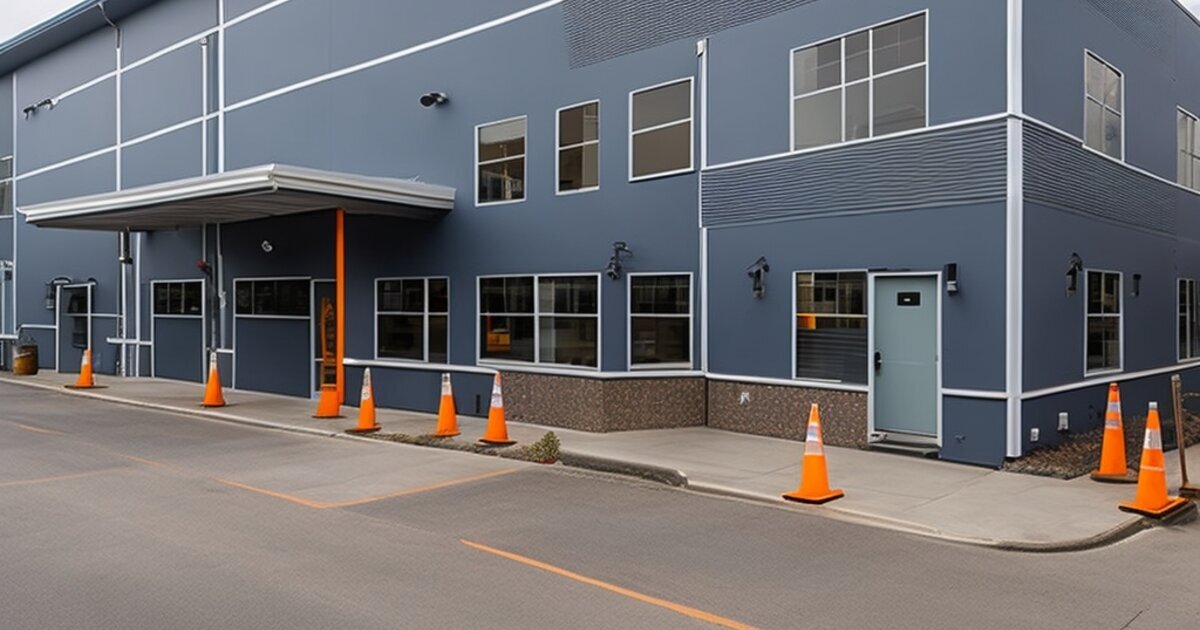
A Southern Arizona distribution center closed its floor for planning, not for production.
The goal was simple on paper: recoat 120,000 sq ft of heavy-traffic warehouse slab in 48 hours with zero full shutdown and measurable improvements in cleaning cycle performance. The challenge was not just chemistry; it was operational sequencing.
Quick Answer
A 48-hour warehouse floor recoat without full shutdown is possible when the facility is zoned by traffic criticality, fast-cure systems are reserved for high-load lanes, and every reopening is controlled by documented cure, slip resistance, and operations signoff.
Key Takeaways
| Metric | Outcome |
|---|---|
| Floor area | 120,000 sq ft recoated |
| Window | Friday evening to Sunday evening, 48 hours total |
| Operations | No unscheduled downtime beyond planned partial lane closures |
| Return to service | Fastest-loaded areas reopened about 16 hours after final wet application |
| Safety | Zero lost-time incidents |
Key Concepts
Project Constraints
The warehouse runs 24/7 most of the year and supports outbound lanes for medical device and electronics components. A full stoppage would have cost more than the coating program itself.
Facility leadership gave us three hard constraints:
- No full shutdown. At least one shipping lane had to remain open.
- 48-hour window. Weekend maintenance window from Friday 6:00 p.m. to Sunday 6:00 p.m.
- No surprise downtime. Internal QA wanted proof points on slip resistance and cure milestones before each opening window.
Baseline and Risk Profile
A baseline condition assessment showed:
- Localized heavy wear near receiving docks and forklift turn lanes.
- Residual solvent-based residues from prior coatings in two dock bays.
- Existing profile variation from prior grinding cycles.
- Seasonal peak in throughput expected during the same maintenance weekend.
The largest risk was not application quality—it was operations handoff. A recoat can perform well in lab conditions and still fail commercially if aisle closures are not coordinated with logistics leadership.
Execution Strategy
1) Zoning and Access Control
We mapped the facility into four zones by traffic criticality:
- Zone A: Primary receiving and high-frequency shipping lanes.
- Zone B: Secondary movement aisles near staging.
- Zone C: Less active cross-aisles and support routes.
- Zone D: Peripheral storage and low-traffic support areas.
Only one Zone A segment was closed at a time. Temporary one-way routing was established with floor stanchions, overhead signboards, and daily route cards shared with supervisors.
2) Surface Prep Stack for Speed
To avoid long abrasive cycles, we used a mixed prep protocol:
- Diamond grinding in Zone A for minimum dust and predictable profile control.
- Shot blast in Zone C and D where operations allowed slightly higher short-term disruption.
- Localized scarification where delamination patches required full depth correction.
Each zone received pre-cleans and tack control with low-void pad systems to reduce residue carry-over before coating.
3) Product Matrix by Exposure
We did not apply one system for every zone. The product matrix was tied to duty cycle:
- High-traffic dock lanes: Fast-cure, high-abrasion epoxy with higher chemical resistance.
- Turn lanes and heavy wheel impact zones: Polyaspartic finish for accelerated return-to-service.
- Peripheral lower-stress zones: Value-tier epoxy blend with a matched cure profile.
Material choice aimed to control risk: the faster systems were reserved for critical movement corridors, while lower-cost systems were applied where traffic demand allowed.
4) Cure-Led Milestone Plan
The team used a hard milestone checklist with hourly checkpoints:
- Substrate cleaned and profiled to target
- First zone primed and coated
- Tack test before each opening
- Cure validation every 4 hours with moisture and surface temperature checks
- Slip resistance measurement before lane reactivation
- Final walk-through with operations and QA at handover
No lane reopened without documented cure and safety signoff.
48-Hour Timeline
Friday (Hours 1-12)
- Final dry runs and zone setup
- Surface prep on Zone D and Zone C
- First-pass coating on Zone D
Saturday (Hours 13-24)
- Full zone prep on remaining non-critical aisles
- Recoat on Zone C with fast-cure top system
- Opening test segment in late evening
Sunday (Hours 25-48)
- Peak-lane prep on Zone A at staggered intervals
- Coating and cure monitoring in live traffic windows
- Progressive reopening as each segment passed safety and cure criteria
By Sunday evening, the warehouse met its throughput target with all production lanes restored.
Outcomes
The outcome was a near-ideal execution for a no-shutdown industrial job:
- Full floor recoat completed in 48 hours from first mobilization to final signoff.
- No unscheduled downtime above the planned partial lane closures.
- Lane reopenings averaged 16 hours after final wet application for the fastest-loaded areas.
- Safety incidents: zero lost-time incidents, with only minor housekeeping observations corrected same-day.
Management measured this as successful because throughput stayed inside tolerance and the facility did not reallocate labor to crisis rerouting.
Why It Worked
The technical execution was only one part of success. The bigger winner was governance:
- Operations, safety, and coating teams used one daily command rhythm instead of separate plans.
- Every crew lead had a predefined go/no-go criterion.
- Procurement, QA, and field teams used the same closeout checklist.
That control model is what made the 48-hour goal realistic, not just the chemistry.
Lessons for Facility Managers
- Treat warehouse floor recoats like a production process, not a construction task.
- Build a return-to-service matrix before prep even starts.
- Assign one person responsible for lane-by-lane clearance decisions.
- Keep a conservative cure buffer for forklift-heavy pathways.
- Require documented signoff for every lane before reopening.
Facility Manager Checklist
Before initiating a warehouse floor recoat project with minimal operational disruption, ensure the following:
- Define Zero-Shutdown Constraints: Confirm which shipping lanes must remain open and establish maximum allowable closure windows with operations leadership.
- Map Traffic-Critical Zones: Divide the facility into zones by traffic criticality and develop phased routing plans with temporary signage and stanchions.
- Select Cure-Speed-Appropriate Products: Match coating systems to duty cycles—fast-cure epoxies for high-traffic dock lanes, polyaspartics for turn lanes, and value-tier blends for low-stress areas.
- Establish Cure Milestone Protocols: Create hourly checkpoint schedules with documented tack tests, moisture checks, and slip resistance measurements before lane reactivation.
- Pre-Validate Surface Prep Methods: Confirm diamond grinding, shot blasting, or scarification protocols based on contamination levels and desired surface profile.
- Assign Single Point of Authority: Designate one individual responsible for lane-by-lane clearance decisions to prevent conflicting go/no-go calls.
- Build Return-to-Service Matrix: Define cure time requirements and safety signoff criteria for each zone before prep work begins.
Frequently Asked Questions
Can a warehouse floor be recoated without shutting down shipping operations?
Yes, if at least one critical lane remains open, closures are staged by traffic priority, and each reopened lane has documented cure and safety approval.
Which coating systems work best for fast warehouse return-to-service?
Fast-cure epoxies and polyaspartic finishes are commonly used in high-traffic or turn-lane areas, while lower-stress zones may use slower value-tier epoxy systems when the schedule allows.
What should be checked before forklifts return to a recoated floor?
Confirm tack-free condition, cure progress, surface temperature and moisture readings, slip resistance, route signage, and final operations or QA signoff for that lane.
Related Reading
- How to Recoat Warehouse Floors Without a Full Shutdown
- Warehouse Floor Coatings: Selection, Performance, and Lifecycle Planning
- Phased Painting Schedules for 24/7 Operations
- Industrial Coating TCO Model for Budget-Constrained Projects
- Preventive Coating Maintenance
- Video: How Coating Inspection Saves Facilities $50K+ in Rework
- Video: Monsoon Season Coating Protection in Action
Frequently Asked Questions
Can a warehouse floor be recoated without shutting down shipping operations?
Yes, if at least one critical lane remains open, closures are staged by traffic priority, and each reopened lane has documented cure and safety approval.
Which coating systems work best for fast warehouse return to service?
Fast cure epoxies and polyaspartic finishes are commonly used in high traffic or turn lane areas, while lower stress zones may use slower value tier epoxy systems when the schedule allows.
What should be checked before forklifts return to a recoated floor?
Confirm tack free condition, cure progress, surface temperature and moisture readings, slip resistance, route signage, and final operations or QA signoff for that lane.