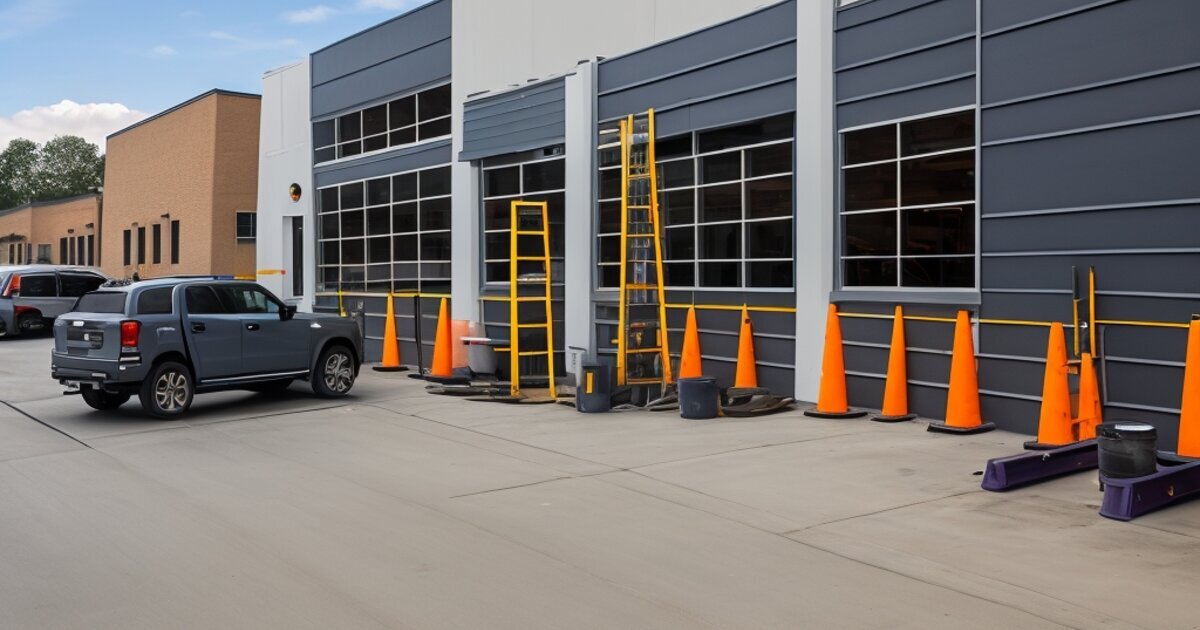
An older chemical storage tank farm can look perfectly manageable from a distance and still be far past the practical end of its original coating cycle.
This project involved a 40-year-old facility with a mix of horizontal and vertical steel surfaces, berm walls, and transition interfaces between concrete and steel. The original coating stack had delivered service beyond its expected lifespan, but the deterioration pattern was no longer cosmetic. Corrosion at tank bottoms and perimeter transitions threatened long-term containment reliability.
The objective was to restore durability without extending operations risk, and to do it within a defined outage while preserving access for routine storage and safety functions.
Quick Answer
Aging tank farms can often be restored without full replacement by ranking coating failures by consequence, repairing transition and edge details first, and applying zone-specific epoxy systems under documented environmental and cure controls.
Key Takeaways
| Restoration Priority | Case Study Approach |
|---|---|
| Highest-risk areas | Tank shell-to-footing and shell/anchor junctions addressed first |
| Coating selection | Reinforced epoxy, novolac epoxy, and UV-stable top systems matched by exposure |
| Operations continuity | Three phased windows preserved routine storage and safety access |
| Quality assurance | Cure, adhesion, edge continuity, and environmental logs required before release |
Key Concepts
Condition Snapshot and Initial Risk Ranking
The initial survey showed:
- Widespread alligatoring and micro-checking on shell coatings.
- Edge delamination where old paint systems had lost flexibility at substrate transitions.
- Water pooling in several vertical seams and at anchor points.
- Corrosive residue migration from historical operations creating spot contamination zones.
- Inconsistent performance between older and recently repaired sectors.
Priority was set using consequence-first grading:
- Highest priority: Tank shell-to-footing interfaces and shell/anchor junctions.
- High priority: Piping supports, walkway edges, and transfer line transitions.
- Moderate priority: Perimeter steel and secondary containment walls where degradation was advanced but still stable.
Risk and consequence scores drove scope sequencing, not just visual severity.
Why an Epoxy Retrofit Was the Right Choice
The facility had enough localized failures to justify replacement, but full demolition and replacement of old film systems would have been economically disruptive. A phased epoxy retrofit offered the best balance:
- Improved adhesion: Mechanical profile control and moisture management allowed better bond at old and worn substrates.
- Chemical resistance: Epoxy chemistry with high build options resisted the specific tank farm contamination profile.
- Cure predictability: With controlled temperature windows and moisture control, cure progression was more reliable than alternatives.
- Service-life improvement: The project was framed as a lifecycle intervention, not a temporary band-aid.
The coating stack was selected by zone: standard reinforced epoxy for moderate exposure, novolac epoxy for elevated chemical exposure, and matched top-surface systems for UV and thermal cycling in sun-facing sectors.
Scope Design and Phasing
The project was split into three operational windows:
Phase 1: High-Risk Assets and Access Preparation
- Isolated priority shell sections, cleaned and prepped for full structural access.
- Executed decontamination and moisture-control protocols before profile checks.
- Installed temporary containment controls around each active area to prevent runoff migration.
Phase 2: Substrate Preparation and Surface Repair
- Mechanical profile correction on steel and concrete transition interfaces.
- Spot metal replacement at thinly corroded fastener zones.
- Edge treatment with moisture-resistant detailing at seams and penetrations.
Phase 3: Coating Application and Cure Management
- Multi-coat epoxy application in planned sectors.
- Environmental logging each shift: substrate temperature, ambient temperature, humidity trend, and wind impacts.
- Hold-and-inspect process before opening each sector to operations.
This phased format protected production pathways while allowing technical work to move continuously.
Containment and Environmental Controls
Because tank farms have strict safety and environmental requirements, execution details were as critical as product choice.
- Segregated wash zones: All wash water captured and controlled during cleanup.
- Dust and overspray control: Negative-pressure support around active surfaces.
- Contamination staging: Temporary isolation for each prep and coating zone reduced cross-contamination.
- Inspection lockouts: No sector reopened until cure, adhesion, and edge continuity checks were completed.
No final handoff proceeded without documented verification.
Results and Measured Outcomes
The restored coating system delivered practical improvements in both durability and operating comfort for the facility team:
- Reduced coating defects at transitions: Edge and junction detailing improved significantly, which reduced early blisters and checking.
- Improved handling confidence: Outage planning and phased release allowed uninterrupted production in non-working sectors.
- Faster post-application acceptance: Consistent inspection criteria reduced review cycles by reducing “debate on standard.”
- Longer projected interval to next major intervention: The project extended useful coating service life with a conservative plan focused on preventive maintenance.
The biggest shift was strategic, not just technical: the client moved from emergency correction to a maintenance schedule tied to documented condition risk.
Lessons for Facilities With Aging Infrastructure
- Age does not demand full replacement; it demands a prioritized intervention plan.
- In mixed-material industrial sites, transitions and edges fail first unless detailed separately.
- Cure control, weather monitoring, and clear inspection checkpoints are the three things that protect expensive chemistry choices from becoming paperwork disputes.
- Maintenance records matter. Every test result, environment log, and closeout note strengthens future budgeting and procurement decisions.
- For secondary containment environments, sequencing is not optional; it is the project.
Facility Manager Checklist
Before initiating a coating restoration project on aging tank farm infrastructure, ensure the following:
- Complete Condition Assessment: Document all alligatoring, edge delamination, water pooling zones, and corrosive residue spots with photos and risk rankings.
- Prioritize by Consequence: Sequence work using consequence-first grading (tank shell-to-footing interfaces first, then piping supports, then perimeter containment).
- Select Zone-Appropriate Systems: Match epoxy chemistry to exposure—standard reinforced epoxy for moderate zones, novolac for chemical exposure, UV-stable topcoats for sun-facing surfaces.
- Require Environmental Logging: Mandate substrate temperature, ambient temperature, humidity trend, and wind documentation for every coating shift.
- Lock Inspection Gate Criteria: No sector returns to operations until cure verification, adhesion testing, and edge continuity checks are documented.
- Plan Segregated Wash and Containment: Capture all wash water, control dust/overspray with negative pressure, and stage contamination zones to prevent cross-contamination.
- Build Maintenance Records: Archive every test result, environment log, and closeout note to strengthen future budgeting and lifecycle planning.
Frequently Asked Questions
Does an old tank farm always need complete coating removal and replacement?
Not always. If the substrate is structurally viable, a prioritized epoxy retrofit can target high-consequence failures while preserving safe operations and controlling lifecycle cost.
Where do coating failures usually matter most on tank farms?
Transitions, edges, tank bottoms, anchor junctions, seams, and secondary containment interfaces usually carry the highest consequence because they concentrate moisture, movement, and contamination.
What records should be kept after an industrial epoxy restoration?
Keep condition rankings, substrate preparation records, environmental logs, product batch data, adhesion tests, cure verification, inspection signoffs, and maintenance recommendations for future planning.
Related Reading
- Industrial Coating TCO Model for Budget-Constrained Projects
- How to Write a Coating RFP That Attracts Qualified Bidders
- How to Plan a Coating Maintenance Cycle
- Commercial Chemical Resistant Flooring and High-Performance Coatings
- Case Study: 48-Hour Warehouse Floor Recoat Without Shutdown
- Video: How Coating Inspection Saves Facilities $50K+ in Rework
- Arizona Monsoon and Dust Storm Coating Protection
Frequently Asked Questions
Does an old tank farm always need complete coating removal and replacement?
Not always. If the substrate is structurally viable, a prioritized epoxy retrofit can target high consequence failures while preserving safe operations and controlling lifecycle cost.
Where do coating failures usually matter most on tank farms?
Transitions, edges, tank bottoms, anchor junctions, seams, and secondary containment interfaces usually carry the highest consequence because they concentrate moisture, movement, and contamination.
What records should be kept after an industrial epoxy restoration?
Keep condition rankings, substrate preparation records, environmental logs, product batch data, adhesion tests, cure verification, inspection signoffs, and maintenance recommendations for future planning.