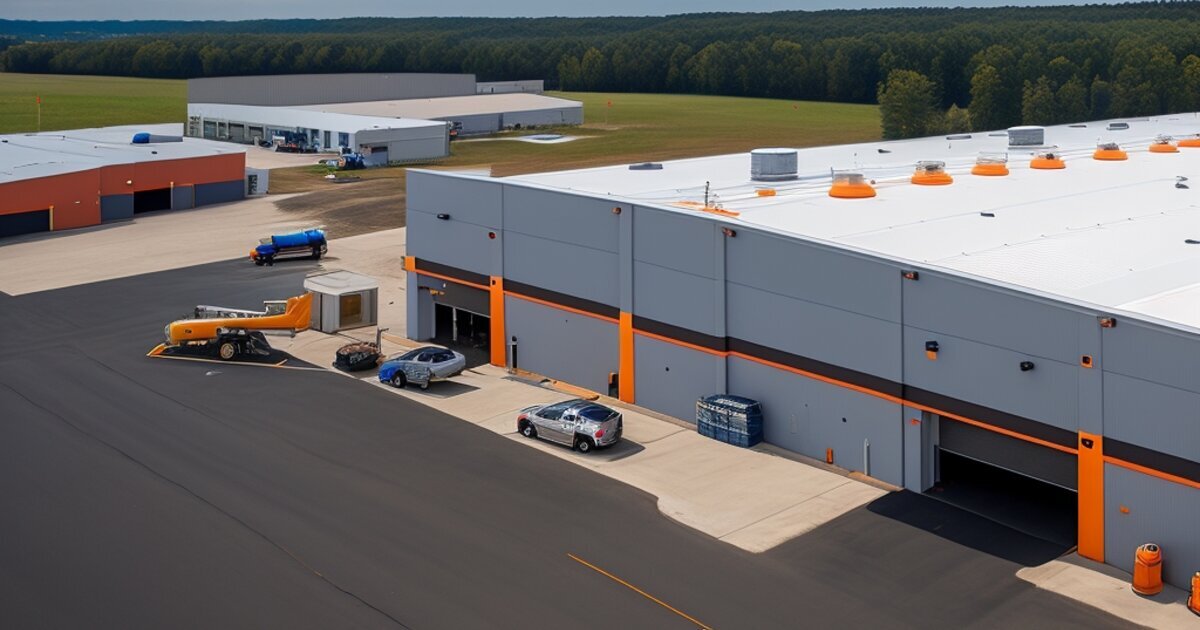
Airports and aviation facilities operate under some of the most stringent safety and operational requirements in commercial construction. Hangars house aircraft worth millions of dollars, fuel farms store thousands of gallons of jet fuel, and runways require precise markings that guide pilots in all weather conditions. Painting in this environment demands compliance with FAA regulations, fuel-resistant coatings, and scheduling that never interferes with flight operations.
For airport facility managers, FBO operators, and aviation maintenance directors, understanding the specialized requirements of hangar, runway, and support facility painting ensures safe, compliant, and durable finishes.
Quick Answer
Airport hangar and aviation facility painting requires fuel-resistant floor coatings, FAA-compliant airfield markings, visible safety zones, secure contractor access, and work windows coordinated around active flight operations. The best specifications address chemical exposure, reflectivity, anti-static needs, NOTAM closures, and documentation before crews mobilize.
Key Takeaways
- Hangar floors need coatings that resist jet fuel, hydraulic fluids, aircraft loads, and safety-marking wear.
- Runway and taxiway markings must follow FAA color, reflectivity, durability, and application requirements.
- Fuel farms and containment pads require hydrocarbon-resistant coatings and strict fire-safety controls.
- Scheduling depends on airport operations, security badging, NOTAM windows, and zero-disruption planning.
Aviation Facility Painting Zones
Hangar Floor Coating Requirements
Hangar floors face unique challenges from aircraft weight, fuel exposure, and hydraulic fluids.
Load requirements. Aircraft weigh from 5,000 pounds (light singles) to 500,000+ pounds (commercial jets). Hangar floors must support concentrated wheel loads and jack points without cracking or spalling.
Chemical resistance. Jet fuel (Jet A, Jet A-1), aviation gasoline (100LL), hydraulic fluids (Skydrol, MIL-PRF-5606), and deicing fluids attack standard concrete and coatings. Specify fuel-resistant epoxy or polyurethane floor systems.
Floor markings. Hangar floors require precise markings for:
- Aircraft parking positions (tie-down points, nose wheel positions)
- Fire lanes and safety zones
- Fuel truck routes
- Pedestrian walkways
- Emergency equipment locations
Thermal shock. Aircraft engines and APU exhaust create localized heating. Floor coatings near engine run-up areas must resist thermal shock.
Anti-static properties. Hangars handling avionics or fuel require electrostatic dissipative (ESD) floor coatings to prevent spark hazards.
Runway and Taxiway Markings
Airfield markings are regulated by FAA Advisory Circular 150/5340-1L and must meet precise specifications.
Paint specifications. FAA-approved paints for airfield markings:
- Water-based acrylic latex
- Solvent-based chlorinated rubber
- Epoxy formulations
All paints must meet FAA durability, reflectivity, and color standards.
Color requirements.
- White: Runway markings, runway edge lines
- Yellow: Taxiway markings, taxiway edge lines, holding position markings
- Red: Mandatory instruction markings (runway holding positions)
- Black: Runway designation numbers and letters on light-colored pavements
Glass beads. Retroreflective glass beads are embedded in fresh paint to provide nighttime visibility. Bead application rate and embedment depth affect performance.
Application windows. Airfield markings must be applied during NOTAM (Notice to Airmen) closures or during low-traffic periods. Coordination with airport operations is essential.
Fuel Farm and Storage Areas
Fuel storage areas require specialized coatings that resist hydrocarbon attack.
Secondary containment. Berms, dikes, and containment pads must be coated with fuel-resistant systems that prevent leakage into the environment. Vinyl ester or novolac epoxy systems provide chemical resistance for jet fuel exposure.
Tank exteriors. Above-ground storage tanks (ASTs) require exterior coatings that resist UV, thermal cycling, and corrosion. Internal tank linings require specialized coatings certified for aviation fuel contact.
Spill containment. Spill pads and wash racks require fuel-resistant, easy-to-clean coatings that facilitate containment and cleanup.
Support Building Requirements
Airport support buildings include maintenance shops, FBO terminals, fire stations, and administrative offices.
Maintenance shops. Similar to industrial facilities with chemical exposure, tool impact, and equipment traffic. Fuel-resistant floor coatings, chemical-resistant wall coatings, and safety markings.
FBO terminals. Fixed-base operator terminals serve as the public face of general aviation airports. Professional finishes that project competence and welcome visitors. Brand-aligned colors and durable materials.
Fire/rescue stations. Airport fire stations must remain ready for immediate response. Painting must not obstruct apparatus bays or impede equipment access.
Control towers. Specialized facilities with unique access requirements. Coordinate with FAA for any work near control tower equipment or sightlines.
Operational Constraints
Airports never close. Painting must work around flight operations.
Airside vs. landside. Airside (ramp, runway, taxiway) work requires escort badges, vehicle permits, and coordination with airport operations. Landside (terminal, parking, support buildings) has fewer restrictions but still requires security awareness.
NOTAM coordination. Any work on runways or taxiways requires NOTAM issuance and airport operations approval. Work windows are typically during overnight hours (11 PM - 5 AM).
Security requirements. All contractors must pass background checks, obtain airport badges, and comply with TSA security regulations. Tools and materials are subject to screening.
Fuel safety. Work near fuel farms requires hot work permits, fire watch, and coordination with fueling operations. No spark-producing activities within 50 feet of fuel vents without permits.
Regulatory Compliance
Aviation facilities operate under multiple regulatory frameworks.
FAA regulations. Advisory Circulars govern airfield markings, lighting, and facility standards. All painting must comply with applicable ACs.
EPA regulations. Fuel storage, spill containment, and waste disposal must meet EPA requirements. Proper handling and disposal of paint materials and solvents.
OSHA safety. Fall protection, confined space entry (tanks), respiratory protection, and hazard communication. Painting contractors must follow OSHA protocols.
Fire codes. NFPA 409 (Aircraft Hangars) and NFPA 415 (Airport Terminal Buildings) establish fire safety requirements that affect finishes and markings.
ADA compliance. Public terminals and facilities must maintain accessible routes, signage, and facilities.
Frequently Asked Questions
What type of coating is used on airport hangar floors?
Fuel-resistant epoxy, polyurethane, or specialty resin systems are commonly used because hangar floors face jet fuel, aviation gasoline, hydraulic fluids, wheel loads, jack points, and cleaning chemicals. Some hangars also require ESD properties for avionics or fueling safety.
Do runway markings require FAA-approved paint?
Yes. Airfield markings must meet applicable FAA Advisory Circular requirements for color, durability, reflectivity, and layout. Glass bead application is also controlled because nighttime visibility depends on correct bead rate and embedment.
How is painting scheduled at airports that stay open?
Painting is coordinated with airport operations through phased closures, airside access controls, escort requirements, and NOTAM windows. Runway and taxiway work is commonly performed overnight or during low-traffic periods.
Facility Manager Checklist
- Specify fuel-resistant floor coatings: Require fuel-resistant epoxy or polyurethane systems in hangars and fueling areas.
- Use FAA-approved paints for markings: Verify all airfield markings use paints meeting FAA Advisory Circular specifications.
- Confirm glass bead reflectivity: Ensure retroreflective glass beads embedded in runway markings meet FAA standards.
- Apply for NOTAMs in advance: Submit Notice to Airmen requests well before any runway or taxiway marking work begins.
- Require airport security badging: Confirm all painting contractors and subcontractors pass background checks and obtain airport badges.
- Obtain hot work permits near fuel storage: Secure proper permits and maintain fire watch for any spark-producing activities within 50 feet of fuel vents.
- Request aviation-specific contractor references: Verify painting contractors have documented experience with FAA regulations and active airfield operations.
Airport and aviation facility painting requires contractors who understand FAA regulations, fuel resistance requirements, and the operational realities of facilities that never close. Facility managers who plan meticulously, coordinate with airport operations, and specify appropriate coatings maintain safe, compliant, and professional aviation environments.
For airport hangar and aviation facility painting in the Southwest, contact Moorhouse Coating.
Standards & Sources
- OSHA — Occupational Safety and Health Administration
- U.S. Environmental Protection Agency (EPA)
- ADA — Americans with Disabilities Act
Related Reading
Related Resources
- Industrial Manufacturing and Fabrication Painting
- Fire Station and Emergency Facility Painting
- Concrete Floor Coatings and Epoxy Systems
- OSHA Compliance Guide
- Phased Painting Schedules for 24/7 Operations
Frequently Asked Questions
What type of coating is used on airport hangar floors?
Fuel resistant epoxy, polyurethane, or specialty resin systems are commonly used because hangar floors face jet fuel, aviation gasoline, hydraulic fluids, wheel loads, jack points, and cleaning chemicals. Some hangars also require ESD properties for avionics or fueling safety.
Do runway markings require FAA approved paint?
Yes. Airfield markings must meet applicable FAA Advisory Circular requirements for color, durability, reflectivity, and layout. Glass bead application is also controlled because nighttime visibility depends on correct bead rate and embedment.
How is painting scheduled at airports that stay open?
Painting is coordinated with airport operations through phased closures, airside access controls, escort requirements, and NOTAM windows. Runway and taxiway work is commonly performed overnight or during low traffic periods.
Facility Manager Checklist
Specify fuel resistant floor coatings: Require fuel resistant epoxy or polyurethane systems in hangars and fueling areas. Use FAA approved paints for markings: Verify all airfield markings use paints meeting FAA Advisory Circular specifications. Confirm glass bead reflectivity: Ensure retroreflective glass beads embedded in runway markings meet FAA standards. Apply for NOTAMs in advance: Submit Notice to Airmen requests well before any runway or taxiway marking work begins. Require airport security badging: Confirm all painting contractors and subcontractors pass background checks and obtain airport badges. Obtain hot work permits near fuel storage: Secure proper permits and maintain fire watch for any spark producing activities within 50 feet of fuel vents. Request aviation specific contractor references: Verify painting contractors have documented experience with FAA regulations and active airfield operations. Airport and aviation facility painting requires contractors who understand FAA regulations, fuel resistance requirements, and the operational realities of facilities that never close. Facility managers who plan meticulously, coordinate with airport operations, and specify appropriate coatings maintain safe, compliant, and professional aviation environments. For airport hangar and aviation facility painting in the Southwest, contact Moorhouse Coating.